Author Stan Rice has just published the second of three novels (Elizabeth’s Exile) in the series Trail of Tears: Novels of Cherokee Identity. Because Kindle has unreliable availability and formatting, the author has also posted a free PDF download. This second novel is about a Cherokee woman, Elizabeth Hilderbrand Pettit who, in middle age, walked with a contingent of other Cherokees on the infamous Trail of Tears from the Appalachians to what is now Oklahoma, after losing their land and possessions. As Rice’s novel explains, this was totally illegal, as the law under which Andrew Jackson prosecuted this Trail of Tears was declared unconstitutional by the Supreme Court.

Any event as big as the Trail of Tears cannot be fully presented in a novel. The novel must focus on one or a few people and their experiences. Rice focused on Elizabeth Hilderbrand Pettit, whom he identifies in the author’s notes as his third great grandmother. By focusing on one or a few individuals, we can see the individual disruptions that occurred within the overall Disruption known as the Trail of Tears.
In Elizabeth’s case, the main disruption (aside from losing her home and land) was her husband James, a white man. It turned out that he had misrepresented himself to her when they married: he had a white wife and family just over the border in Mississippi. She sued him (historical fact) and won possession of all property and goods—all of which she lost when she had to get onto the Trail of Tears. In Rice’s novel, James was with her on the entire journey. Though James was probably an evil man, Rice treats him sympathetically as a tragic character who just wants Elizabeth to forgive him, which she never does. Despite this disruption, Elizabeth remains positive and strong on the entire trip.
The same cannot be said of Elizabeth’s daughter Minerva, who came of age on this journey. She is spunky and wise, and seems to be very strong. But then she is violated by a slimy preacher named John Schermerhorn and this, Rice suggests, ruined her ability to trust that anything good could happen in her life. Minerva was—historical fact again—married six times and died at the age of forty. She was married briefly to one of the novel’s main narrators, Lewis Hicks, her second husband, but had a child by her third husband while she was still married to Lewis. Rice uses this story in his novel, but adds in ideas from the Biblical story of David and Bathsheba and Uriah the Hittite.
Rev. John Schermerhorn was a historical figure who was every bit as slimy as Rice portrays him. I think Rice might have had to invent this character, had he not actually existed. He was infamous among all the Cherokee women for trying to hit up on them. They called him Devil Horn. He was the same man who had supervised the Treaty of New Echota in which illegal representatives of the Cherokee tribe signed away their rights to their Appalachian homeland.
Rice includes other historical events such as the murder of the Cherokee leader Doublehead by his fellow Cherokees, as well as the murders of John Ridge and Elias Boudinot. Nobody in the tribe reveres Doublehead, who was also called Babykiller. But to this day some Cherokees despise, and others revere, the efforts of Ridge and Boudinot to protect the Cherokees from white oppression, although their compromises (including the Treaty of New Echota) proved ultimately futile.
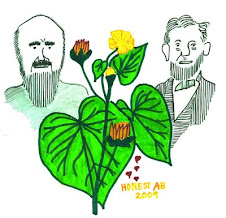
Rice also includes Asa Gray, the Harvard botanist. Gray was, in fact, a defender of the rights of free Blacks in the North, but I suspect Rice has invented all the details of Gray being a leader in the Underground Railroad.
Rice ends the novel from the viewpoint of Edd Hicks, one of Minerva Pettit’s grandchildren, who regrets all the oppression in Cherokee history but who has resolved to make the best of whatever situation he is in. He is the focus of the third novel in the series, Edd’s Land, reviewed later in this blog.



No comments:
Post a Comment