Stan Rice has just published another novel Blue Wild Indigo in the series Under the Sun, which explores what, if anything, God is doing in this world under the sun: first, from the viewpoint of the poet who lived at the time of King Solomon, and wrote Ecclesiastes (Among the Lilies); next, from the viewpoint of the woman who loved the prophet Jeremiah (The Almond Branch); next, from Heloïse and Abélard in medieval France (Paraclete); finally, this novel, set in modern rural Oklahoma.
Here is the author’s summary from Amazon:
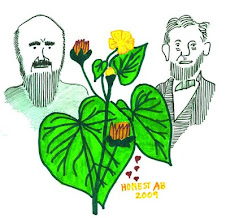
All her life, Sophia is inconvenient. She thinks too much and everybody knows it. She escapes twice from her Amish community in rural Oklahoma and discovers how dangerous and costly love and wisdom can be. The first time, she leaves with Clay. They find that the outside world is worse than their Amish community and they return, join church, and marry. Sophia’s second departure—with its risk of shunning—is not so easy. She takes refuge with Gil, a famous, lonely theologian, who is escaping his own past. But by hiding in Gil’s house, Sophia has exchanged one set of restrictions for another. Sophia’s brilliance shocks Gil into rethinking everything he thinks he knows, as he helps Sophia recreate herself. Their love grows as deeply as the roots of the blue wild indigo, a long-lived prairie flower. As Clay stalks Sophia, she and Gil discover that love is worth even the risk of death. Only after this experience are Sophia and Gil free.

What is love? This, you might say, is the one question that every novel addresses. Here is a passage from Blue Wild Indigo that expresses the kind of love Gil and Sophia had for each other. When I read these words, I was reminded of the words of the singer/songwriter Ann Zimmerman in her song, Blue Wild Indigo.
[Sophia said,] “You told me the day we met that prairies need to burn in order to remain alive.”
“Yes,” I said, breathing again.
“I assume it is because the fire turns those dead sticks and leaves into fertilizer.”
“Yes. And the fire burns away things that aren’t supposed to be in a prairie, like tree seedlings.” I sat down in the grass stems.
“I can hardly imagine,” said Sophia, also sitting down, “anything more painful or frightening than fire. Certainly the preaching we hear in our churches has a lot of hellfire in it. The men tell us how the God of Love, if we stray so much as a millimeter off of the path—I guess Hell uses the metric system—will make us burn forever, and that we will feel the full pain of it every millisecond of that time. Eternal conscious torment, they call it. Even nature does not do that to us. If you feel something painful—or, for that matter, something pleasant—for a long enough time, whether a few minutes or a few days, your brain starts to adapt to it and you stop noticing it. But maybe fire is an essential part of life on Earth…
Then Sophia said, “This is blue wild indigo. And we agreed that it represents love. So, do you love me wildly?”
I had an answer straightaway but hesitated to tell her. I finally said, “Yes.”
“And what does that mean?”
“When we talk about wild love,” I said, “I mean us non-Amish, we usually mean that we toss aside all restrictions of society and propriety and start grabbing each other. That’s what we imagine that wild animals do.”
“But that is not, apparently, what plants do,” said Sophia. “For this plant, love means growing deep roots. And, Gil, if I decide to interpret my feelings for you as love, it will be love with deep roots.”
Gil also realizes, when he has to describe Sophia for the police, that all the things they would want to know about her are things he did not think about:
“I know her name, and her husband’s name. But I don’t know which house she lived in, or her parents’ names. Most of the things the law wants to know about a person are things I do not yet know about Sophia. They don’t want to know what her thighs look like, what her tears taste like, or how she can make a wise man feel stupid, that she shows her love by cleaning out the bathtub with her foot when she finished, that her handwriting looks like cuneiform, that the embrace of her mind is sweeter than the drippings of the honeycomb.”
The topic of love comes back in when we are forced to consider, as I explained earlier, whether you can love your fetus and still have an abortion.
Sophia decides to go to the University of Oklahoma, so she can finally learn wisdom. Gil takes her there and pays for everything. While Sophia was gone, Gloria came back for a visit. She is ready to start up a relationship with him, again, but Sophia calls. She is disillusioned that she is almost the only student at the university who desires wisdom. Gloria grabs the phone and tells her that Gil is ready to bring her home. She has not yet experienced the kind of love that Gil gave her long ago, but she is ready to sacrifice it for Sophia.
I will not tell you the ending. Sophia’s church found her living with Gil, confronted her with what they thought was adultery (though it was not). The church elder was firm but gentle. Not so Clay, who had followed the elder and chased down Sophia (in a pickup truck driven by a neighbor). Clay had a gun. Did he use it? Yes. How? In a way, I will only say, that left love intact.



No comments:
Post a Comment