Showing posts with label Faith. Show all posts

Wednesday, September 9, 2026

Elizabeth’s Exile, a Novel of a Cherokee Refugee, by Stan Rice, part five. What Is Faith?

Author Stan Rice has just published the second of three novels (Elizabeth’s Exile) in the series Trail of Tears: Novels of Cherokee Identity. Because Kindle has unreliable availability and formatting, the author has also posted a free PDF download. This second novel is about a Cherokee woman, Elizabeth Hilderbrand Pettit who, in middle age, walked with a contingent of other Cherokees on the infamous Trail of Tears from the Appalachians to what is now Oklahoma, after losing their land and possessions. As Rice’s novel explains, this was totally illegal, as the law under which Andrew Jackson prosecuted this Trail of Tears was declared unconstitutional by the Supreme Court.


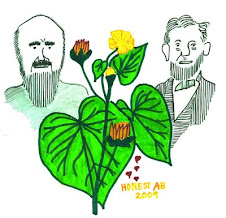
Of course Rice, a botanist and evolution author, would revere Asa Gray, the Harvard botanist who was Charles Darwin’s main defender in America. Gray promoted Darwinism even though he was a conventionally and seriously religious Christian.

And Gray promoted the protection of Black people as far as he could in Boston. While even white Northerners were prejudiced against Blacks (they thought slavery was wrong, but had no particular love for Black people), Gray taught Sunday School for Blacks.

But Rice totally made up the stuff about Asa Gray being a leader in the Underground Railroad, which escorted escaped slaves to freedom. This is perfectly credible—especially since Gray would have had the perfect excuse to be in the borderlands of the Union and the Confederacy, searching for new plants—but it just didn’t happen. This is fiction; there has to be something that is not completely historical. Rice also invented the part about Elizabeth Hilderbrand Pettit being an Underground Railroad leader.

But Rice gives us some insights about the Christian faith in these examples. Elizabeth had to lead some of the slaves blindly in the darkness without any assurance that their rescue would be successful. That is, her journey was based on faith, not on evidence. As the Bible says, we walk by faith, and not by sight. One of Elizabeth’s sections of the novel ends with these words: “This is faith. I walk where I cannot see, leading people I do not know, toward a salvation that may not be there.”

Friday, May 17, 2024

What Is Faith?

As a scientist, let me start off by saying what faith is not. It is not simply believing something that somebody else has told you.

Faith is something broad and deep that you believe. It is the most important thing in life. It is so important that you are willing to spend years, or the rest of your life, proving or disproving it. Faith is not, therefore, something you believe despite evidence, but because of it. As a result, scientists may have more faith than anyone else. Every scientist will agree that if you believe nothing, then you will never try to find out what is true and what is not.

In the previous essay, I wrote about my Ph.D. dissertation work in plant ecology. I believed that weedy fields had more environmental variability than the forest floor, and that prairies were intermediate between the two. I also believed that plants that live in weedy fields can adjust their growth to variable conditions better than forest floor plants can, and that prairie plants were intermediate between the two. Makes sense, but just because something makes sense doesn’t mean it is true.

I spent seven years in graduate school trying to even partly prove that my belief about weeds, forest floor plants, and prairie plants was true. It was like a vision that kept me going through hours of tedious work out in weedy fields and slapping mosquitoes in forests; afternoons of hot work in a humid greenhouse; hours of computer analysis and writing; and years of reading journal articles. I was Galahad and it was my grail.

I could have been wrong. But the results came out not just non-random but perfect. I still marvel that the results were so good. Hard work is no guarantee of success. It also takes luck.

Whenever you pursue a belief, and continually test and refine it into a faith, you should have a backup plan. What if you are wrong? But I had no backup plan. If my belief had proven wrong, I could still have published some results and made it into a Masters degree. I would not have been a failure in life, but I would not be Dr. Rice. There were a couple of years when things were, in fact, not looking very good.

I hate taking leaps of faith. But that is what I did. Maybe I had more faith in my scientific beliefs than I realized.

And it has left a residue of faith in my mind. Largely as a result of this experience, I am convinced that the natural world makes sense and we can understand it if we study it hard enough. And get lucky.

Tuesday, July 4, 2017

A Patriotic Message

At least, as close as I ever come to one anymore.

It is difficult to be patriotic anymore. The word “patriot” is loaded to mean conservative; to mean Republican; to mean “follower of Trump.” Even though I was born an American, and my Native American roots go back ten thousand years, I do not feel as though I am a real American, because I do not sing “Praise the Lord!” after every Trump tweet.

I consider the American flag, the one that we are supposed to wave and fly today, to be an embarrassment to the world. It used to be something positive, back in the days when Barack Obama got the Nobel Peace Prize. But today the American flag merely proclaims Trump’s ego to the entire world. Trump proclaims “America First” to the world. Not too surprising; all countries put themselves first. But what Trump means is “America Only,” that is, America will make all of its decisions as if no other countries exist except to be our markets, our sources of raw materials and cheap labor (so long as they don’t come here). He pulled us out of the Paris Accords and implies that NATO consists mostly of freeloaders. He is insulting everyone he can think of and seems to think that, if it were America vs. the rest of the world in a conflict, we would win.


Not everything is bad in America. So far, we still have laws that restrain even The Donald from grabbing absolute power. And, to me, the principal cause for faith is that many, perhaps not most, Americans remain good people. This includes the younger generation. When I think of my daughter and son-in-law, both of them powerful forces of good that make the world better for everyone around them, and their friends, who are also good people, and of my better students, or my fellow scientists, I feel good about the future. The feeling doesn’t last very long, however, since such people are not abundant. But since the future will not be improved by my worrying about it, I prefer to focus my attention on the good people whom I know.

Wednesday, November 25, 2015

What is Faith?

Okay, so this doesn’t sound like a science essay. But I assure you it does fit in with science. I want to share a story that I heard on Krista Tippett’s On Being, an NPR show, on September 24 of this year. I retell this story from memory, since I do not have time to listen to the whole podcast over again, but you can hear it at this link.

Dr. Guy Consolmagno is the current Vatican Astronomer, at the Vatican Observatory, and Dr. George Coyne is the recently retired astronomer. Now, whoa. You may not have known there even was a Vatican Observatory. Wasn’t this the church that condemned Galileo for believing the Earth was not the center of the universe, and burned Giordano Bruno at the stake? Well, it took a while for the Vatican to catch up with science, but in 1891 Pope Leo XIII founded the Vatican Observatory. (Now you know what the URL suffix “.va” stands for.) Instead of resisting science, the Catholic church decided to pursue it.

Dr. Coyne told a story of speaking at a convention of astronomers one time. He was wearing his priestly vestments. Then someone in the audience asked him, “Father,” not Dr. Coyne or George, “What does it feel like to go to work each day with the realization that you already know all of the answers?” Coyne’s response was swift and sure. He tore off his robe (I assume he was clothed underneath, and not in Mormon magical undergarments) and let everyone know that faith is not about knowing the answers, but about the assurance that the universe can be, as each day and year passes, better and better understood: our efforts at research will be rewarded. Even if we never understand it fully.

That is a way of describing the fundamental faith that all scientists have. And it is a leap of faith: there is no logical reason to believe that our brains, which evolved to maximize the fitness of genes and individuals, should have any way of understanding the universe. We evolved intelligence because it gave us a better ability to survive and to form associations with or to dominate other human beings. It evolved as a tool for evolutionary success, in the pursuit of which rationalization was just as good as reason. What our minds tell us need not be true, except in the matter of telling us where the edge of the cliff, or the next meal, is; it can be total fantasy, and natural selection favors it, so long as it allows us to form associations and to dominate others. I consider it an astonishing thing that our brains just happen to be suited for understanding the universe also. Even though very few people can actually understand dark energy or superstrings, at least we can understand the reasoning.


Keep the faith, brethren. We can understand the world, despite the political and religious and economic forces of hatred and unreason that try to keep us from doing so.

Friday, October 29, 2010

Scientific Faith

All scientists are people of faith. A few are religious people, adhering to specific doctrines. Most are spiritual, with a reverence for the beauty of the universe, particularly of whatever part of it they are studying (in my case, trees and other plants). But all scientists make at least one assumption of faith. We believe that we can find the truth.

All of us scientists believe that the universe makes sense and that we at least have a chance to figure out how. We analyze light from distant galaxies, with a firm faith that light in those galaxies obeys the same laws of physics as does the light from our own sun, and that from that light we can determine the distance of the galaxy and how rapidly it is rushing away from its Big Bang point of origin. We believe in our own brains. We cannot see the Big Bang but we trust that our inference of it, from the correspondence between distance and velocity of the galaxies, is not a delusion. We believe that if there is a God, he has not created fake light to trick us into thinking that the universe is 13.2 billion years old, or fake DNA in our chromosomes to make it look like we had evolutionary ancestors when in fact we did not, and did not magically move plants and animals around during the Flood to make the resulting fossils appear to have an evolutionary order.

I have students who do believe that God made fake light, fake DNA, and a fake fossil record to trick us into rejecting creationism. Not surprisingly, these are the students who have little interest in science, even the science that should be compatible with their religion. These are the students who often plagiarize papers, since they are not interested in thinking for themselves. What is the point, if the physical world is an illusion?

But, I assert, it is the scientists, not the anti-scientists, who are people of faith. It is faith because we cannot prove that the universe is not a fake scenario created by God. I doubt that any of us scientists has ever stopped in the middle of our work and thought, “Geez! What if everything I am studying is just an illusion created by Zeus?” And we stake our entire lives on this faith. If a government were ever to threaten to kill us for accepting the evidence of evolution, most of us would probably end up being martyrs.