Stan Rice has just published another novel Blue Wild Indigo in the series Under the Sun, which explores what, if anything, God is doing in this world under the sun: first, from the viewpoint of the poet who lived at the time of King Solomon, and wrote Ecclesiastes (Among the Lilies); next, from the viewpoint of the woman who loved the prophet Jeremiah (The Almond Branch); next, from Heloïse and Abélard in medieval France (Paraclete); finally, this novel, set in modern rural Oklahoma.
Here is the author’s summary from Amazon:
All her life, Sophia is inconvenient. She thinks too much and everybody knows it. She escapes twice from her Amish community in rural Oklahoma and discovers how dangerous and costly love and wisdom can be. The first time, she leaves with Clay. They find that the outside world is worse than their Amish community and they return, join church, and marry. Sophia’s second departure—with its risk of shunning—is not so easy. She takes refuge with Gil, a famous, lonely theologian, who is escaping his own past. But by hiding in Gil’s house, Sophia has exchanged one set of restrictions for another. Sophia’s brilliance shocks Gil into rethinking everything he thinks he knows, as he helps Sophia recreate herself. Their love grows as deeply as the roots of the blue wild indigo, a long-lived prairie flower. As Clay stalks Sophia, she and Gil discover that love is worth even the risk of death. Only after this experience are Sophia and Gil free.

Sophia, as I noted earlier, was extremely inconvenient. She was the only child in Amish homeschool who thought Christopher Columbus was inhumanly cruel, or who collected fossils and wondered about the history of the Earth and wanted to go to a big university. Nobody else Sophia knew was idealistic as she was, except Clay, man of the earth, who wanted to go to law school. The Amish disapproved of universities, and, unlike other fundamentalists, have none of their own. But Clay wanted to be able to offer legal help to his fellow Amish. He had to work a few years to save up money for it, however. So when they reached majority, they left the farm and moved to Tulsa. Clay found temporary jobs to be demeaning. Gloria continued to be inconvenient, when as a sales clerk she actually discouraged customers from buying things they did not need and could not afford. This did not end well, so they moved back home, married, and joined church.
Disruptions continued for Sophia. She found herself pregnant, but she had read enough college-level genetics that she was suspicious that her child, like many others in small inbred communities, would have genetic mutations. She sneaked into the county health department, where she found out how badly mutated her child would be, and she had an abortion. To her, she was releasing her child’s spirit from a severely crippled body.
Especially after he and Sophia suffer at the hands of a criminal, Clay settles into the rural gun culture. Sophia hated this, but was unsure what to do about it, until the day she met Gil at her family’s store. Sophia’s intelligence disrupted Gil, and Gil disrupted Sophia, so she walked all night to his house and just assumed (another disruption) that he would let her move in, which he did.
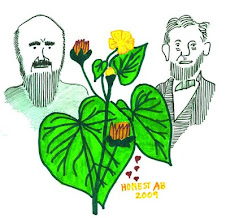
This novel not only presents credible disruptions for both main characters, but also teaches a lot of science (geology, genetics) in the process. This includes a discussion about how the brain processes sensory information, something about which both Gil and Sophia had extensively read. When they look at a blue flower (the blue wild indigo of the title), they speculate that there is no such thing as blue. Certain wavelengths of light stimulate cells in the retina that stimulate a certain part of the brain, to create an illusion of blue.



No comments:
Post a Comment