Showing posts with label ecological succession. Show all posts

Sunday, June 12, 2016

Henry David Thoreau, the scientist

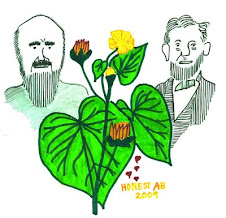
This is the second essay I am posting about Henry David Thoreau, recycled from my encyclopedias. In this essay, I concentrate on Thoreau’s oft-forgotten contributions as a scientist.

Thoreau was also a scientist, though without formal training. His observations of nature suggested hypotheses to him, which he (however imperfectly) investigated. He was passionate about making observations (for example, the colors of Walden Pond ice and the stages by which it thawed) and measurement (the depths of Walden Pond). Scholars puzzle that his last writings were all mere observations of seed dispersal and spring budburst dates of plants. But his observations were the basis upon which important aspects of ecological science was later based, such as the following:

  • Seed dispersal. In his long essays “The Dispersion of Seeds” and “The Succession of Forest Trees,” Thoreau presented many detailed observations to prove that trees grew only where their seeds had been planted by wind, water, or animals. As unbelievable as it may sound today, some intellectuals (none of them scientists) believed that trees just sprang up from the ground. Thoreau demonstrated that wild cherry trees grew where birds had carried their seeds, and that cherry seeds would not grow unless they had passed through a bird’s digestive system. He tested a hypothesis that mice dispersed hazelnut seeds by microscopically comparing tooth marks on a hazel nut with the teeth of a mouse skull.
  • Forest succession. He also systematically surveyed tree stumps, counting the rings to reconstruct forest history by determining when each tree had begun to grow. He applied his observations to an understanding of the successional processes by which forests changed over time: oaks grew up underneath pines, not underneath oaks, not only because oak forests cast too much shade upon the seedlings and oak leaf litter contained toxins, but also because animals such as squirrels and jays carried acorns preferentially into pine forests. Thoreau also knew about natural disturbances, as well as human disturbances (he noted that Native Americans deliberately set fire to forests).
  • Stochastic processes. Thoreau recognized what scientists today call stochastic processes. Ecological succession is not a deterministic process, always occurring in the same way, but by stochastic chance depended upon which species of plants as a seed source might happen to be near the disturbance.
  • Spatial patterns of plants. Thoreau also studied spatial patterns in plants, noting that species whose seeds were dispersed by wind tended to grow in clumps, while animal-dispersed plants were more evenly spread on the landscape.
  • Seasonal patterns. Thoreau also kept copious notes about the dates on which trees burst their buds in the spring, on which birds migrated, on which the ice thawed, and on which wild fruits matured. Modern scientists, such as botanist A. J. Miller-Rushing, have used Thoreau’s data to document that springtime comes earlier, and winter comes later, in New England today than in Thoreau’s day. Thus Thoreau started the science of phenology, which is the study of seasonal adaptations of the life cycles of plants and animals.

Sunday, March 13, 2016

Resurrection

Last night (March 12, 2016) I went to the Tulsa Symphony production of Gustav Mahler's Second Symphony, the Resurrection Symphony. The Tulsa Symphony, together with the Tulsa Oratorio Chorus, performed magnificently. The conductor was Benjamin Zander, who is also the conductor of the Boston Philharmonic. I have carefully listened to this symphony for thirty years, but I still learned many new things when I actually saw the performance and listened to the conductor explain it.

Most people react to death by not thinking about it: by just going to the funeral and getting it over with. Mahler was not like this. The first movement of his symphony was not a funeral march; the inchoate march was always interrupted when Mahler stopped to agonize, or to appreciate the surprising beauty of life. With excruciating beauty, Mahler wrung out every last insight he could get from the fabric of life, death, and resurrection. Here was neither a facile atheism nor a shallow Christianity.

Mahler's music is not for everybody. I will admit that my writing, too, is not for everybody. I cannot write anything, not even a four-line poem, which does not somehow plumb the meaning of life, revealing both its agony and its beauty, sometimes simultaneously. I am trying to do for the written word what Mahler did for music.

This being a science blog, I am not going to go into any musical details. I just wish to say that, as a scientist, I see resurrection all the time. You have to look for it and think about it, as Mahler did. Here is what I see.

On the cover of a vinyl edition of Bruno Walter's recording of this symphony, there is one simple image: a deep space nebula. A nebula is a resurrection. The old superstar explodes as a supernova and is dead, leaving behind a pregnant cloud of gas and dust. From this cloud, new stars and planets condense, and the second generation of stars ignite. This is where our solar system came from. Our sun is a resurrected sun. And there would be no planets were it not for the engine of creation inside the supernova, the only place in which there is enough temperature and pressure to create the larger kinds of atoms such as iron, phosphorus, and magnesium from which planets and soils are made, and uranium, a radioactive element the decay of which keeps the interior of our planet hot. Our planet is solid and warm-blooded because of the supernova, the death and resurrection, of an earlier generation of star. This is why our sun is only five billion years old, while the universe is over twice that age. Astrophysicists believe in resurrection. It is not the same star, resurrected back to life; it is a different star; but the star-life continues.

I am a botanist and I see resurrection all the time. I don't just mean the opening of tree buds each spring, a process that is in full swing right at this moment. Budburst is not really resurrection; the trees and flowers were just asleep for the winter, and are awakening. But every forest that I walk through is a resurrection. Every forest is one that grew in a place in which an earlier forest was destroyed. Longfellow wrote about "the forest primeval" in Evangeline; but there is no such thing as a primeval forest! Longfellow's "primeval" Acadian forest had not even been there a few thousand years earlier, when the land was covered with glaciers. The forest had grown back after the glaciers melted. A fire or mudslide destroys a forest, and then it goes through a slow process of what ecologists call succession: first weeds, then shrubs, then fast-growing trees such as cottonwood, and finally, after about a century, the slow-growing and long-lived trees such as oaks. This is a resurrection. The original trees are gone; perhaps the new forest is different from the previous forest; but a forest has grown back. It is not a miracle, any more than a nebula is a miracle; it is simply the natural laws of plant growth. To realize this, you have to look closely at the forest, and look at it in four dimensions.


These are the kinds of resurrection that, I think, Mahler believed in. He had a hard time accepting the death of the old, but his faith in the growth of the new was irrepressible.