Showing posts with label fuel efficiency. Show all posts

Friday, November 7, 2025

Serious about Energy Efficiency, part two.

One of the major sources of greenhouse gases is automobiles. In America, in 2022, there were 283,400,986 automobiles registered in America, including corporate and government vehicles. Clearly, as we all know, Americans rely heavily on automobiles to go everywhere. Only in certain urban areas, and not even very many of these, have usable public transit. Also, much of America is simply not walkable for everyday purposes. To go to a large store, an American usually has to drive. Americans who have given up the use of automobiles have had to prepare carefully and greatly alter their daily schedules. I have known exactly one such person outside of New York City. But in urban areas in France, it is not unusual for people to simply not own cars.

And American cars are big. The average fuel efficiency in America is 6.7 liters per 100 km (35 mpg), down from 905 in 2004, which is an improvement, but is still less efficient than the 4.1 liters per 100 km in Europe. There are all kinds of consequences for this. In America, we have to have wide lanes and multiple lanes to accommodate the numerous big cars and pickup trucks. In Strasbourg, France, where I live, even major streets usually have just one lane each direction, and the lanes are narrow. I have seen five pickup trucks in two years in Strasbourg. Even panel trucks used for repair and delivery are smaller than those in America. In France, bicycle parking lots are larger, and every urban area has well-developed, reliable, and cheap public transit. People in France without cars, like me, can save the money and inconvenience of car payments, licenses, registration, driving school (mandatory in France), finding parking spaces, etc. That adds up to a lot of time and money.

One result of excessive car ownership in America is traffic jams. Most major cities, and even minor ones, have huge traffic jams at certain times of day. Even Tulsa, where I used to live, which is far from being among the largest American cities.

Traffic jams cost a lot of money for cars idling, and create headaches for governments that feel the obligation to build new roads. At least in America.

The traffic problem in Strasbourg seems ridiculously small to me, who has just moved from America. But the government of the Eurometropole of Strasbourg sees traffic as a problem. Too many cars? In America, no level of government would think that there are too many cars. A few American cities have provided incentives to not drive downtown. But in Strasbourg, there are incentives to actually get rid of your car.

According to the municipal websiteif you sell your car (and can show the city officials your paperwork), you can receive a debit card (from MasterCard) with between 2,000 and 2,500 euros of funds, depending on your income. You can only use these funds for certain things. You can get tickets for buses, trams (trains within the metropolitan area), trains (between cities), official car-sharing services, or to rent, buy, or repair a bicycle. It would take a lot of tram rides (over 1,300, in fact, or 650 round trips) to use up 2,500 euros.

The trams in Strasbourg are quite efficient. They almost always run on time, and at intersections the trams get the right of way. Cars (and municipal buses) must wait for the trams to pass.

In America, municipal governments might try to encourage people to take public transit. But in France, they will pay you to do so. It seems like a good deal to me.

Suppose Tulsa, my previous home, checked into building a tram service. It would be so expensive that it would not get seriously considered. But most cities in France have had tram service for decades and have simply maintained and expanded it.

It is a nice day today (rare enough in the rainy, chilly autumn of northeastern France). I think I will take a hike in one of the forest preserves. If I had a bicycle, something I’m still working on, I could ride there safely on paved trails and dedicated bike lanes. But instead I will take the tram to the bottom of the hill in La Robertsau, hike into the Parc de Pourtalès, then on the paved walking/biking trail to the Cascades, and back. Or I could walk all the way to the Rhine River and look into Germany. Suppose I had more time. I could take the tram to the train station, and take a bus up to a medieval monastery in the mountains, where I could look across the Alsatian plain to the Rhine River, and hike back down to catch a train home.

When I retired to France, I said there were two things I would not do: drive a car, or tie my shoes. They have both been equally easy investments: walking shoes with straps, and tram/bus tickets. Life is good in this socialist paradise.

Wednesday, May 19, 2021

Big Headlines! Why America Will Never Convert to Electric Vehicles

It’s the big headline today! Ford is going to formally announce its new all-electric F-150 pickup truck! Oh, can’t you just barely contain the excitement! Yesterday, President Biden took one for a test drive in a lot where everything a 78-year-old man might run over had been removed.


This year, General Motors announced that it plans to phase out electric vehicles by 2035 and manufacture only electric vehicles. (Note: this site may have a paywall.) I here briefly explain why this will not happen.

It is true that hybrid and electric vehicles get much better fuel efficiency, without sacrificing maneuverability, than gasoline vehicles. Anyone like myself who has driven one will attest to this. I enjoy my hybrid more than any car I have ever owned. Mine is a Prius but I have no reason to doubt the quality of other brands.

But it will never happen in America, or at least in Oklahoma.

This is because, in America, the purpose of a vehicle is not only, perhaps not mainly, transportation. At least where I live in Oklahoma, the major purpose of a vehicle for many people is not transportation, but to express dominance, fury, and frustration to everyone within hearing or collision range.

Redneck Okies love to drive around big, noisy, fuming trucks even when they have nowhere they need to go. They drive them fast, which means they sometimes cannot control them. For this purpose, an electric vehicle simply will not work.

First, the vehicles have to be big. Size itself should be no deterrent to the adoption of hybrid and electric vehicles. Rednecks think that nobody can admire them if they drive a small vehicle. By actual count, about one-third of all vehicles I have seen in Oklahoma are big pickup trucks. Therefore, most electric vehicles will be unacceptable to redneck Okies though perhaps to other Oklahomans.

Second, the vehicles have to be heavy. One of the ways in which hybrid and electric vehicles get good fuel efficiency is by using lightweight components. But redneck Okies want to have not just large trucks but heavy ones. The reason for this is that they want to express their fury by driving around a vehicle that can bash other vehicles without harming their own. To them, the entire system of roads is a potential demolition derby. This, at least, has been my experience. In my family, we have had collisions that were not our fault on four occasions in the last couple of decades. In each case, the driver was a white man with a larger vehicle, on two occasions a large truck. One of those collisions—very recent, and an ongoing source of grief—was a hit-and-run in which the white man with the big pickup drove away from the scene, after causing an injury. The victims were my daughter, son-in-law, and two grandchildren. In another case, my vehicle was totaled by a pickup truck that did not get even a scratch—and the driver had false insurance cards. In none of these cases did the police actually seek out the drivers. It was, instead, the insurance companies that did so. Public safety does not matter; only profit. But at least there is profit in the service of public safety, from time to time. In order for a pickup truck to crush a smaller vehicle, it does not need to just be large but to be heavy. Electric and hybrid vehicles, even when large, are relatively light.

Third, the vehicle has to produce a lot of noise. The redneck drivers want everyone around them to hear their dominance, fury, and frustration. At both of my residences in Oklahoma, there is nearly a constant stream of big pickup trucks that are extremely loud. The drivers want us to admire them—and they assume everyone admires a loud truck. Maybe the redneck guys think they can get a gal that way. “Oh, wow, he must be such a man—he can push down a gas pedal!” Whether there really are any women who are that stupid or not I do not know. When I see the looks on the faces of the drivers, I sometimes see fury and frustration. Electric and hybrid vehicles are quiet. By actual count, at least half of the beg pickup trucks I see are loud. The technology exists for even a heavy truck to be quiet, as about half of them are. But a quiet truck is, to the rednecks among Oklahomans, unacceptable.


Fourth, the vehicle has to produce a lot of fumes. A truck with good fuel efficiency cannot produce fumes. Fumes are a way for the driver to create a space of dominance around him an to antagonize other people.

For these four reasons, hybrid and electric vehicles will never predominate in Oklahoma, unless there is a complete, and nearly impossible, shift away from the redneck culture. Here in Oklahoma, we still fly confederate flags, for God’s sake (at least the rednecks think it is for God’s sake).

Saturday, October 24, 2020

Why I Love My Small Car

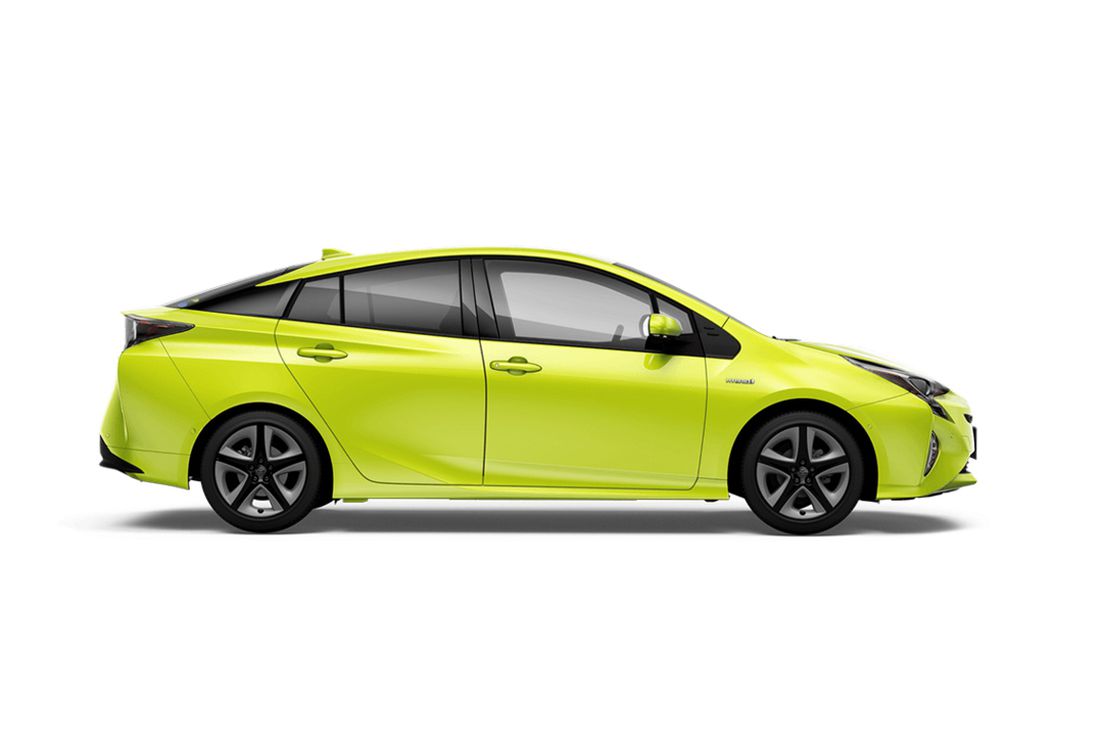
One of the main reasons I drive a small car (a Toyota Prius, in my case) is that, for each mile that I drive, I am emitting less carbon dioxide from the tailpipe. I am doing my part to reduce global warming. But this is not the only reason I drive a small car. Here are some other reasons, which are highly emotional and celebratory. The photo is a stock photo, but this is the model I have.


I can fit my small car into spaces that a larger vehicle could not go. This has proven useful on several occasions. Just recently, when I was in the parking lot of a grocery store, a delivery truck parked in the lot and blocked a bunch of cars, including mine. The delivery people did not care if the store’s customers were inconvenienced. A bunch of other cars were trapped, but there was about a six-foot gap through which my car, but no others, could escape. Similarly, when I stayed at a motel one night (back when I traveled), some a-hole parked his horse trailer in the main lot, taking up eight spaces. He paid the same price I did, but I had no place to park. I got permission from the desk to park my car in the garden. This week, the city of Durant began road construction, without advance notification to the university, and several parking lots became inaccessible. If a car was already parked in the lot, that was just their bad luck. But not mine. My car is small enough I can drive it around barriers and between trees to get away if I have to.

Gasoline is processed, distributed, and sold by a few large corporations. We are pretty much at their mercy. They abuse their powers, imposing their will on us, in direct contradiction to the principles of free enterprise. By buying less gasoline, I take away some of the profits of these oppressive corporations.

Briefly, near the beginning of the current pandemic, gasoline was cheap. The price of oil actually became negative, which means the oil corporations would pay other corporations to take their oil. (The other option was to pour it all into the Gulf of Mexico. Hey, it worked last time, during the 2010 oil spill.) But this did not last very long. Gas prices have again increased. Getting fuel efficiency that is twice the national average saves me about $12 per round trip between Durant, where I work, and Tulsa, where my family lives. This saves me about $300 a year over the average American fuel efficiency.

And, of course, it was cheaper to buy the car in the first place, compared to the cost of a bigger car.

Of course, in a smaller car, I am at greater risk of getting killed by someone driving a larger vehicle. But if we all wanted to be one hundred percent safe, we would all have to drive armored vehicles around, like this man did in 1995 in San Diego.

Despite the American love of big vehicles, and despite the hand-wringing of the oil corporations, who fear that fuel efficiency will put them out of business, Americans have been choosing smaller vehicles more and more each year. How can the oil corporations, and the government that serves their interests alone, reverse this trend? I came up with a fictional idea, which I used in one of my novels. The government could require every vehicle owner to use a minimum of 1000 gallons of gasoline a year; or else, just forfeit the money if they cannot. I called this law the “Koch Quota” after the famous anti-conservationist oil baron brothers. It would be the ultimate socialism, but oil corporations would, I believe, embrace socialism rather than to lose a single dollar in profits.