Showing posts with label gasoline. Show all posts

Saturday, October 24, 2020

Why I Love My Small Car

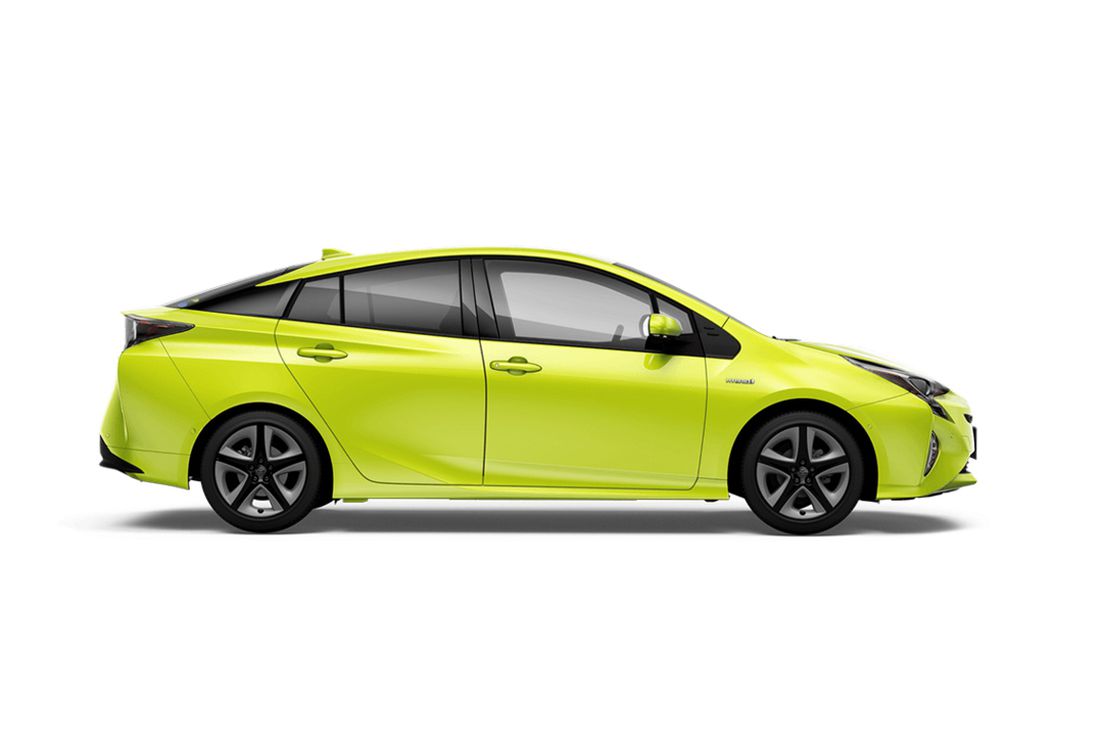
One of the main reasons I drive a small car (a Toyota Prius, in my case) is that, for each mile that I drive, I am emitting less carbon dioxide from the tailpipe. I am doing my part to reduce global warming. But this is not the only reason I drive a small car. Here are some other reasons, which are highly emotional and celebratory. The photo is a stock photo, but this is the model I have.


I can fit my small car into spaces that a larger vehicle could not go. This has proven useful on several occasions. Just recently, when I was in the parking lot of a grocery store, a delivery truck parked in the lot and blocked a bunch of cars, including mine. The delivery people did not care if the store’s customers were inconvenienced. A bunch of other cars were trapped, but there was about a six-foot gap through which my car, but no others, could escape. Similarly, when I stayed at a motel one night (back when I traveled), some a-hole parked his horse trailer in the main lot, taking up eight spaces. He paid the same price I did, but I had no place to park. I got permission from the desk to park my car in the garden. This week, the city of Durant began road construction, without advance notification to the university, and several parking lots became inaccessible. If a car was already parked in the lot, that was just their bad luck. But not mine. My car is small enough I can drive it around barriers and between trees to get away if I have to.

Gasoline is processed, distributed, and sold by a few large corporations. We are pretty much at their mercy. They abuse their powers, imposing their will on us, in direct contradiction to the principles of free enterprise. By buying less gasoline, I take away some of the profits of these oppressive corporations.

Briefly, near the beginning of the current pandemic, gasoline was cheap. The price of oil actually became negative, which means the oil corporations would pay other corporations to take their oil. (The other option was to pour it all into the Gulf of Mexico. Hey, it worked last time, during the 2010 oil spill.) But this did not last very long. Gas prices have again increased. Getting fuel efficiency that is twice the national average saves me about $12 per round trip between Durant, where I work, and Tulsa, where my family lives. This saves me about $300 a year over the average American fuel efficiency.

And, of course, it was cheaper to buy the car in the first place, compared to the cost of a bigger car.

Of course, in a smaller car, I am at greater risk of getting killed by someone driving a larger vehicle. But if we all wanted to be one hundred percent safe, we would all have to drive armored vehicles around, like this man did in 1995 in San Diego.

Despite the American love of big vehicles, and despite the hand-wringing of the oil corporations, who fear that fuel efficiency will put them out of business, Americans have been choosing smaller vehicles more and more each year. How can the oil corporations, and the government that serves their interests alone, reverse this trend? I came up with a fictional idea, which I used in one of my novels. The government could require every vehicle owner to use a minimum of 1000 gallons of gasoline a year; or else, just forfeit the money if they cannot. I called this law the “Koch Quota” after the famous anti-conservationist oil baron brothers. It would be the ultimate socialism, but oil corporations would, I believe, embrace socialism rather than to lose a single dollar in profits.

Sunday, February 14, 2016

The Good Old Days of Rationing

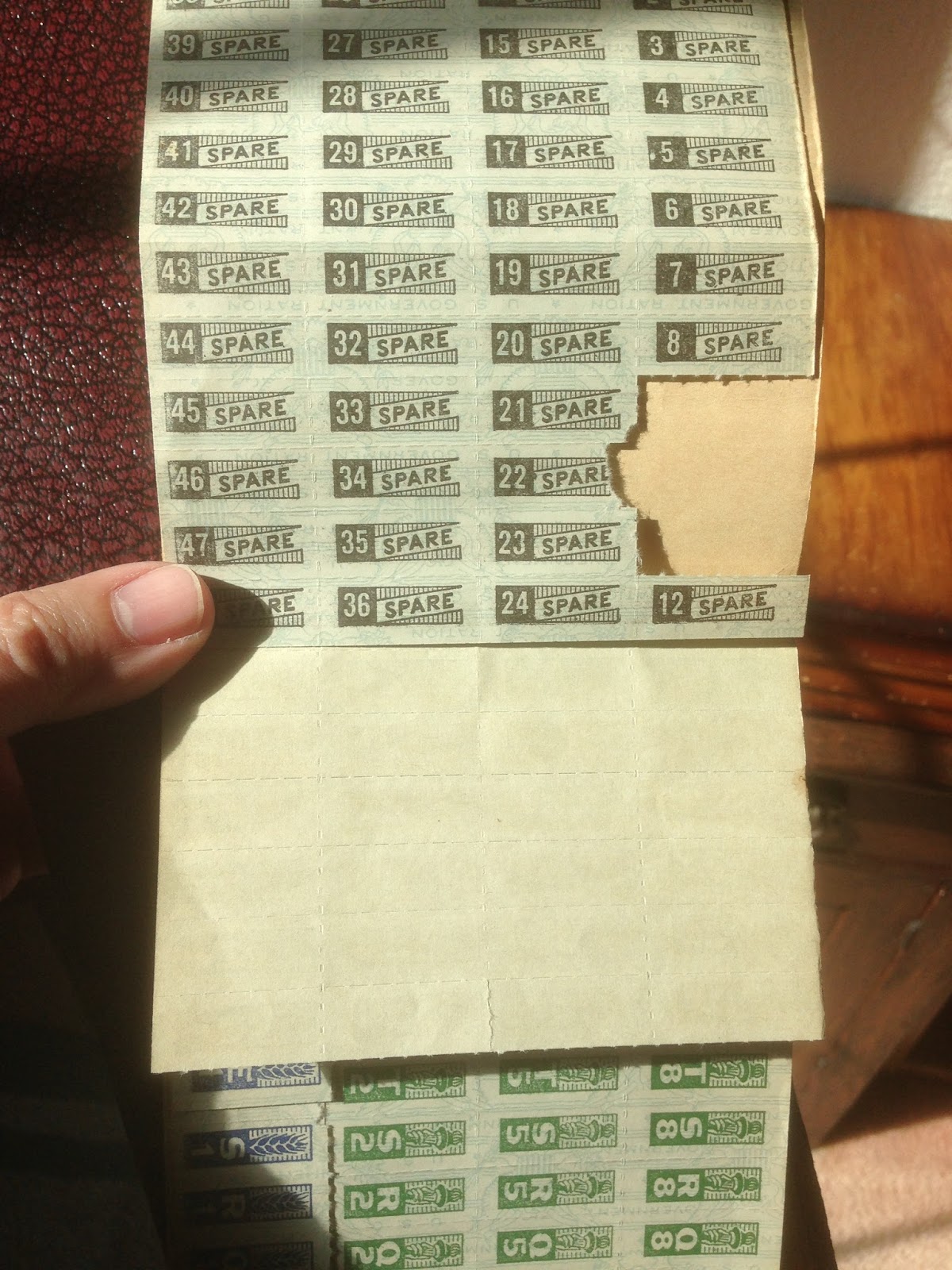
In an old box of family memorabilia, we found my grandparents’ 1943 World War Two ration books.


At the beginning of the Second World War, the Empire of Japan took over the rubber plantations of Southeast Asia. Suddenly, the United States found that all of the rubber we would ever have during the war—the duration of which we could not know—was the rubber that we had in 1941.  In particular, the Armed Forces needed rubber for tires. It became almost impossible for civilians to buy new tires. They did everything they could—including stuffing old newspapers into the tires—to make the old ones last. The government asked for donations of old tires, raincoats, gloves, and garden hoses as sources of rubber.

But the main act the government took to conserve rubber was to lower the speed limit. Starting on October 28, 1942, the Patriotic Speed Limit was 35 miles per hour. Imagine this: driving across the Mojave Desert without air conditioning, at 35 miles per hour. This is what my Mom and Dad had to do when Dad went from basic training at Ft. Sill, Oklahoma, to Camp Roberts, California. Can you imagine America accepting a 35 mph speed limit today?

Actually, we have recently had a conservation-inspired speed limit in the recent past. From 1973 to 1987, the national speed limit was 55 miles per hour. The purpose was to save gasoline, in response to Arab oil embargoes.

Although gasoline conservation was not the main reason for the lower speed limit in 1942, gasoline was in fact rationed: each vehicle could receive only 3-5 gallons per week, and the number on your ration stamp had to match that of the sticker on your windshield.

And don’t even think about buying a car. To get an automobile or appliance, you had to provide written evidence that you really really needed it. Even for typewriters—of which the war effort required a large number.

Meat was also rationed. Each person was limited to two and a half pounds of meat a week. My grandparents lived on a farm and raised their own crops and livestock, so they seldom bought meat, but in cities the meat shortage became very noticeable. In San Diego, Americans flooded into Mexico to buy meat. Then the Mexican government decided to build a big wall to keep out the Americans…wait, that didn’t happen.

The government was very serious about rationing. Each ration stamp book had not only the person’s name but also the age, sex, weight, height, and occupation, so that the person who had the book could be identified as the rightful owner. (Edd Hicks, 64, male, 145 pounds, 5 feet 7, farmer; Stella Hicks, 53, female, 170 pounds, 5 feet 6, housewife.)  And this was the warning label:

WARNING: This book is the property of the United States Government. It is unlawful to sell it to any other person, or to use it or permit anyone else to use it, except to obtain rationed goods in accordance with regulations of the Office of Price Administration. Any person who finds a lost War Ration Book must return it to the War Price Rationing Board which issued it. Persons who violate rationing regulations are subject to $10,000 fine or imprisonment, or both.

Can you imagine anything like this today? An Office of Price Administration? Many Americans would whine and howl, “The government can’t tell me what price to charge for my product! That’s socialism and communism.” The government only barely regulates bank interest rates, which are at a level that no one could have imagined in 1943. And the $10,000 fine (which was probably only used against major profiteers, rather than individuals loaning out a stamp or two to family or friends) was big money in 1943, unlike the fines that the government levies against financial corporations that break the law today—fines that are barely a blip in the profits they make from illegal activities.

Sugar was rationed. Almost the only reason anyone could buy a five-pound bag of sugar was to use for home canning—so that manufactured canned goods could be used for the war effort. This is the message that was on the back of the instructions:

WE MUST GET ALONG WITH LESS SUGAR THIS YEAR BECAUSE—

1. Military needs are high. Each soldier actually consumes twice as much sugar a year as the average civilian now receives.
2. Ships which otherwise might be bringing sugar into the United States are hauling supplies to the battle fronts.
3. Manpower is scarce at sugar refineries and shipping ports.
4. Beet sugar production last year was 500,000 tons short, making the stock of sugar smaller for this year.
5. Last year many people over-applied for canning sugar. We used so much sugar that stocks at the beginning of this year were abnormally low.

DO NOT APPLY FOR MORE SUGAR THAN YOU ACTUALLY NEED FOR HOME CANNING—HELP MAKE OUR WAR SHORT SUGAR SUPPLIES LAST ALL YEAR.

Here is another warning:

VIOLATORS of the Gasoline Rationing Regulations are subject to revocation of rations and criminal prosecution under the laws of the United States (emphasis theirs).


Today, we are not fighting a war against Nazi Germany and the Empire of Japan. But we do face severe challenges. We are fighting smaller wars. We face severe environmental challenges, especially global warming. And we have severe financial challenges as well. It is time for us to all come together and practice creative and joyful frugality. We need to do it for our fellow Americans, our fellow humans in the world, and for the survival of the planet. Many of us are already doing this; each year, more people recycle more things, and energy efficiency becomes more popular. And what should the role of the government be? The government should be the mediator of altruism. The government should level the playing field so that conserving resources is fair for everybody.

But there is a significant and visible minority of people, more in Oklahoma than many other places, who are so pissed off at the thought of conserving resources, and especially that the government might require them to do so for the sake of their fellow citizens, that they drive huge pickup trucks that spew smoke into the air. It is as if they are saying, “This is what I think about the Earth! This is what I think about my fellow human beings! This is what I think about God’s creation!” To them, freedom means the ability to waste the resources of the Earth and to show utter disregard for their fellow humans. If the government were to issue them ration stamps, they would probably get out their guns and start shooting. I believe that if I conserved, these people would come and take whatever I have at gunpoint. I seriously believe this. Not very many people would do this, but enough to submerge us into civil chaos. Had my grandparents, and my father and uncles who were all involved in the war effort, reacted in such a selfish way, the Nazis and the Japanese could have just walked right in and taken us over while we were fighting one another.

We won World War Two largely because of our internal altruism toward one another. I don’t think we have enough of it any more.