Showing posts with label social evolution. Show all posts

Sunday, March 6, 2022

Gorilla Lawyers and Jury Abuse

I grew up being idealistic about the American legal system. This was partly from watching nearly all of the Perry Mason reruns. And while I knew that it was imperfect, I felt at least that our system was, overall, an effective way of maintaining justice in America. I knew that problems remained with the oppression of minorities and women, but that America was making progress toward ever greater fairness in justice. It was, at least, a good system of determining whether a defendant was guilty or not.

My recent experience in a jury pool have completely changed my mind. Since I was way down the list, they did not need my participation and they sent me home on the second day. This was good, because I was already about to lose my composure. I will tell you what I saw, without divulging any facts of the case itself. I will tell you briefly about what I learned about human evolution from my brief jury experience.

The jury is a captive audience. Literally. Two members of the jury pool tried to leave, but within minutes they were back, though not literally in handcuffs. Jury duty is a civic responsibility just like paying taxes. But the jury is also a captive audience for lawyers to abuse. We had to submit to their verbal abuse. Here are examples.

The prosecution and defense are both expected to ask questions to determine the suitability of a prospective juror for any particular case. The prosecuting attorney asked several in the jury pool whether they would hold it against the defendant if no defense at all was presented. Several answered that they would consider the lack of defense to be evidence (though not proof) of guilt. This was enough to get both attorneys to request that these people be excused from the jury, since the law presumes the defendant is innocent until proven beyond reasonable doubt to be guilty. Fair enough. But for this prosecuting attorney, this was not enough. He asked one woman about this, she answered, and that should have been the end of it after thirty seconds. The prosecutor then verbally attacked the juror for several more minutes, reducing her to tears. This was totally unnecessary and should be illegal. But it appears that jurors have no rights; an attorney can verbally abuse them in a way that would not be acceptable in any workplace or social interaction outside the courtroom. But the woman had to put up with it until, just before lunch, she was among several jurors to be excused. One of the jurors (who had to stay) told me that she felt the jurors were on trial and themselves being treated like criminals. Certainly the defendant got more rights and respect than the jurors.

The defense attorney was no better. During his introduction, he said that one of the charges against the defendant was rape. “Oh, that sounds so scary, doesn’t it? Rape!” Rape, he wanted us to think, was not necessarily such a bad thing. Though I was not there when the trial began, I can just imagine that, with the same tone of voice and zeal, he would have torn into the victim and made her feel like she was being raped all over again. The point of the trial was not whether rape was bad; it was whether the defendant raped the victim. The defense attorney—who bore a striking resemblance to Edward G. Robinson from the old gangster movies—had us really angry at him. He was prejudicing us against his client.
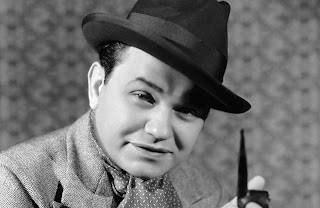

Only later did I realize what this had to do with human evolution. The lawyers, despite their membership in the species Homo sapiens and their rich clothes, were the equivalent of alpha male gorillas. They had a captive audience—jurors who had no choice but to be present and remain silent, jurors who had no rights of citizens: the lawyers, either defense or prosecution, could say anything they wanted, say things that, if I said them to my students, would get me fired (if I were not already so close to retirement), that if anyone other than one of the lawyers said them to anyone else in any other place, would get them disbarred. There is no such thing as protection from verbal abuse or aggression, from slander. Defendants have rights, but jurors do not. On paper, jurors are American citizens, but in reality, once a juror enters a courtroom for jury selection, he or she has no rights. This is the perfect dream of an alpha male. An alpha male gorilla has to earn his status, but in a courtroom, this status is accorded him by law. He does not have to be nice to anybody, and therefore seldom is. There are two rewards for being a courtroom lawyer, whether prosecution or defense: first, big money; second, the joy of humiliating a group of captives who have been pummeled into meekness. The fantasy of an alpha male lawyer: to be able to humiliate women and get away with it, because they are required by law to submit to him.

I’m not convinced law enforcement officers are any better. Our house was burgled, and my wife saw the burglar run away. He had forced his way in through a side window, which was locked and which was held shut by vertical dowel rods in the sides. But he used a lever to exert a force strong enough to break the rods. We had taken reasonable precautions to secure our house. But when the police came, one officer told my wife that she should have had the front storm door locked. The door itself was locked. But the burglar had come in through a secured window, not the (also secured) front door. The policeman had to find some way to scold the victim. Some, though presumably not all, police officers are male gorillas who like to demean female crime victims. No investigation was ever undertaken, as far as I have been able to determine.

I began my jury experience with a modicum of hope, thinking that perhaps the system worked, however imperfectly. My most modest expectations were dashed. But I left with an unexpected modicum of hope. I was expecting a random selection of 60 Oklahomans to be a sorry bunch—racist, offensive, loud. Maybe that is what I would have seen in a rural Oklahoma setting. But this was in Tulsa, along with Norman the little oases of decency. With few exceptions, the jury pool consisted of sincerely good, fair, intelligent people. Some of them had experienced tragedies in their lives, such as divorces, or the murder of a child. The lawyers made sure that every detail of each of these tragedies was entered into the court record. Are you trying to tell me that the fact that your daughter was murdered will not influence your ability to reach a fair decision in this case? You must be a biased and bitter person if your daughter was murdered… Okay, the lawyer (I forget which one it was) didn’t say the second thing, but lashed into the poor, old mother—a black woman—with unmitigated vigor, actually saying the first thing, only implying the second. That poor woman’s only comfort was a fellow juror (the other woman who had been reduced to tears) who put her arm around the woman’s shoulders as she wept. I really like and respect the fellow members of the jury pool, therefore of the final jury that was soon to hear the lawyers bend the truth. I believe that these jurors will reach a fair decision in this case by largely ignoring the lies, antics and assaults of the alpha male lawyers.

Another modicum of hope. A small percentage of lawyers offer pro bono services to help poor and oppressed people, especially women. I know individual examples of lawyers who are heroes of goodness. And there are some organizations. Just one that I have heard of in Tulsa: Still She Rises—Tulsa. But they are generally underpaid and powerless. They are the secret Underground Railroad in the Confederacy of Lawyers. We are lucky to have them.

Wednesday, May 19, 2021

Big Headlines! Why America Will Never Convert to Electric Vehicles

It’s the big headline today! Ford is going to formally announce its new all-electric F-150 pickup truck! Oh, can’t you just barely contain the excitement! Yesterday, President Biden took one for a test drive in a lot where everything a 78-year-old man might run over had been removed.


This year, General Motors announced that it plans to phase out electric vehicles by 2035 and manufacture only electric vehicles. (Note: this site may have a paywall.) I here briefly explain why this will not happen.

It is true that hybrid and electric vehicles get much better fuel efficiency, without sacrificing maneuverability, than gasoline vehicles. Anyone like myself who has driven one will attest to this. I enjoy my hybrid more than any car I have ever owned. Mine is a Prius but I have no reason to doubt the quality of other brands.

But it will never happen in America, or at least in Oklahoma.

This is because, in America, the purpose of a vehicle is not only, perhaps not mainly, transportation. At least where I live in Oklahoma, the major purpose of a vehicle for many people is not transportation, but to express dominance, fury, and frustration to everyone within hearing or collision range.

Redneck Okies love to drive around big, noisy, fuming trucks even when they have nowhere they need to go. They drive them fast, which means they sometimes cannot control them. For this purpose, an electric vehicle simply will not work.

First, the vehicles have to be big. Size itself should be no deterrent to the adoption of hybrid and electric vehicles. Rednecks think that nobody can admire them if they drive a small vehicle. By actual count, about one-third of all vehicles I have seen in Oklahoma are big pickup trucks. Therefore, most electric vehicles will be unacceptable to redneck Okies though perhaps to other Oklahomans.

Second, the vehicles have to be heavy. One of the ways in which hybrid and electric vehicles get good fuel efficiency is by using lightweight components. But redneck Okies want to have not just large trucks but heavy ones. The reason for this is that they want to express their fury by driving around a vehicle that can bash other vehicles without harming their own. To them, the entire system of roads is a potential demolition derby. This, at least, has been my experience. In my family, we have had collisions that were not our fault on four occasions in the last couple of decades. In each case, the driver was a white man with a larger vehicle, on two occasions a large truck. One of those collisions—very recent, and an ongoing source of grief—was a hit-and-run in which the white man with the big pickup drove away from the scene, after causing an injury. The victims were my daughter, son-in-law, and two grandchildren. In another case, my vehicle was totaled by a pickup truck that did not get even a scratch—and the driver had false insurance cards. In none of these cases did the police actually seek out the drivers. It was, instead, the insurance companies that did so. Public safety does not matter; only profit. But at least there is profit in the service of public safety, from time to time. In order for a pickup truck to crush a smaller vehicle, it does not need to just be large but to be heavy. Electric and hybrid vehicles, even when large, are relatively light.

Third, the vehicle has to produce a lot of noise. The redneck drivers want everyone around them to hear their dominance, fury, and frustration. At both of my residences in Oklahoma, there is nearly a constant stream of big pickup trucks that are extremely loud. The drivers want us to admire them—and they assume everyone admires a loud truck. Maybe the redneck guys think they can get a gal that way. “Oh, wow, he must be such a man—he can push down a gas pedal!” Whether there really are any women who are that stupid or not I do not know. When I see the looks on the faces of the drivers, I sometimes see fury and frustration. Electric and hybrid vehicles are quiet. By actual count, at least half of the beg pickup trucks I see are loud. The technology exists for even a heavy truck to be quiet, as about half of them are. But a quiet truck is, to the rednecks among Oklahomans, unacceptable.


Fourth, the vehicle has to produce a lot of fumes. A truck with good fuel efficiency cannot produce fumes. Fumes are a way for the driver to create a space of dominance around him an to antagonize other people.

For these four reasons, hybrid and electric vehicles will never predominate in Oklahoma, unless there is a complete, and nearly impossible, shift away from the redneck culture. Here in Oklahoma, we still fly confederate flags, for God’s sake (at least the rednecks think it is for God’s sake).

Thursday, September 1, 2016

The Evolution of Isolating Mechanisms, as Observed in France (or, The Cheese)

This is another in my series of essays about what I learned in France. Be prepared for some surprises.

In an earlier essay, I explained that geographical isolation has led to speciation: for example, both France and America have maple trees, but not the same species. The Atlantic Ocean keeps the European and American species from intermixing.

But another major force in evolution is isolation caused by actual biological or social processes. These are isolating mechanisms. These mechanisms permit members of one group—which may later become its own species—to recognize other members of that group, and to distinguish them from outsiders. Isolating mechanisms have led to a great amount of evolutionary diversity. For example, most mating behavior functions in this way. When a male and female blue-footed booby get together, how does the female booby know that the male is really the right species? You’d think the big blue feet would be a dead giveaway, but no—she expects him to go through a silly and humiliating booby-dance.

Humans are the prime example of isolating mechanisms. Human social groups have many, complex, and difficult behaviors that take a lifetime to learn and therefore label an outsider as an outsider for life. I discovered this in France. I will never ever ever be French.

In many ways, I am pre-adapted to be French. I already drive a small car, and am satisfied with modest luxuries and being quiet. I already treat food as an experience rather than as just a way to stuff my face. An American driving a big fuming pickup truck and yelling loudly would never fit in to French society. But I am not that kind of American.

But I will never be able to communicate fluently in French. Many languages communicate primarily by consonants. Hebrew even omitted the vowels and just wrote the consonants. But in French, most of the consonants are ignored, even the ones that, according to the rules, should be spoken. Many of the syllables are dropped. For example, commençaient (they began) is pronounced “ko-mans” (you can barely hear the s), just like commence (I begin) and commencent (they begin). In commençaient the final five letters are silent and usually the final six. I can read most things in French but understand hardly anything that I hear.

But French has about thirty different vowel sounds. Some of them are easy to distinguish. Everyone knows that eau and eaux and os and and ou and eu and eux all sound different. That’s the easy stuff. But there are other examples, even more subtle, about which I would tell you except that I don’t know what they are. If you use a slightly incorrect vowel sound, they will not understand you. Maybe in Paris they will rudely pretend to not understand you, but in Strasbourg, they really sincerely politely do not understand you.

And if you cannot handle those vowels, you are no more a Frenchman or woman than a catbird is a mockingbird—close relatives, but unable to speak to one another.

Another cultural feature that weeds out the outsiders is cheese. There are certain kinds of cheese in France that are so ripe that, as I understand, it is illegal to export them to America. An example from the Vosges Mountains, near Orbey, just southwest of Strasbourg, is Muenster cheese. It was invented in the Muenster Valley, of which I posted photos in an earlier entry. Oh, you can buy mild stuff that is called Muenster here in America. But the stuff in France has a fragrance that fills a room even if it is wrapped.

Real Muenster cheese, some French are proud to say, smells like shit. And it is something that is overwhelming even to many French. A family that hosted us to dinner on our final night in Strasbourg (a wonderful family, who got out the special 1971 wine and treated us royally, a family of intelligent, creative, polite people) told us the story of how one of them took a well-wrapped piece of Muenster cheese onto a train compartment. Nobody would share the compartment with them except a young family with a baby. The young family immediately checked the baby’s diaper and, finding it clean, glanced over at my hosts and quickly left. I repeat, they told us this story proudly. (I swear it’s true. You can’t make stuff like this up.) They also found that you can smuggle anything you want (even though they did not actually do so) if you put it under some Muenster cheese. Then they unwrapped some for us. I just politely watched the others eat it. It was expensive and they were saving it for a very special occasion, which was us.


You can study French in college, but you may never be able to learn the subtleties of French speech, and you will probably never learn to love, really love, the kinds of French cheese that are illegal in America. You will never be French unless you already are. So don’t try. Instead, you should try being exotic. If you are part Native American, you will be revered as a curiosity. I got pretty good use of the only two words of Cherokee I know (osiyo and wado) and from the story about my grandfather having a Cherokee name (Tsisqua). If I ever move to France, I will put a dream-catcher in my window.

Friday, May 13, 2016

Another Arms Race of Social Evolution: Getting Published

In order to get something published, you have to first get noticed, whether by an editor of a magazine, or an agent, or an editor at an academic publisher (these publishers still prefer direct submissions from authors). So when you write a story, you have to catch the attention of the reader—usually, a reader who has already looked at a hundred other submissions that day. This is a process of social evolution.

And it is a process of accelerating social evolution—an arms race of social evolution. As time goes on there are fewer publishers of literary or academic works, and more authors. This means that authors have to keep going to ever greater lengths to get noticed.

To a certain extent, this is good. Take a short story, for example. It has to have an interesting beginning so that the reader, who has many other demands upon his or her time, knows whether to keep reading. It is simple courtesy on the part of the author to have an interesting start to the story. It is truth in advertising: if the story has an interesting middle, it should be visible at the beginning. In chemistry, one would call it activation energy: you have to put a little more energy into the reaction to get it started, and then it will go to completion with its own energy. The publishing arms race is driving poorly-written stories—at least stories with poorly written beginnings—to extinction. But the expectations for what has to happen in the first paragraph are getting excessive, as I here describe.

Unfortunately, one of the unsuccessful approaches to writing a story, which is falling by the wayside, is to begin at the beginning. I recently pulled out of my files a story that I consider one of my better ones. It begins with an interesting scene, in which a food chemist tastes a totally unexpected new kind of honey, and decides to track it to its source. But the beginning does not give any idea of what the story is going to eventually be about (the discovery of a tribe of Homo heidelbergensis people in Madagascar). I realized I had to change this, and start in the middle, where the main male character, the origin of the point of view (which insiders call POV), sees the pre-human woman with whom he develops a complicated and intense relationship. He is in the archaic-human tribe, and thinks back over the events that brought him there. In this way, I offer the reader a glimpse of what they can expect if they read my story. And I have to deliver on the promise in due time.

(As an evolution educator and writer, I consider fiction to be an excellent way of exploring not only the facts of human evolution but questions about what it means to be human—questions that we will never be able to test through direct scientific investigation.)

Getting to know a story is like getting to know a person. It is a relationship. And the most intense relationships, with people or with stories, are the intimate ones. Let us consider the trajectory of a relationship that becomes intimate. How does it develop?

The way such a relationship cannot successfully develop is to begin with the setting—to describe a house, or a neighborhood, or even (despite my botanical inclinations) a forest. In this sense, a story is like a person: if you meet someone interesting, it is not because you saw the person’s house first (unless it is unusual and part of the plot). And the relationship must begin because there is something appealing, to you, about the person. The world is so full of people that you cannot start making new relationships at random. In the case of a potentially intimate relationship, there has to be something romantically enchanting about the person. A good story, therefore, often begins with the appealing person doing something interesting that reveals something beautiful—bodily, or mental, or both. In the case of my story, the main male character looks into the face of a woman who is beautiful but in a way very different from what our species may think. Is her look pity, or is it love?

But as a writer without an impressive list of fiction publications—four of them, all in magazines cheaply published and now extinct—I feel pressured to start with something more compelling. I feel that I have to begin, at least a little bit, with sex. That’s the only thing, it seems, that can make my story stand out among the ten dozen others submitted to the science fiction website that day. The only question is how much sex. My story does, in fact, have a sex scene, though not a graphic one; after all, from the head on down, Homo heidelbergensis was pretty much like us. The other way to start a story these days is with a violent conflict in which the hero or heroine is in the midst of mortal combat—or a chase scene, only my story has no such element in it.

But I refused to begin with the sex scene. Instead, I merely added a little sex—not gratuitous sex, but relevant to the story—to the scene in which the man looks into the woman’s face. He notices her breasts and her strong shoulders. And she caresses him, to help heal his injury. (Stories should not have gratuitous sex or violence because there is no room for any gratuitous anything in a story.)

Getting to know a story is like getting to know a person, as I said. There has to be something appealing to capture attention. But the marketing of fiction by means of sex is unethical for the same reason that it is unethical in the start of a relationship. Try to imagine a society in which the very first step in forming a relationship is for the potential partners see one another naked before even meeting. However common this might be, it is not a good way to start a meaningful relationship, but only as a prelude to a sexual encounter. Open sex is the way to begin porn, not a short story. There are specialized publishers for porn. I do not believe that all short stories will go this far, though, of course, I could be wrong.


So I am going to submit my story with a beginning that has the slight hint of sex but not the full thing. I want my readers to be rewarded with something better in the middle and at the end than they experienced in the beginning. But we’ll see how it goes. My reasonable approach might simply get my story eliminated from consideration.

Friday, June 6, 2014

The Red Queen Strikes

Lewis Carroll’s Alice encountered the Red Queen, who had to keep running just to stay in place as the world around her kept moving. Many evolutionary biologists, starting with Leigh Van Valen, used this imagery to describe how populations have to keep evolving just to stay where they are. The reason is that their biological environments keep changing. So if you can imagine a population of animals perfectly adapted to their physical environment, they must keep evolving new defenses against parasites. The parasites, being primarily small organisms with rapid life cycles, can evolve faster than most of their hosts. Confirmation has come from the fact that populations of animals such as snails that encounter more parasites are more likely to have sexual reproduction than populations with fewer parasites, which might reproduce without sexual recombination.

We live in a social environment with its own, and rapidly accelerating, version of the Red Queen. We are constantly evolving (by memes, not genes) new technologies that allow faster information transfer and processing, better medicine, etc. But even if we choose to remain in place—if we decide that what we have is good enough—we cannot do so, because our social environment is full of rapidly evolving parasites. Parasites in cyberspace continually evolve new ways to steal our personal information. Even corporations that consider themselves legitimate are always coming up with new plasmids in the fine print that allow them to charge us extra fees, or new designs that promote built-in obsolescence, or new attractions that make us think that we want their products when, honestly, we do not. You want to buy whole wheat bread because it is healthier? Better check to see just how much whole wheat is in it; the dark color may mostly be caramel. You have to be careful when you run your free AVG virus-check on your computer, because it will automatically sign you up for “protection” that is not free unless you take the initiative to uncheck the box. An anti-virus virus, as it were. You have to be careful when you go to a medical provider. No matter how small your problem, the provider may try to prescribe for you an expensive course of therapy.

Our economy is a jungle of parasitic perils. We have to watch every transaction, every account, all the time to catch entities that accidentally-on-purpose take money from us. Durant City Utilities charged me an extra $100 for water I did not use. I pay these utilities by automatic debit, and had I not scrutinized every transaction, I might never have caught their error, an error they admitted once I pointed it out to them. No matter what I do or don’t do, no matter how much stasis I may choose in my life, the economic environment is coming up with new ways to parasitize me. And you. No wonder it’s hard to get work done; we have to spend our time being paranoid about economic parasites. It’s sort of like a war.

What can we do, not just to protect ourselves but to go to war against the threats we face? I suggest we take stock of our strengths and opportunities, and use them. You may have more power than you realize. One thing we can do is to write letters to corporations and tell them that we know what they are doing to victimize us. In some cases, we can make them take notice. When I sent a nasty note to AIG, back when they were getting government bailout money while paying millions of dollars to their executives, they undoubtedly ignored it. But if I write a letter to a tobacco corporation saying that I teach hundreds of students not only about the dangers of tobacco but also about the illegal tactics that these corporations use (including their 1994 perjury to a House committee), they might take notice. They might take even more notice if I share contact information with my students so they can write letters too. Better yet, I can offer extra credit to the students. Or I can write and encourage others to write to sugar corporations about their deceptive marketing of a product that is dangerous in the excessive uses that they promote. We can, you see, go to war with them in the marketplace of ideas and consumer spending.

The marketplace is also filled with a cultural version of mindless parasites. The “people” with whom you interact may not even be people. When I first opened a Twitter account, I immediately had two followers whom I did not know, who had female names but no bios, and photos without faces (just alluring body parts). They soon disappeared. They were probably “bots” rather than actual people. And every writer has probably had some version of the experience I am about to relate. I sent a query letter to an agency listed in Writers Digest, but which had no website. I got a response back from what sounded like a personable agent saying, your project sounds interesting, send us the first couple of chapters. I emailed back, requesting further information about the agency. In response, I got exactly the same email as before. It appears, based on the online comments of other authors, that this agency is just a front for a law firm that thinks authors will pay them to represent their work to editors whom the author must contact. I wonder how many “literary agents” actually do not exist.


It would be nice if we could leave our parasites behind the way rotifers do, by just drying up and blowing away in the wind, leaving our fungi behind. But for us to survive in a Red Queen world of corporate parasites, we need to be constantly vigilant (trying not to slip into paranoia). We also need to fight back.

Thursday, December 19, 2013

Darwin at the Mall


Ho ho ho. The Christmas shopping season is upon us. Greetings from someone who doesn’t enjoy shopping. I’m no Grinch or Scrooge; I just do not enjoy materialism. A walk in the woods, or reading or writing something creative, is much more enjoyable to me than a trip to the Mall. I enjoy receiving gifts, but not all that much. I am sort of like the Dalai Lama on his birthday in the cartoon: he said, “Just what I always wanted! Nothing!” as he looked into an empty box. But it was recently necessary for me to go with my family to the Mall, and when I did, I decided to use it as an opportunity to observe the human species from the viewpoint of an evolutionary biologist.

In Tulsa, “The Mall” usually refers to Woodland Hills Mall at 71st and Memorial. The first thing I noticed was how many clothes retailers there were, each with its own brand. As far as I could tell, all of the clothes that they sold were more or less alike, except for either (1) a status label, or (2) subtle messages that are meaningful only to the sender and the receiver of the message. Right away this reminded me of the 1981 discovery by Nancy Burley that the simple act of putting a red leg band on a male zebra finch would enhance its success of mating. Although this effect has recently been called into question, it remains a memorable example of how something as arbitrary as a leg band can turn out to be a social signal to animals. In many birds, bright feathers are indicators of health. But the exact form of the indicator in one animal species may be meaningless to another. We think it quaint when we read about the Mayoruna tribe in the Amazon decorating their faces with cat whisker tattoos and even embedding palm fibers in their lips like cat whiskers. But to them, our flaunting of brand name clothing would seem as incomprehensible as their decorations seem to us. Of course, they are probably now wearing American brand-name T-shirts and shorts, having been brought into the splendor and comfort of western civilization.

At the same time, many of the businesses appeared nearly desperate to come up with something new other than just to sell the same items as everyone else. In these cases, it is innovation, not just a label, that is the status marker. However, innovations can be just as arbitrary as labels. Just how much innovation can you have in a wristwatch? You can make them into timepieces with atomic accuracy. Or you can replace the hands with little bubbles on an analog face; a large and a small bubble revolve around the center of the watch face. And there was a shop that sold many interesting and wonderful flavors of tea. But after awhile, all the different fruit and flower flavors start seeming alike. Enter monkey-picked tea. This is tea made from the youngest leaves of the tea trees, which grow on branches so delicate that only trained monkeys can harvest them. I tried some; it tasted like tea. The only value of this type of innovation would be if the recipient knows that the tea leaves were picked by monkeys. These innovations are mostly valuable as status symbols.

Perhaps the main products being marketed at this mall are placebos. The labels and innovations do not produce a qualitative difference in the products, but the shoppers can easily imagine that they do. They imagine that monkey tea tastes different from ordinary tea if, in advance, they know that it is monkey tea. It is well known that even many expert wine-tasters will choose wines they think are expensive, even if the wines are cheap brands in expensive bottles. In one corner of the Mall, there were a few shiatsu-massage chairs into which you could insert a dollar and try them out. I gave one of them a try, and found it to be annoying, perhaps because I am not shaped like a typical American and the pokes and nudges touched me in the wrong places. It goosed me a couple of times. I wonder if  “shiatsu” is Japanese for “placebo.” While there is no doubt that massages feel good, I am skeptical that there are “shiatsu points” of special significance on the body. I watched a young Thai mother of four trying out the chair as her kids pommeled on her. The chair evoked an artificial lordosis from her as she was transported into ecstasy. It worked for her. Or maybe it was just her kids tickling her. I wondered whether I should even be watching her.

Finally, I noticed that even though I’d come without the intention of buying anything, I ended up spending a couple of hundred dollars, largely on status and placebo items. Social forces act upon our behavior in ways of which we are hardly conscious, and sometimes despite our best efforts to be conscious of them.


I bought some items at See’s Candies. At last here is something that is truly different and superior: I have tasted many kinds of candy, but none can measure up to See’s. As I tried a sample, I kept asking myself if I was merely experiencing a placebo effect. If I was, it was despite my best effort to be objective. But this purchase accounted for only about twenty dollars of my total expenditure. When I got home, I was not sure how I ended up spending sixty dollars on candles. Evolution has adapted us with flexibility to adjust to changing social environments. The social environment is our human environment; we create it, and it creates us.