Showing posts with label virus. Show all posts

Wednesday, June 24, 2026

Blood-Brain Barrier: Stories from the Borderlands of Science, story 3. Flow of Blood

This collection of short stories by Stan Rice, who is also the author of nonfiction books of popular science and science novels, takes the reader to the frontier between science and worlds of the impossible. Readers of my science blog will appreciate the creative telling of scientifically impossible stories; readers of my religion blog will appreciate the question of whether, even if these things were possible, would they be good?

The stories in this collection are The Man Who Could Work Miracles and Light Apparel (reviewed earlier), Flow of Blood (reviewed here), Wisdom Builds Her House, Rock Bunnies, Entropy, Olga the Science Cat, Doghouse, and Fresh Air.


In Flow of Blood, the science is not impossible, as was the case with the two previous stories. It is about a viral fever killing people in Africa, including graduate students trying to stop it. As I write these words, the ebola virus is spreading almost uncontrolled in the Democratic Republic of the Congo.

Perhaps the most important plot component of this story is racism. The white male grad student was raised to be a racist, until he meets and loves a black female grad student from Africa. He goes with her to study and fight the disease in her birth village. He becomes ill, and she goes back to Kansas to be with him. His family at first rejects her, thinking that Africa is where all viral diseases come from. But they have just suffered another loss: another son has died of a viral fever, but this time it was the American hantavirus. This shared experience of death brings them together.

Medical science is not just about germs and medicine, but about the struggles and perils of real people. And sometimes it takes a medical tragedy to bridge the gulf of racism.

Wednesday, January 5, 2022

A Future Full of Plagues


Happy New Year, y’all.

The late nineteenth and the twentieth century was an amazing time of medical progress. Nearly every disease at least began to submit to scientific eradication. Not just infectious diseases, but cancer and nutritional diseases also. It seemed as if nothing could stop the progress of medicine.

But, it was apparent by the late twentieth century, one thing could stop the progress of medicine against bacterial diseases: the evolution of antibiotic resistance. Many bacteria that cause disease (which most do not) evolved resistance against many antibiotics, rendering them obsolete. This actually occurred by the process of natural selection: resistance evolved. By the end of the twentieth century, two things became apparent. The first is that we needed to keep developing new antibiotics. The second is that we had to decrease our reliance on antibiotics.

With regard to the first, we have done an inadequate job. Private pharmaceutical companies have not been developing new antibiotics as rapidly as the old ones become obsolete. This is because new antibiotics are not profitable. When a corporation develops a new antibiotic, it has a limited time span of use. First, each patient takes the antibiotic for a limited time, usually ten to fifteen days. Second, after a few years, the bacteria evolve resistance. It is much more profitable for pharmaceutical corporations to develop and market new drugs against diseases that cannot evolve resistance, and for which the patient must take the drug every day for the rest of his or her life. An example would be depression. The result is that our “armamentarium” (medical historians like military metaphors) of antibiotics is growing smaller each year.

With regard to the second, there are clearly things that we can do. Doctors used to prescribe antibiotics with little regard as to whether they were necessary. Since antibiotics do not work against viruses, doctors began to prescribe antibiotics only after they knew the infection was bacterial, not viral, in origin. This was and continues to be a good thing. But another thing we can all do to reduce the use of antibiotics is to prevent the spread of diseases.

There are many ways to reduce the spread of disease, and everyone knows what they are. As the covid pandemic broke out, and before vaccinations were available, we were told to practice social distancing and to wear masks. These practices were very effective, so that covid incidence began to decline even before vaccinations were widely available. It is now very clear that we can reduce our dependence on antibiotics by using vaccination, masking, and social distancing to control the spread of bacterial diseases. If we do these things, the old antibiotics will become obsolete more slowly, or, if we are lucky, not at all. Penicillin almost became obsolete, but it remains effective for some uses even after almost eighty years of use.

But there are no antibiotics against viruses. For viral diseases such as the various kinds of coronavirus, we have only vaccination, masking, and social distancing. That’s it. (Well, there is one alternative: massive dieoff, in which natural selection produces a resistant population of humans. I have actually had people tell me that this is an acceptable solution to the problem.)

Political conservatives in many countries, however, have shown hostility against all three of these ways of preventing the spread of disease. The Islamic fundamentalists have been rejecting vaccination for decades, with the result that many diseases that could have been eradicated are still in the world. And now Christian fundamentalists, and fierce conservatives (often the same people) reject masking, social distancing, and vaccination with unbridled fervor. They would, literally die—and have you die, too—than to participate in any of these.

New infectious diseases will come along. They always do. And when the next one comes, millions of fierce conservatives will make sure that the disease gets a free ride to spread through the world as much as possible. It is almost as if death from covid (even their own deaths) are a badge of honor to them. If the disease is bacterial, these conservatives who would rather die than to wear a mask will get the germs to spread faster than antibiotics can be used to control them.
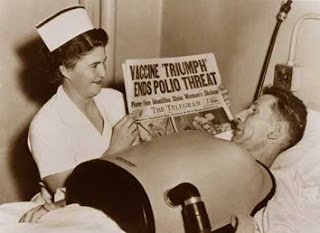
The nurse in this photo is showing a headline to a man who is confined to a ventilator because the polio virus destroyed the nerves that allowed him to breathe. The news came too late for him, but the nurse intended it as good news that, at least, the next generation of people would not have to suffer from polio. Neither of them would have guessed that millions of people would consider the polio vaccine to be evil. When Edward Jenner developed the smallpox vaccine; when Louis Pasteur developed the rabies vaccine; when Jonas Salk developed one of the polio vaccines—they could not have imagined that people would consider them evil and actively work against them.

We are, it appears, entering a new dark age of plagues. We have political conservatives to thank for it.

Wednesday, July 15, 2020

Why Fundamentalists Must Believe the Coronavirus Pandemic is a Hoax


I have posted a video that describes the ideas below.

Thousands, if not a million or more, fundamentalist Christians in the United States believe that the coronavirus pandemic is a hoax that has been started by Democrats to make Donald Trump look bad. Part of this is because white evangelicals have, as the title of a recent book indicates, chosen to “worship at the altar of Donald Trump.” In some cases, fundamentalist belief that there is no coronavirus pandemic has led them to acts of aggression, as certain recent viral videos have shown.

But there is another reason that fundamentalists MUST reject the fact that the coronavirus pandemic is caused by a virus. And that is because the Bible says so. I first pointed this out in a blog entry in 2012.

Actually, the Bible does not say that there is no such thing as viruses, or that they never cause disease. But I present below the evidence that the New Testament describes one-third of all diseases as being demonic in origin.

Here is a complete list of Jesus’ healings, in which I indicate which ones were and were not attributed to demon possession. In order to do so, I have tried to determine which of the parallel Gospel accounts refer to the same event, so as not to double-count them. And here they are (demonic events in bold).


Event
Matthew
Mark
Luke
John
1
Healing a leper
8:1
1:40
5:12

2
Centurion’s servant
8:5

7:1

3
Peter’s mother-in-law
8:14
1:29
4:38

4
Same day: demoniacs
8:16


5
Gadarene swine
8:28
5:1
8:26

6
Forgave the paralytic
9:2
2:1
5:17

7
Resurrected ruler’s daughter
9:18
5:21
8:40

8
Woman with hemorrhage
9:20
5:24
8:43

9
Two blind men
9:27


10
Dumb demoniac
9:32

11:14

11
Man with withered hand
12:10
3:1
6:6

12
Blind dumb demoniac
12:22


13
Canaanite woman with demon daughter
15:21
7:24


14
Epileptic boy falling into fire
17:14
9:14
9:37

15
Blind men near Jericho
20:30
10:46


16
Demoniac near Capernaum

1:21
4:31

17
Deaf dumb man, Decapolis


7:31

18
Blind man at Bethsaida

8:22

9:1
19
Young man in his funeral


7:11

20
Another woman with flux


13:10

21
Man with dropsy


14:1

22
Ten lepers


17:11

23
Official’s son


4:46
24
Lame man at Bethsaida


5:2

I cannot be sure of some of the classifications; item 23 might be the same as item 2, but I have erred on the side of caution in favor of fundamentalists; item 2 refers to a servant, item 23 to a son, which most of us believe could just be a garbled transmission of the account, but fundamentalists do not believe garbled transmission is possible in the Bible. I have omitted the famous account of Lazarus, since it was considered an example of a resurrection, not a healing.


The point here is that seven of the 24 healings were specifically described—in all the parallel accounts available—as the casting out of demons. This is 29 percent. If you count the stories separately, 14 out of 46 involve demons, which is 30 percent. That is, in roughly one-third of the healings, exorcism was involved. In one of them (14), clear symptoms of epilepsy are described.
Creationists make a really big deal about evolution. Decades ago, they wanted to outlaw the teaching of evolution. When that didn’t work, they tried to mandate equal time for creation and evolution. When that didn’t work, they wanted to mandate the inclusion of a mention of creationism. Clearly, over the decades, evolutionary science has been their target. More recently, they have begun attacking the science of global warming with nearly as much fervor as they once attacked evolution.
But they didn’t have any trouble with medical science. Their children learned about how viruses, bacteria, protists, fungi, and parasitic worms cause contagious diseases, and how mutations can cause other diseases—in medical school, in college, in high school, even before high school. In none of these places, except perhaps their own schools and colleges, was demonology mentioned. I have never heard of fundamentalists trying to get legislation passed to mandate the inclusion of demonology in the medical science curriculum. They chose to allow a figurative interpretation of, or perhaps just to ignore, those Bible passages that attribute disease to spiritual causes. Fundamentalists occasionally attempt exorcisms, but they never insist that the rest of us agree with them.
How can the creationists do this? They think that God has given them the right to decide which parts of the Bible to take literally and which parts to take figuratively. “Day” is literal in Genesis 1 and figurative in Genesis 2; “the Earth” was figurative in Peleg’s day but literal in Noah’s day; and natural law accounts for the wind and the rain and diseases but not the origin of species.
I wondered, in 2012, what God would do without fundamentalists to tell us which parts of the Bible to believe and which ones not to believe. But now I know. They have embraced a literal Bible interpretation to such an extent that they reject medical science, except when they get sick. There are more stories than any of us can list of fundamentalist preachers rejecting the coronavirus pandemic, only to themselves die of covid.

Friday, March 10, 2017

Balanced Pathogenicity in Shangri-La

When I first learned about balanced pathogenicity back in the 1980s, it made me feel good about the world. This is the process in which germs evolve into milder forms over time. Natural selection favors the milder strains of germs because they can spread more readily. Any germ that kills its host is at a disadvantage. There are many examples in which diseases used to be very virulent, but today they are milder even without vaccination or medication. Examples include smallpox, which in Europe and North America evolved into a mild disease; leprosy, which today is a slow skin disease but used to kill people quickly. There are even diseases such as the “sweating sickness” that had major outbreaks in Europe in past centuries but appears to have evolved itself out of existence (it persists only in very mild forms): there are no diseases today that have exactly those symptoms. Balanced pathogenicity was part of the balance of nature in a blessed world.

Or so I thought. That’s what I wanted to believe.

Then I started learning about the exceptions. Waterborne diseases such as cholera do not evolve into milder forms. Insect-borne diseases may evolve into even worse forms. So I had to change what I taught and wrote: balanced pathogenicity applies to diseases that spread to a new host by close proximity to the victim. My main example was ebola, which, I thought, will evolve into a milder form since the worst forms of it keep healthy people from coming in close proximity to the victims.

But it turns out that even ebola can evolve into a worse form, as explained in this article by Carl Zimmer. I suppose that this evolution of worse forms of ebola is a temporary reversal of the overall trend of balanced pathogenicity. But I am now having to make so many “exceptions to the rule” that I am beginning to wonder how much of a pattern balanced pathogenicity really is.

My original feeling about balanced pathogenicity came about because I wanted to believe that there was a fundamental goodness to the world. Bad things happen, but within them is the seed of a better world. This was partly because I got my optimism from the same source that I got my original information: Rene Dubos. I learned about balanced pathogenicity by reading his Man Adapting and Celebrations of Life. He was a scientist and informal philosopher in the same mold as Lewis Thomas. A great thinker. But his “gospel” was that evolution ultimately produces a better world. I wanted very badly to believe that evolution was a good process that God incorporated into a good world. But the world in which evolution works for the Greater Good is more of a Shangri-La than a real world.


Balanced pathogenicity happens, except when it doesn’t. Evolution makes the world better, except when it doesn’t. Creationists look for scientific reasons to believe God is good. Theistic evolutionists look for scientific reasons to believe that evolution produces goodness that God intended. In this particular sense, I am not sure that theistic evolution is much of an improvement over creationism.

Friday, June 6, 2014

The Red Queen Strikes

Lewis Carroll’s Alice encountered the Red Queen, who had to keep running just to stay in place as the world around her kept moving. Many evolutionary biologists, starting with Leigh Van Valen, used this imagery to describe how populations have to keep evolving just to stay where they are. The reason is that their biological environments keep changing. So if you can imagine a population of animals perfectly adapted to their physical environment, they must keep evolving new defenses against parasites. The parasites, being primarily small organisms with rapid life cycles, can evolve faster than most of their hosts. Confirmation has come from the fact that populations of animals such as snails that encounter more parasites are more likely to have sexual reproduction than populations with fewer parasites, which might reproduce without sexual recombination.

We live in a social environment with its own, and rapidly accelerating, version of the Red Queen. We are constantly evolving (by memes, not genes) new technologies that allow faster information transfer and processing, better medicine, etc. But even if we choose to remain in place—if we decide that what we have is good enough—we cannot do so, because our social environment is full of rapidly evolving parasites. Parasites in cyberspace continually evolve new ways to steal our personal information. Even corporations that consider themselves legitimate are always coming up with new plasmids in the fine print that allow them to charge us extra fees, or new designs that promote built-in obsolescence, or new attractions that make us think that we want their products when, honestly, we do not. You want to buy whole wheat bread because it is healthier? Better check to see just how much whole wheat is in it; the dark color may mostly be caramel. You have to be careful when you run your free AVG virus-check on your computer, because it will automatically sign you up for “protection” that is not free unless you take the initiative to uncheck the box. An anti-virus virus, as it were. You have to be careful when you go to a medical provider. No matter how small your problem, the provider may try to prescribe for you an expensive course of therapy.

Our economy is a jungle of parasitic perils. We have to watch every transaction, every account, all the time to catch entities that accidentally-on-purpose take money from us. Durant City Utilities charged me an extra $100 for water I did not use. I pay these utilities by automatic debit, and had I not scrutinized every transaction, I might never have caught their error, an error they admitted once I pointed it out to them. No matter what I do or don’t do, no matter how much stasis I may choose in my life, the economic environment is coming up with new ways to parasitize me. And you. No wonder it’s hard to get work done; we have to spend our time being paranoid about economic parasites. It’s sort of like a war.

What can we do, not just to protect ourselves but to go to war against the threats we face? I suggest we take stock of our strengths and opportunities, and use them. You may have more power than you realize. One thing we can do is to write letters to corporations and tell them that we know what they are doing to victimize us. In some cases, we can make them take notice. When I sent a nasty note to AIG, back when they were getting government bailout money while paying millions of dollars to their executives, they undoubtedly ignored it. But if I write a letter to a tobacco corporation saying that I teach hundreds of students not only about the dangers of tobacco but also about the illegal tactics that these corporations use (including their 1994 perjury to a House committee), they might take notice. They might take even more notice if I share contact information with my students so they can write letters too. Better yet, I can offer extra credit to the students. Or I can write and encourage others to write to sugar corporations about their deceptive marketing of a product that is dangerous in the excessive uses that they promote. We can, you see, go to war with them in the marketplace of ideas and consumer spending.

The marketplace is also filled with a cultural version of mindless parasites. The “people” with whom you interact may not even be people. When I first opened a Twitter account, I immediately had two followers whom I did not know, who had female names but no bios, and photos without faces (just alluring body parts). They soon disappeared. They were probably “bots” rather than actual people. And every writer has probably had some version of the experience I am about to relate. I sent a query letter to an agency listed in Writers Digest, but which had no website. I got a response back from what sounded like a personable agent saying, your project sounds interesting, send us the first couple of chapters. I emailed back, requesting further information about the agency. In response, I got exactly the same email as before. It appears, based on the online comments of other authors, that this agency is just a front for a law firm that thinks authors will pay them to represent their work to editors whom the author must contact. I wonder how many “literary agents” actually do not exist.


It would be nice if we could leave our parasites behind the way rotifers do, by just drying up and blowing away in the wind, leaving our fungi behind. But for us to survive in a Red Queen world of corporate parasites, we need to be constantly vigilant (trying not to slip into paranoia). We also need to fight back.

Tuesday, February 25, 2014

Contagion?

I recently watched the movie Contagion. As usual, my review of this movie is several years late.

I thought that this movie hit the right balance of Hollywood plot and sound science. It had the requisite feel-good ending, which I will not spoil, in case there are one or two of you who have not seen it. The reason that it had this ending was that few people can tolerate a piece of fiction, let alone a movie, that tells the story of a population. We need stories about individuals as much today as we did around the Paleolithic campfire. Even nonfiction has a hard time engaging the attention of readers without the information being woven on a personal-story framework. It was such a personal story that made an otherwise flawed book, The Man who Planted Trees (see earlier review from last November 26), interesting. And I understand the producers of the movie relied on professional advice for the science.

The point is not whether the events in the movie are likely to occur. Each step in the sequence of events (bat to pig to Chinese meal to human to millions of humans) is unlikely. But if the entire sequence has odds of a billion to one, then in a world of seven billion people (starting in China, with over a billion people and even more pigs) the sequence is mathematically inevitable. Let’s hope the odds are at least a trillion to one.

The scientific point of the movie was to raise questions about what could happen should such a virus spread through the world. The virus could spread through personal contact and through fomites (pronounced fo-mi-tees; the actors got the pronunciation wrong). What would happen if people in charge of crisis management broke the rules, ever so slightly, to save the life of just one person they loved? What would happen if a lone blogger tapped into the hysteria of millions by saying that the government was hiding a homeopathic cure in order to assure profits for big pharma? And would this blogger merely be profiting from the sales of the homeopathic “cure”? Could the scenario in which the WHO official was kidnapped by the Chinese in return for ransom (vaccine shots) actually happen? Are scientists who violate the rules (like the professor and the CDC scientist), in order to expedite research, heroes? Would there have to be a lottery for the vaccine, which would have a huge black market value? Would people riot and kill in order to get their hands on MREs (meals ready to eat)? Would there be statewide quarantines enforced by military firepower? I think that the message that I am left with is that any such outbreak would have unforeseen consequences.

Evolution protects us from becoming extinct due to epidemics: there is genetic variation in individuals, making some of them (such as the Matt Damon character) resistant; and natural selection operates in populations by balanced pathogenicity (at least for diseases, such as this one, that spreads by direct contact). But it does not protect individuals. And humans have a level of worldwide interconnectedness that is unprecedented in the history of the Earth.


Evolution has given us the ability to plan ahead. As I have written in earlier entries, we seem to have discarded the use of this ability. The federal government of the USA seems to constantly be doing a danse macabre of fiscal cliffs, which are artificial crises. And those of you in other countries who read this—is your government any better? In some cases, yes. Would our government be prepared to deal with a pandemic such as the one shown in the movie Contagion? The producers wisely left the federal government, beyond the CDC and Homeland Security, out of the plot, for otherwise they would have been forced to incorporate sick humor into this movie.
