Showing posts with label antibiotics. Show all posts

Wednesday, January 5, 2022

A Future Full of Plagues


Happy New Year, y’all.

The late nineteenth and the twentieth century was an amazing time of medical progress. Nearly every disease at least began to submit to scientific eradication. Not just infectious diseases, but cancer and nutritional diseases also. It seemed as if nothing could stop the progress of medicine.

But, it was apparent by the late twentieth century, one thing could stop the progress of medicine against bacterial diseases: the evolution of antibiotic resistance. Many bacteria that cause disease (which most do not) evolved resistance against many antibiotics, rendering them obsolete. This actually occurred by the process of natural selection: resistance evolved. By the end of the twentieth century, two things became apparent. The first is that we needed to keep developing new antibiotics. The second is that we had to decrease our reliance on antibiotics.

With regard to the first, we have done an inadequate job. Private pharmaceutical companies have not been developing new antibiotics as rapidly as the old ones become obsolete. This is because new antibiotics are not profitable. When a corporation develops a new antibiotic, it has a limited time span of use. First, each patient takes the antibiotic for a limited time, usually ten to fifteen days. Second, after a few years, the bacteria evolve resistance. It is much more profitable for pharmaceutical corporations to develop and market new drugs against diseases that cannot evolve resistance, and for which the patient must take the drug every day for the rest of his or her life. An example would be depression. The result is that our “armamentarium” (medical historians like military metaphors) of antibiotics is growing smaller each year.

With regard to the second, there are clearly things that we can do. Doctors used to prescribe antibiotics with little regard as to whether they were necessary. Since antibiotics do not work against viruses, doctors began to prescribe antibiotics only after they knew the infection was bacterial, not viral, in origin. This was and continues to be a good thing. But another thing we can all do to reduce the use of antibiotics is to prevent the spread of diseases.

There are many ways to reduce the spread of disease, and everyone knows what they are. As the covid pandemic broke out, and before vaccinations were available, we were told to practice social distancing and to wear masks. These practices were very effective, so that covid incidence began to decline even before vaccinations were widely available. It is now very clear that we can reduce our dependence on antibiotics by using vaccination, masking, and social distancing to control the spread of bacterial diseases. If we do these things, the old antibiotics will become obsolete more slowly, or, if we are lucky, not at all. Penicillin almost became obsolete, but it remains effective for some uses even after almost eighty years of use.

But there are no antibiotics against viruses. For viral diseases such as the various kinds of coronavirus, we have only vaccination, masking, and social distancing. That’s it. (Well, there is one alternative: massive dieoff, in which natural selection produces a resistant population of humans. I have actually had people tell me that this is an acceptable solution to the problem.)

Political conservatives in many countries, however, have shown hostility against all three of these ways of preventing the spread of disease. The Islamic fundamentalists have been rejecting vaccination for decades, with the result that many diseases that could have been eradicated are still in the world. And now Christian fundamentalists, and fierce conservatives (often the same people) reject masking, social distancing, and vaccination with unbridled fervor. They would, literally die—and have you die, too—than to participate in any of these.

New infectious diseases will come along. They always do. And when the next one comes, millions of fierce conservatives will make sure that the disease gets a free ride to spread through the world as much as possible. It is almost as if death from covid (even their own deaths) are a badge of honor to them. If the disease is bacterial, these conservatives who would rather die than to wear a mask will get the germs to spread faster than antibiotics can be used to control them.
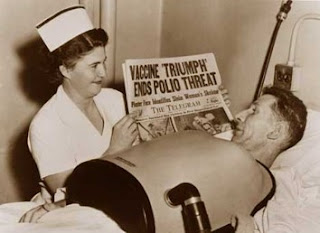
The nurse in this photo is showing a headline to a man who is confined to a ventilator because the polio virus destroyed the nerves that allowed him to breathe. The news came too late for him, but the nurse intended it as good news that, at least, the next generation of people would not have to suffer from polio. Neither of them would have guessed that millions of people would consider the polio vaccine to be evil. When Edward Jenner developed the smallpox vaccine; when Louis Pasteur developed the rabies vaccine; when Jonas Salk developed one of the polio vaccines—they could not have imagined that people would consider them evil and actively work against them.

We are, it appears, entering a new dark age of plagues. We have political conservatives to thank for it.

Friday, January 3, 2020

When to Give Up and Trust the Future: My Farewell to the Seaside Alder


As I look into a new decade, I see the imminent approach of retirement. A major focus of my professional work has been to understand, and to save, a rare species of shrub known as the seaside alder (Alnus maritima). My colleagues and I have found that:

  • This species may persist only from clonal resprouts; the seeds, though often abundant, only germinate on wet, sunny gravel, a condition that was common after the last ice age but is now rare.
  • This alder species is less shade-tolerant than other, more abundant alder species in North America.


In the entire world, this species consists only of three subspecies:

  • A maritima var. maritima grows only in small, scattered populations in bogs around the Delmarva Peninsula.
  • A maritima var. georgiensis grows only in a single swamp in northwestern Georgia.
  • A maritima var. oklahomensis grows only in south central Oklahoma along part of the Blue River and a few nearby creeks.


That’s it, for the entire world. Only a few of the populations are protected.


In this photo from the Blue River in Oklahoma, the alder is the right foreground tree.

There are a few of the Delmarva alders in Trap Pond State Park; the others are unprotected. My colleague Phil Gibson and I looked for one population that was documented in the 1970s, only to find that it consisted of just one shrub, in someone’s back yard. We did not tell them about it, lest they cut it down before the much-feared federal government could tell them that they could not.
Most of the Georgia alders are on private land; a few are now, thanks to the work of Catherine Borer, protected by the major utility of the region, which has a large power plant nearby.
Many of the Oklahoma alders are on state wildlife land, and are thus protected.

I did not pursue the option of trying to get the federal government to list this species as endangered. In 2010, I talked with the Southeast district director of the Fish and Wildlife Service. She said this species was already on a list which was the subject of litigation; the plaintiffs thought the FWS was proceeding too slowly. The director told me that, even if the suit was won, they could not work on it until 2016. I decided to try other options.

This species produces antibiotic compounds in its branches. Not being a chemist, I cannot identify these compounds, though I have identified a number of their properties. A small pharmaceutical company in Massachusetts was interested in developing it, but just when the papers were signed and they began their research, Little Pharma was bought up by Big Pharma, which is hostile toward the development of new antibiotics, regardless of how much they are needed. Big Pharma, perhaps only by neglect, killed this line of research.

The Nature Conservancy of Oklahoma attempted to grow some of these alder bushes in a portion of the Blue River that they reclaimed from degradation by cattle. This was the vision of Jona Tucker, who saw this eroded stretch of river and saw a new riparian forest. But deer would eat the little saplings. Only deer fencing—which washed away with every flood—could keep the deer out. The Preserve is still there, but without a thriving population of alders.

I then attempted to get Oklahoma gardeners to plant this species in their wetlands. A few of them did, but not many. One such gardener sold the land and moved, and the fate of what the new owner probably thought was a worthless bush is unknown. Few gardeners have the approximately 10-foot-by-10-foot wet area in the sun that a single bush requires. My former student Sonya Ross has planted several of them on the campus of Southeastern Oklahoma State University. Will they be maintained after I am gone and she is gone also? I have also attempted to get the Tulsa Botanic Garden to plant them extensively to hold down the soil of their new plantings and to educate Tulsans about this important native species. As far as I know, only a few alders have been grown and none planted outdoors.

A botanist in Mississippi recently contacted me for some seeds, which I sent to him.

I cannot save this species single-handedly, nor can my colleagues Phil or Catherine, nor can any one person. I was hoping I could have the salvation of this species be my crowning achievement, but this dream has died. This species enriches the soil by harboring nitrogen-fixing bacteria in its roots, and produces medicinally important compounds in its branches. I am just going to have to trust the future. I know that the pharmaceutical angle will not work. Researchers in Oregon seem to have rediscovered the antibiotic compound, which is found not just in the rare seaside alder but in the incredibly abundant red alder as well; the medicinal angle will not help save the rare species. Maybe the FWS will classify the species as endangered. But it was a low priority under the Obama Administration, and all endangered species are now the personal enemies of Donald Trump. Maybe someday someone will rediscover a few of the shrubs at Trap Pond or along the Blue River or in Mississippi. Maybe someone at Southeastern, decades from now, will remember what these trees are.

Friday, March 8, 2019

What Does a Scientist Do When He or She Gets Sick?


I mean, besides griping and whining like everyone else. And feeling embarrassed for sneezing in front of a class. And I don’t mean an ordinary sneeze. I mean a convulsive one that makes me bend over double, one that is uncontrollable, and which makes me invent new consonants. Red Skelton did a comedy routine about this once.

What do we scientists do when we get sick? We test a series of hypotheses, that’s what. It keeps our minds occupied even though we may never find out which hypothesis, if any, might be true.

When I became sick over a month ago, I tried to figure out what it was. I first assumed it was allergies. Allergies are famous in Oklahoma. I got a severe sore throat one night, assumed it was a cold, Hypothesis 1, but it was gone the next day, to be replaced by all the usual symptoms of either an allergy or a cold. Lots of other people had the same experience on the same day, which just happened to be the day the rain stopped and a strong wind came from the south during cedar pollen season (Juniperus ashei, abundant in Texas). How likely was it that I had an infection when everybody else had allergies? The rain came back and our windshields ran yellow with cedar and elm pollen. That was hypothesis 2: allergic reaction.

But it didn’t go away. I assumed that Hypothesis 1 had been correct. But nine days later, I still had this cold. Maybe, I thought, it was a bacterial infection, Hypothesis 3. Maybe the allergic reaction weakened my immune system, making me vulnerable to bacteria that I already harbored and which had been waiting their chance to invade me. Evidence: yellow snot. Not just from breathing pollen, but even when the pollen had been rinsed away by more rain.

Ten days of amoxicillin seemed to help. At least my sense of taste returned. But my cough and congestion continued. I went to the clinic again. My snot was now clear, so the conclusion was that Hypothesis 2 had been correct, and I got an allergy shot.

By the beginning of the fourth week of whatever-the-hell, I was beginning to think of bacteria again, because the allergy shot brought no relief. I thought it was working, but this was bias on the part of my brain. My snot was yellow again, and there were the convulsive coughs, along with abdominal muscle pains just from the coughing. I have already used more tissues than I typically do in two or three years. But this is Hypothesis 4: amoxicillin-resistant bacteria.

Antibiotic-resistant bacteria kill thousands of people. They are the premier example of the statement I used in my encyclopedia: What you don’t know about evolution can kill you. If I had not studied evolutionary medicine, I might never have thought of Hypothesis 4. Most infections, even bacterial ones, are self-limiting, which means you eventually get over them in a few months or decades. But I have too much life that I want to finish before I die, so I hope it doesn’t take this long. And recovery is not guaranteed. Weep not for me, gentle friends, but for the books I will not have a chance to publish unless I recover.

As of this posting, the second-line antibiotic seems to be working. If it does not, I hereby authorize my heirs to post a notice on this blog.

I was in the mood for hypothesis testing because I was reading This Is Biology: The Science of the Living World, by the late great Ernst Mayr. He wrote the book when he was 92 years old; he died at age 100 in 2004. It is thick with information, but pleasantly written (even with a joke or two), and I could relax in the assurance that he had figured out the philosophy of science so that I did not have to. He was not a great fan of philosophers; during the height of Karl Popper’s popularity, he said that every scientist he knew claimed he or she was a Popperian and then went ahead and did whatever he or she was going to do anyway. If I did not have to sit at home, I might never have looked at this book.

Hypothesis testing helps us understand reality, but it also helps take our minds away from the reality that would depress us.

Thursday, March 3, 2016

How Peoria Changed Human History

We all know that we need to save as much biodiversity as possible because we do not know what a species might be capable of doing. The rare species of tree on which I have done research has turned out to show great promise of producing a pharmaceutical product—a corporation is investigating this possibility.

And it is not just species diversity. It is the diversity of genetic lineages within species. Take the example of Penicillium mold.

We have all heard the story of how Alexander Fleming discovered penicillin. He was trying to find a way to kill pathogenic bacteria. When he came back from vacation (I hope I am getting this right), he found some green Penicillium mold growing in some bacterial plates he had neglected to sterilize. He saw the clear zone around the mold, in which a chemical produced by the mold had killed the bacteria. And, as far as most of us might have known, this was the triumphant discovery of penicillin, which was quickly ramped up to industrial scale production.

But actually Fleming’s work was mostly a failure. Many strains of Penicillium failed to produce penicillin, and none of them produced enough to allow industrial-scale production of the world’s first antibiotic. In 1940, Howard Florey and Ernst Chain tried again. They decided to sample lots of strains of Penicillium, in the hopes of finding one that produced lots of penicillin. They worked in Peoria, and asked for people to bring in specimens of the famous green mold. Most of them were fairly worthless. But someone in Peoria brought in a cantaloupe that just happened to have a potent strain of Penicillium. That is where the industrial production of penicillin got started.

It is obvious that, were Penicillium to have become extinct, we would never have found penicillin, and perhaps it would have been a long time before anyone would have thought to look for other antibiotics such as streptomycin. Certainly nobody would have deliberately looked in the soil of Easter Island (Rapa Nui) for microbes that produce (?) rapamycin. But apparently it was also important that this particular strain of Penicillium not become extinct. Just saving a random specimen of Penicillium was not enough.


Saving biodiversity is more than just saving species. It is saving genetic strains within species and saving all the microbes that grow on plants and animals.