Showing posts with label Christmas. Show all posts

Sunday, December 12, 2021

Was Love Born in a Manger?


A church sign I saw out in the country in Oklahoma recently read, “Love Was Born in a Manger.” I will briefly explain why this is wrong.

Most of my life, devoutly Christian, I was deeply moved, almost suffocated, by my belief that Jesus represented the manifestation of God’s love to humankind. I was wrong. The stories of Jesus are wonderful—certainly, in my mind, Jesus represents some of the finest of human love—and I wish I could still believe that love was born in a manger at Christmas.

But I will now explain why this belief is wrong.

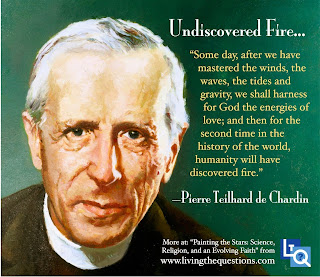
The statement implies that, without Jesus having been born, or foreordained from the beginning of Creation to be born, then there would be no love. But it is quite clear that love evolved. I do not mean  in some vague way as Pierre Teilhard de Chardin wrote about decades ago. I mean that love evolved by means of natural selection.


I am talking about altruism. Love promotes altruism which promotes fitness. Not always, but often. To love your offspring and, to a lesser extent, your relatives increases fitness through inclusive fitness. To love your friends increases fitness through direct reciprocity. To have a reputation for being kind and generous increases fitness through indirect reciprocity. Natural selection favors whatever increases our fitness. Often this is hatred, but often (perhaps even more often) it is love. Natural selection gave us the instinct of love. The evidence is that it feels so good. We need food; natural selection favored millions of years of animals who, when hungry, love the taste of food. We need water; natural selection favored millions of years of animals who, when thirsty, love water. Love is an appetite, just as much as sex, food, and water. Whether we decide to use the instinct of love or not is up to each of us individually.

There is another problem with the belief that Jesus is the origin of all love. It implies that those of us who do not accept the doctrines about Jesus (however much we may love Him) do not really love other people, the natural world, or God. We are either faking it or are totally deluded. What I experience, when I feel love for Jesus or for other people or for the creation, is not genuine, according to this view.

But I know what I am thinking. I know for a fact that I am not faking it. Billions of people who are not doctrinal Christians love people, the natural world, and God very passionately. Some are lying, but we can’t all be lying. I cannot speak for anyone else, but it would be the height of arrogance to claim that I am the only non-doctrinally-Christian person who sincerely loves other people. Many doctrinal Christians would claim that those of us who reject their doctrines might sincerely believe we are sincere, but it is in fact a delusion. I am not deluded. The burden of proof is on doctrinal Christians who claim that all who reject their doctrines are either liars or lunatics.

If, in fact, love does not exist apart from a doctrinal Jesus, then it must come from somewhere else. It must be part of human nature. And, as I wrote above, I believe that evolution put it there. Love is a basic instinct.

Merry Christmas, y’all, and though you may not think it possible, I believe Merry Christmas.

Thursday, December 19, 2013

Darwin at the Mall


Ho ho ho. The Christmas shopping season is upon us. Greetings from someone who doesn’t enjoy shopping. I’m no Grinch or Scrooge; I just do not enjoy materialism. A walk in the woods, or reading or writing something creative, is much more enjoyable to me than a trip to the Mall. I enjoy receiving gifts, but not all that much. I am sort of like the Dalai Lama on his birthday in the cartoon: he said, “Just what I always wanted! Nothing!” as he looked into an empty box. But it was recently necessary for me to go with my family to the Mall, and when I did, I decided to use it as an opportunity to observe the human species from the viewpoint of an evolutionary biologist.

In Tulsa, “The Mall” usually refers to Woodland Hills Mall at 71st and Memorial. The first thing I noticed was how many clothes retailers there were, each with its own brand. As far as I could tell, all of the clothes that they sold were more or less alike, except for either (1) a status label, or (2) subtle messages that are meaningful only to the sender and the receiver of the message. Right away this reminded me of the 1981 discovery by Nancy Burley that the simple act of putting a red leg band on a male zebra finch would enhance its success of mating. Although this effect has recently been called into question, it remains a memorable example of how something as arbitrary as a leg band can turn out to be a social signal to animals. In many birds, bright feathers are indicators of health. But the exact form of the indicator in one animal species may be meaningless to another. We think it quaint when we read about the Mayoruna tribe in the Amazon decorating their faces with cat whisker tattoos and even embedding palm fibers in their lips like cat whiskers. But to them, our flaunting of brand name clothing would seem as incomprehensible as their decorations seem to us. Of course, they are probably now wearing American brand-name T-shirts and shorts, having been brought into the splendor and comfort of western civilization.

At the same time, many of the businesses appeared nearly desperate to come up with something new other than just to sell the same items as everyone else. In these cases, it is innovation, not just a label, that is the status marker. However, innovations can be just as arbitrary as labels. Just how much innovation can you have in a wristwatch? You can make them into timepieces with atomic accuracy. Or you can replace the hands with little bubbles on an analog face; a large and a small bubble revolve around the center of the watch face. And there was a shop that sold many interesting and wonderful flavors of tea. But after awhile, all the different fruit and flower flavors start seeming alike. Enter monkey-picked tea. This is tea made from the youngest leaves of the tea trees, which grow on branches so delicate that only trained monkeys can harvest them. I tried some; it tasted like tea. The only value of this type of innovation would be if the recipient knows that the tea leaves were picked by monkeys. These innovations are mostly valuable as status symbols.

Perhaps the main products being marketed at this mall are placebos. The labels and innovations do not produce a qualitative difference in the products, but the shoppers can easily imagine that they do. They imagine that monkey tea tastes different from ordinary tea if, in advance, they know that it is monkey tea. It is well known that even many expert wine-tasters will choose wines they think are expensive, even if the wines are cheap brands in expensive bottles. In one corner of the Mall, there were a few shiatsu-massage chairs into which you could insert a dollar and try them out. I gave one of them a try, and found it to be annoying, perhaps because I am not shaped like a typical American and the pokes and nudges touched me in the wrong places. It goosed me a couple of times. I wonder if  “shiatsu” is Japanese for “placebo.” While there is no doubt that massages feel good, I am skeptical that there are “shiatsu points” of special significance on the body. I watched a young Thai mother of four trying out the chair as her kids pommeled on her. The chair evoked an artificial lordosis from her as she was transported into ecstasy. It worked for her. Or maybe it was just her kids tickling her. I wondered whether I should even be watching her.

Finally, I noticed that even though I’d come without the intention of buying anything, I ended up spending a couple of hundred dollars, largely on status and placebo items. Social forces act upon our behavior in ways of which we are hardly conscious, and sometimes despite our best efforts to be conscious of them.


I bought some items at See’s Candies. At last here is something that is truly different and superior: I have tasted many kinds of candy, but none can measure up to See’s. As I tried a sample, I kept asking myself if I was merely experiencing a placebo effect. If I was, it was despite my best effort to be objective. But this purchase accounted for only about twenty dollars of my total expenditure. When I got home, I was not sure how I ended up spending sixty dollars on candles. Evolution has adapted us with flexibility to adjust to changing social environments. The social environment is our human environment; we create it, and it creates us.

Saturday, December 22, 2012

A Christmas Altruism Message


Merry Christmas, everyone. Pull up a chair by the fireplace and listen to some stories about altruism.

Society is based on altruism. One of the most common examples is traffic regulation. Nearly everyone obeys traffic laws almost without thinking about it. Think of the billions of dollars that would be lost in our economy if, instead of traffic regulations, we just had open competition on the roadways. It would be chaos, with millions of hours of productive work time lost by people stuck in traffic worse than they already are. I would be perfectly happy to yield to pickup trucks with half-ton ram’s horns on the front, but I wouldn’t necessarily see them coming in time to stop. Also, I do not think a free-market economy would work well for traffic regulations. I would be happy to let someone driving a big pickup pay me to let them always have the right-of-way, but the infrastructure necessary to keep track of the payments would consume most of the profits. Traffic regulations are perhaps the best example of everyone reaping immense benefits from altruistically surrendering just a little bit of freedom, and we all grudgingly love those little laws.

Christmas is a time when people dabble in a little more altruism than normal. And tell and retell the story of Ebenezer Scrooge, the Dickens story about the quintessential anti-altruist. Scrooge (whom I played in a high school drama, as difficult as that may or may not be to imagine) was an evolutionary failure in all three forms of altruism: kin selection (he was mean to his nephew), direct reciprocity (he was mean to Bob Cratchit), and indirect reciprocity (he refused to donate to charity). Christmas is also a time when everyone can congratulate themselves that they are, at least, not as mean as Scrooge.

One might think that everyone would, with Dickens, rejoice in Scrooge’s Christmas Day conversion into an altruist. But one might be wrong. Leave it to a conservative commentator to criticize Scrooge for turning into a nice guy. This commentator (whose name I forgot, but who worked for a conservative think tank) said, in effect, what was Scrooge thinking? Giving Bob Cratchit and his family that big goose? First, how would that affect the employer-employee relationship? What will happen on the day after Christmas, when Cratchit shows up for work and expects to get a goose every week? And, second, this would only encourage Cratchit to sue Scrooge after he and his family ate all the grease and developed circulatory problems.

Okay, I just made that second one up. But the conservative commentator really did make the first point. I couldn’t make something like this up. Truth is stranger than fiction. I first learned this when, as a child, I was watching Dragnet on television. In one of their episodes, they investigated a case in which someone had stolen a man’s lawn. It was an expensive dichondra lawn, rather than a grass lawn. Dichondra has shallow roots, making it easy to scoop up a dichondra lawn (I think, never having tried it myself). No one could make up a story about someone stealing a lawn (Dragnet always began with, “The story you are about to see is true; the names have been changed to protect the innocent”). And only in the real world could a conservative commentator criticize the generosity of Scrooge. I only hope it was intended as a joke, although neither the guest speaker nor the radio host gave any such hint.

If you want another Christmas message, this time from Charles Darwin, check out the Merry Christmas from Darwin video on my YouTube channel.