Showing posts with label love. Show all posts

Thursday, November 19, 2026

Blue Wild Indigo, a novel by Stan Rice. Part four: What is love?

Stan Rice has just published another novel Blue Wild Indigo in the series Under the Sun, which explores what, if anything, God is doing in this world under the sun: first, from the viewpoint of the poet who lived at the time of King Solomon, and wrote Ecclesiastes (Among the Lilies); next, from the viewpoint of the woman who loved the prophet Jeremiah (The Almond Branch); next, from Heloïse and Abélard in medieval France (Paraclete); finally, this novel, set in modern rural Oklahoma.

Here is the author’s summary from Amazon:

All her life, Sophia is inconvenient. She thinks too much and everybody knows it. She escapes twice from her Amish community in rural Oklahoma and discovers how dangerous and costly love and wisdom can be. The first time, she leaves with Clay. They find that the outside world is worse than their Amish community and they return, join church, and marry. Sophia’s second departure—with its risk of shunning—is not so easy. She takes refuge with Gil, a famous, lonely theologian, who is escaping his own past. But by hiding in Gil’s house, Sophia has exchanged one set of restrictions for another. Sophia’s brilliance shocks Gil into rethinking everything he thinks he knows, as he helps Sophia recreate herself. Their love grows as deeply as the roots of the blue wild indigo, a long-lived prairie flower. As Clay stalks Sophia, she and Gil discover that love is worth even the risk of death. Only after this experience are Sophia and Gil free.


What is love? This, you might say, is the one question that every novel addresses. Here is a passage from Blue Wild Indigo that expresses the kind of love Gil and Sophia had for each other. When I read these words, I was reminded of the words of the singer/songwriter Ann Zimmerman in her song, Blue Wild Indigo.

[Sophia said,] “You told me the day we met that prairies need to burn in order to remain alive.”

“Yes,” I said, breathing again.

“I assume it is because the fire turns those dead sticks and leaves into fertilizer.”

“Yes. And the fire burns away things that aren’t supposed to be in a prairie, like tree seedlings.” I sat down in the grass stems.

“I can hardly imagine,” said Sophia, also sitting down, “anything more painful or frightening than fire. Certainly the preaching we hear in our churches has a lot of hellfire in it. The men tell us how the God of Love, if we stray so much as a millimeter off of the path—I guess Hell uses the metric system—will make us burn forever, and that we will feel the full pain of it every millisecond of that time. Eternal conscious torment, they call it. Even nature does not do that to us. If you feel something painful—or, for that matter, something pleasant—for a long enough time, whether a few minutes or a few days, your brain starts to adapt to it and you stop noticing it. But maybe fire is an essential part of life on Earth…

Then Sophia said, “This is blue wild indigo. And we agreed that it represents love. So, do you love me wildly?”

I had an answer straightaway but hesitated to tell her. I finally said, “Yes.”

“And what does that mean?”

“When we talk about wild love,” I said, “I mean us non-Amish, we usually mean that we toss aside all restrictions of society and propriety and start grabbing each other. That’s what we imagine that wild animals do.”

“But that is not, apparently, what plants do,” said Sophia. “For this plant, love means growing deep roots. And, Gil, if I decide to interpret my feelings for you as love, it will be love with deep roots.”

 Gil also realizes, when he has to describe Sophia for the police, that all the things they would want to know about her are things he did not think about:

“I know her name, and her husband’s name. But I don’t know which house she lived in, or her parents’ names. Most of the things the law wants to know about a person are things I do not yet know about Sophia. They don’t want to know what her thighs look like, what her tears taste like, or how she can make a wise man feel stupid, that she shows her love by cleaning out the bathtub with her foot when she finished, that her handwriting looks like cuneiform, that the embrace of her mind is sweeter than the drippings of the honeycomb.”

            The topic of love comes back in when we are forced to consider, as I explained earlier, whether you can love your fetus and still have an abortion.

            Sophia decides to go to the University of Oklahoma, so she can finally learn wisdom. Gil takes her there and pays for everything. While Sophia was gone, Gloria came back for a visit. She is ready to start up a relationship with him, again, but Sophia calls. She is disillusioned that she is almost the only student at the university who desires wisdom. Gloria grabs the phone and tells her that Gil is ready to bring her home. She has not yet experienced the kind of love that Gil gave her long ago, but she is ready to sacrifice it for Sophia.

            I will not tell you the ending. Sophia’s church found her living with Gil, confronted her with what they thought was adultery (though it was not). The church elder was firm but gentle. Not so Clay, who had followed the elder and chased down Sophia (in a pickup truck driven by a neighbor). Clay had a gun. Did he use it? Yes. How? In a way, I will only say, that left love intact.

Wednesday, October 28, 2026

Among the Lilies, a novel by Stan Rice, part three. The taste of bread and true love

Stan Rice has just published another novel, Among the Lilies, the first novel in the trilogy Under the Sun. The central character is Elah, who is the scribe who writes the things that King Solomon takes the credit for: Ecclesiastes and Song of Songs, as well as many other Old Testament writings.

The summary from Kindle is:

Elah, the narrator, is a servant in one of King Solomon’s harems. While this sounds like the best job in the world, Elah’s work is way below his mind. He spends all the time he can thinking and writing about what, if anything, God is doing under the sun. But then he meets and loves Henna, the only black woman in Jerusalem. She is confined to her stepfather’s walled garden. Elah risks his life to meet Henna in the garden.

While in a cavalcade to the cedar forests of Lebanon, which he intends to cut down to make his palace, The King (who resembles Elvis) elevates Elah to the position of chief scribe. When The King sees Henna, he decides to add her to his stable of wives. Meanwhile Gomer, who becomes the woman in charge of the royal kitchens and is an expert in poisonous wild plants, is not at all pleased. She wants Elah for herself, and doesn’t she try to do something about it. But she cannot keep Elah from meeting Henna again. His quest fails.

Elah becomes a leader of revolutionary forces against The King. Elah finally finds Henna in the muddy eroded landscape that used to be the forests of Lebanon. The King captures Elah and offers him the choice between death and not quite being dead.


Is true love like fine wine, or maybe whiskey? Or like exquisite candies? In Rice’s novel, true love turns out to be more like fragrant bread.

Gomer is the little woman who bakes the bread and eventually becomes the Head Baker. She wants Eli as her husband and will stop at nothing to get him—even while he still pines for Henna. Elah resists Gomer, until she sacrifices herself to save his life. Eli guards Gomer’s secret: she is a runaway Hittite slave. Eli realizes that Gomer’s love is what he really wants. This love story is as good as the love between Elah and Henna.

Even when Elah says that what he really wants is to die, since he cannot have Henna, Gomer is his ally. She knows desert wildflowers, and Elah has to trust her that she knows the difference between regular lilies and the visually-similar death lilies.

One of Elah’s tasks as head scribe is to find all Israelite folk stories and write them down. These stories, once organized, become much of the Old Testament: the stories of Lot, Barack, Gideon, Jotham, and Samson. Gomer is his comrade in collecting these stories. When Eli is banned from Jerusalem, he joins the rebel general Jeroboam, whom the Israelite people support. Gomer joins him.

But at the end temptation to have Henna is Elah’s downfall. The fact that Henna wants Eli is totally irrelevant to Solomon, who just smiles as she spits in his face.

Friday, February 20, 2026

Platonic Friendships

I read a book, What We Are, by Lonnie Aarssen. Aarssen is a Canadian plant ecologist, roughly contemporaneous with me. He has made the transition from plant ecologist to evolutionary psychologist—that is, studying the effects of our human evolutionary history on the way our brains work. I have made the transition from plant ecologist to a general science writer, so I know about evolutionary psychology, but do not know as much as Aarssen.

I’m not sure platonic friendship can be defined, but most of us have a general understanding of it. Aarssen makes the assertion that it is very difficult for men and women to form platonic relationships. Why? Rather than attempting a detailed summary of his reasons, I will just say that it is because men are jerks. They want to conquer women, not befriend them. That sort of captures the meaning.

I immediately recognized that this is not true of me. As I think over my life, I have had lots of platonic relationships with women. I recently made a list of people—men and women; all ages; most of them still alive—who have been important in my life, just so I could remember them. The list had 111 names, and the list keeps growing. Of these, 55 are women of a reasonably similar age with myself and with whom I had a close friendship, and with none of which I had sex. What is wrong with me?

In many cases, it would have been professionally unethical—for example, students and colleagues. But in at least 30 cases, there was no such difficulty (they were single and not, at least at the time, my students). So, I ask again, what is wrong with me?

What is wrong with me is love. In earlier decades, it was religious conviction. Later, it was that I did not want to endanger or stress my marriage. Neither of these is known, on a societal level, as a reason why a man does not have sex. But I loved all of these women, and did not want to mess up the trust they were placing in my friendship. I know for a fact that at least a few of them would have welcomed sexual intimacy from me. But a life is something you build, and as I look back on mine, I am satisfied with the choices I have made.

I knew that I was unusual, but I did not realize how unusual.

Sunday, December 12, 2021

Was Love Born in a Manger?


A church sign I saw out in the country in Oklahoma recently read, “Love Was Born in a Manger.” I will briefly explain why this is wrong.

Most of my life, devoutly Christian, I was deeply moved, almost suffocated, by my belief that Jesus represented the manifestation of God’s love to humankind. I was wrong. The stories of Jesus are wonderful—certainly, in my mind, Jesus represents some of the finest of human love—and I wish I could still believe that love was born in a manger at Christmas.

But I will now explain why this belief is wrong.

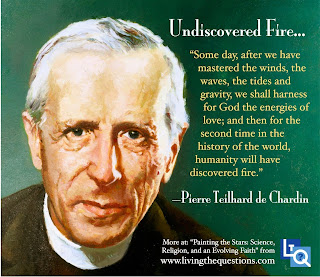
The statement implies that, without Jesus having been born, or foreordained from the beginning of Creation to be born, then there would be no love. But it is quite clear that love evolved. I do not mean  in some vague way as Pierre Teilhard de Chardin wrote about decades ago. I mean that love evolved by means of natural selection.


I am talking about altruism. Love promotes altruism which promotes fitness. Not always, but often. To love your offspring and, to a lesser extent, your relatives increases fitness through inclusive fitness. To love your friends increases fitness through direct reciprocity. To have a reputation for being kind and generous increases fitness through indirect reciprocity. Natural selection favors whatever increases our fitness. Often this is hatred, but often (perhaps even more often) it is love. Natural selection gave us the instinct of love. The evidence is that it feels so good. We need food; natural selection favored millions of years of animals who, when hungry, love the taste of food. We need water; natural selection favored millions of years of animals who, when thirsty, love water. Love is an appetite, just as much as sex, food, and water. Whether we decide to use the instinct of love or not is up to each of us individually.

There is another problem with the belief that Jesus is the origin of all love. It implies that those of us who do not accept the doctrines about Jesus (however much we may love Him) do not really love other people, the natural world, or God. We are either faking it or are totally deluded. What I experience, when I feel love for Jesus or for other people or for the creation, is not genuine, according to this view.

But I know what I am thinking. I know for a fact that I am not faking it. Billions of people who are not doctrinal Christians love people, the natural world, and God very passionately. Some are lying, but we can’t all be lying. I cannot speak for anyone else, but it would be the height of arrogance to claim that I am the only non-doctrinally-Christian person who sincerely loves other people. Many doctrinal Christians would claim that those of us who reject their doctrines might sincerely believe we are sincere, but it is in fact a delusion. I am not deluded. The burden of proof is on doctrinal Christians who claim that all who reject their doctrines are either liars or lunatics.

If, in fact, love does not exist apart from a doctrinal Jesus, then it must come from somewhere else. It must be part of human nature. And, as I wrote above, I believe that evolution put it there. Love is a basic instinct.

Merry Christmas, y’all, and though you may not think it possible, I believe Merry Christmas.

Thursday, July 9, 2020

Is There Any Such Thing As a Neighbor in Oklahoma?


A lawyer famously asked Jesus, “Who is my neighbor?” Just as famously, Jesus did not answer the question directly but told a story. Don’t you just love that?

The connection between this essay and the science of evolution is that a neighbor is someone with whom you exchange altruism, and altruism is one of the most serious topics in evolutionary science.

In Oklahoma, during racial tensions and the pandemic, I wonder just how many “neighbors” there are. Rather than simple neighborliness, we have either one extreme or the other.

  • First, there are the bad neighbors, who are neighbors only in the sense of physical proximity. They are otherwise full of hatred toward their fellowman. Here in Oklahoma, especially in the rural town where I work (in contrast with Tulsa, where my family lives), a lot of people in the immediate neighborhood do everything they can to make themselves bad neighbors. Loud music is common. And twice, people have used my yard as a place over which to shoot their fireworks. They let their dogs run free and bite people (two of my colleagues, not yet me), they throw their garbage everywhere, in their own yards and everyone else’s. They make themselves as obnoxious as possible.
  • Second, there are the good neighbors. But we cannot just relax and be neighbors. My wife and I were out walking and we met one of our neighbors, a black man who was cleaning up branches from his yard. We could have just been neighborly and said Good Morning, but it was the day of the Trump rally and racial tensions in Tulsa, so we felt an obligation to create small talk with him, which we all enjoyed. Those of us who are not part of the problem have to use every opportunity we can to promote the solution, in this case interracial friendship. We cannot just take neighborliness for granted. Altruism is so rare that it might die if we do not actively feed it.


Repeatedly on radio interviews, black people say that they are afraid that white police will shoot them even if they try to be nice to them and cooperate. They feel all white guns pointed at them, and they do not take a single day of life for granted. They fear that, each day they get out of the house, they might get shot. This is a horrible burden to have to bear. Are they overreacting? Actually, the chance of a black person getting shot by a white policeman is very small—but still much larger than the chances a white person faces. After what they have been through, a little overreaction is understandable. I cannot lecture them and say, You probably won’t get shot, so just calm down. My responsibility is to contribute to a solution.


I remember back to a time, not long ago in our neighborhood, when you could just treat everyone the same. But today, under Trump’s leadership of perceived hatred, good white people have to notice which of their neighbors are black and make special efforts to befriend them. People like us are the ones that will keep America from descending into racial chaos.

Friday, June 14, 2019

Trust the Mother


One of the most divisive political issues is abortion rights. I am a scientist, and I can tell you that there is no single point in embryonic or fetal development in which the unborn child “becomes human.” It depends on the indicator that you use: heartbeat, brain activity, etc. all begin at different times. There are even three events that occur during “the moment of conception.” As a result, I have no scientific opinion about “when life begins.” Nor will I speculate about morality or politics. But I do have some scientific insights that you might find useful.

Love evolved. Love is, from the evolutionary point of view, the instinct for helping and protecting other animals in your species. Natural selection has favored animals that protect their offspring. In this way, they maximize their reproductive success. If you want to know more, search for information about inclusive fitness. The most famous examples are from insects such as bees, ants, and termites, and among mammals such as ourselves.

The strongest love in the natural world is the love between a mother and her offspring. It is a force of nature. If you get between a mother bear and her cubs, it might be the last thing you do. This is because the cubs are the mother bear’s entire genetic future. Human mothers are no less motivated to protect their young, including those not yet born, than any other species of mammal.

In the animal world, a mother’s love is, on the average, stronger than a father’s love. The reason for this is because the mother always knows which offspring are hers, but the father cannot be certain. Every ounce of effort that a mother puts into nurturing and defending her young is well spent, but for the father, there is the lingering subconscious question about whether the offspring are his. (“Mommy’s baby, Daddy’s maybe.”) Genetic tests, in humans and birds, show that some of the offspring in the nest or the home, which the father supposes to be his, are not. The offspring may not be the father’s entire genetic future. Most of us fathers love our children, but on the average, mothers love their children more.

And a mother loves her offspring, including those not yet born, more than politicians do.

Given that a mother’s love is the strongest love in the natural world, I believe we should trust the instincts of an individual mother. The idea that pregnant women are eager to kill their unborn children unless white men pass laws and tell them not to is ridiculous. Maybe we should trust the mother to make the right decision regarding her unborn offspring.

Monday, October 1, 2018

Another Useless Message to President Trump


I sent this message to the White House on September 20, 2018.

“Mr. President, you have made many people angry at you, including your fellow Americans and our allies abroad. You are doing your best to make people hate the Republican leadership of America.

“But you will not make me bitter or angry. I will continue to be a force for good in the world. I will continue to spread love even though your work of spreading hatred has a billion times as much impact on the world as do my efforts at helping the world.

“You will never control my soul.”

Thursday, August 30, 2012

The Republican Party Is Going To Stop Loving Us


I have written many entries about altruism, which is one of the major products of evolution. Altruism closely resembles what people have always called love. I reported earlier that the Republican Party has officially rejected altruism. Now they have officially rejected love.

For many years, we have all known that the Republican Party is the party of love. They say only nice things about people so that everyone will love them. They gladly accept the label “bleeding hearts” for themselves because their hearts flow out with love toward not just the middle class and poor, such as the victims of bank robo-signing, but even toward the world of nature, you know, birds and stuff. They embrace the Bleeding Heart ideal because this term refers to the bleeding heart of Jesus Christ.

Nowhere has Republican love been more obvious than in the pronouncements of commentators such as Rush Limbaugh, Sean Hannity, and Bill O’Reilly. For years, liberal writers such as myself have referred to them as “bloviators,” but we have been so wrong. Every word that has come from Rush Limbaugh’s mouth has been loving and nourishing, each an attempt to help his listeners by giving them truly constructive advice. Even Jesus himself would have a hard time matching the love that Republicans have showered upon their listeners. Where have you ever seen a more loving person than Donald Trump? When the Religious Right Republican commentators make it abundantly clear that everyone who disagrees with them in even the most minor detail is a Satan-possessed terrorist God-hater, this is only because they care about us and wish for us to be saved from hell by worshiping them. Pat Robertson, who pours his words of love from Trinity Broadcasting Network, is the ultimate Christian superman, and he consistently proclaims the Gospel of Republicanism.

So great has been their love that the Republican Religious Right fully deserves every last penny of their wealth. Paul and Jan Crouch, owners of the Trinity Broadcasting Network, have used millions of dollars of money sent by their worshipers to purchase numerous lavish mansions, a luxury jet, and then even have a $100,000 motor home for their dogs. Surely their mansions and the comfort of their dogs is more important than a few thousand children in Bangladesh—isn’t this what Jesus would have said?

But all of that is about to change. At the Republican convention, Governor Chris Christie said (as quoted by Fox News), “‘I believe we have become paralyzed, paralyzed by our desire to be loved.’ Christie said leaders chronically opt to do what is popular, ‘but tonight I say enough. Tonight, we’re gonna choose respect over love.’”

So the Republican Party is now going to command the kind of respect that one receives in the absence of love. What kind of respect could this be? It cannot be the respect that comes from doing a good job for your customers, since that is a form of love. Certainly it is not the kind of respect that comes from neighbors helping one another after a hurricane, such as the one that almost hit the Republican Convention. Both of those are forms of altruism, which Mitt Romney specifically rejected a couple of weeks before Christie’s Sermon on the Mound. It must be the kind of respect that comes from force and intimidation. The kind of respect that a schoolyard bully receives from the other kids whose faces have been beaten into the dirt. Limbaugh called student Sandra Fluke a slut. (Maybe I should call one of my unwed female mother students a slut, and see how long my tenure would protect me.) That, my friends, is love-speech. I wonder what respect-speech would look like.

And before you know it, the whole country will be dominated by the vast canopy of Republican respect. I am looking forward eagerly to all of us non-Republicans, and even moderate Republicans, being called a slut or a terrorist or a communist or a servant of Satan. I can hardly wait to live in this Republican utopia.