Showing posts with label natural selection. Show all posts

Tuesday, October 13, 2026

Tails of Evolution: Unnatural Selections, a story collection by Stan Rice, story three. Lord Bob and Sir Dick

Stan Rice has published a collection of short stories, Tails of Evolution. Rice is also the author of the Encyclopedia of Evolution, Life of Earth, and popular articles about evolution. Here is Rice’s summary from Kindle:

            What you don’t know about evolution can kill you.

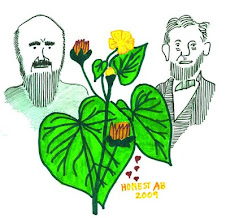
In these stories, Stan Rice introduces us to people who would never have imagined that evolution had any impact on their lives. A young fundamentalist Christian woman, out of place at a university, discovers that love can evolve. A creationist discovers half-fish half-amphibians in a swamp in Oklahoma. Two young Englishmen find themselves actors on the stage of Darwinian sexual selection. A fundamentalist bases his faith on hearing a devil bird. A young preacher finds a hidden city that is based on Darwinism. A food scientist discovers a tribe of Homo ergaster pre-humans in the cliffs of Madagascar. Darwin meets Lincoln, who was born on the same day in 1809. And a young man discovers that love is the most combustible thing in the universe.


Bob and Dick are two British students who are wildly enthusiastic about science, especially natural history. Bob puts down Dick for his failure to understand nature—especially evolution—as well as Bob does. They form a secret club—which meets in an old shed at Charles Darwin’s childhood home in Shrewsbury—in which they become Lord Bob and Sir Dick (based, the author says, on Lord Bob May and Sir Richard Dawkins, both leaders in evolutionary science). They find a bottle of flammable chemical in the shed.

Into this intellectual competition comes mate competition in the form of Betsy, a red-haired Irish girl who becomes Lady Elizabeth in the club. That is, as an evolutionary scientist like Rice would explain, natural selection and sexual selection are both at work. Bob is prevailing to gain Betsy’s interest, especially after he discovers them making love in the shed. As Dick, crazed by lust, considers what he might do, he quietly removes the stopper from the chemical bottle. A fire, caused by a Nazi bomb, makes the decision for him.

Friday, October 10, 2025

Darwin and Dewberries


This essay accompanies a video on the Darwin channel.

All over Europe, blackberry bushes (Rubus fruticosus) form thick hedges (ronces) out in the sun that are nearly impenetrable by humans or other large animals. The vinelike branches are thick, strong, and covered with nasty thorns. At first it might seem strange that the vines would be so well protected against animals, since they produce delicious blackberries that natural selection has designed for animal dispersal. Animals eat them, the seeds pass through the gut, and come out in a new location—exactly what the plant “wants” to happen. But apparently the ronces “want” birds, not mammals, to disperse the seeds.

The blackberry bushes have numerous adaptations to life in bright sunlight. The branches are thick with sapwood that conducts water to the thick leaves, which are white on the underside, an adaptation to occasionally hot, dry conditions. Because the shrubs grow so fast, they can produce an abundance of fruits, which are first green, then red, then black when fully ripe. The flowers begin to open in spring; then, starting in July, you and other animals can feast on the berries, that is, when you can reach them. 

Meanwhile, in the shade, another species of Rubus grows: Rubus caesius, the dewberry. They are adapted to life in the shade: narrower stems that conduct less water, and they have thinner leaves, which are not white on the underside. The flowers do not open until August, and the fruits are not ripe until September. Because they grow in the shade, they grow more slowly, and are smaller. For every one dewberry, a bird may find a hundred blackberries.

They also have fewer thorns. These differences are not just due to sun vs. shade conditions; even when both of the species grow together in the shade, one can distinguish them, for example by the number of leaflets (often five in blackberries, only three in dewberries).

Clearly, blackberries are the dominant species. Dewberries hide in the shade. There appears to be competition between the two species. Blackberries rule the summer sunshine; dewberries could not possibly win in competition against them. But dewberries find a refuge from competition by blooming later. Natural selection has favored dewberries that reproduce a little bit in the late summer shade, over dewberries that might uselessly attempt to reproduce in the same place and same time as blackberries. This is evolution (a kind called temporal niche displacement) acting upon the dewberries. It spells the difference between barely surviving, and not surviving at all.

Temporal displacement keeps the species from interbreeding. I have no idea whether they could interbreed; no one knows exactly how closely related the two species are. But they don’t interbreed because they flower at different times.

And they don’t live in exactly the same places. When a bird looks for a juicy berry, a dewberry is just as good as a blackberry, but a bird is very unlikely to eat both of them. As a result, a poop-load of blackberry seeds is likely to end up in a separate location from a poop-load of dewberry seeds.

It is conceivable that natural selection also acts upon the blackberries. Right through August and September, blackberries produce big red berries that ought to turn black. But when I look for ripe blackberries in August, I find that almost all of them have withered before I, or any birds, have a chance to eat them. I find this puzzling. The weather remains good for ripe blackberries, but something makes them turn into little dried black blobs.

Thus the fact that dewberry flowers and fruits are delayed, and also the fact that the late blackberry fruits wither, both keep the two species from blending together. Evolution at work. A human parallel would be an ethnic minority that could blend in with the majority, and lose its distinctness, remains distinct and survives by living in little, separate communities.

Friday, August 16, 2024

Where New Adaptations Come From

 I posted a video in which I explain where new evolutionary adaptations, and cultural innovations, come from. I filmed the video in Strasbourg, which has many old villages crammed together, such as Hoenheim (where I live) and Bischeim and even one called Souffelweyersheim.

Here is how I learned the process of natural selection. A new mutation appears, then if it is a good one, natural selection favors it. It starts off very rare—only one individual carries it—and ends up common, maybe even going to fixation (completely replacing the other versions of the gene). This is the way I taught it, and the way I wrote about it in my Encyclopedia of Evolution.

But the reality is more complicated, as is usually the case in science. If the mutation appears in a large population, say, a million organisms, then it is extremely rare—one in a million. No matter how good it is, it can get lost by random events before it has a chance to get selected. It has virtually no chance.

But suppose the large population, a million individuals, consists of small interconnected populations, maybe a hundred each. If the mutation occurs in one of them, it has a chance of becoming common, maybe even going to fixation. One chance in a hundred. Then if it spreads to another population, it has another one chance in a hundred to go to fixation. If this happens a hundred times, the new mutation now has ten thousand chances out of a million to be successful.

This is the shifting balances theory of Sewall Wright, who was one of the most important figures in the modern theory of evolution. He was publishing books right up until his death almost at age 100. New adaptations get started in small populations. That is the only way they have a ghost of a chance of succeeding. This is how natural selection must work.

Cultural evolution works the same way, but with ideas instead of genes. Suppose somebody got a great new idea in Hoenheim (or even Souffelweyersheim!). In a small village, the idea might have a chance to spread. If it becomes common in Hoenheim, it might become common in Strasbourg as well. And from there it might have a chance of success in Paris. (This may be unlikely, since Parisians consider themselves the cultural center of the universe, and Strasbourg, to them, is unspeakably provincial.) And from Paris, maybe the world. But the new idea popping up in Paris would get swamped out by all the other ideas in Paris.

This is not the whole story because, of course, Paris consists of lots of small populations, local neighborhoods and arrondissements. A big new idea in the 49th arrondissement might spread to the 5th.

One of the major examples of a cultural innovation starting in a place considered provincial is the printing press. Johannes Gutenberg perhaps had to start in an out of the way place—in fact, it was Strasbourg, where I now live. He did not start in Paris or Vienna.


Thursday, July 4, 2024

Some Thoughts on July 4

July 4 is when Americans celebrate the Declaration of Independence, even though they know very little about it.

In the weeks leading up to July 4, 1776, white European or European-derived men met together in Philadelphia to figure out a system of government that, it must be admitted even by its critics, had not been seen before in Europe, Asia, or Africa.

One characteristic of this system of government is that, the Founding Fathers claimed, it was based on the laws of nature. Thomas Jefferson was particularly clear on this point. Democracy is essential for a healthy nation. Jefferson pointed out that, in Europe, many centuries of inbreeding (though he did not use this term) had produced a nobility and royalty that consisted of defective people. In other words, we would say today, the scum rises to the top. Jefferson was personally acquainted with at least a dozen European rulers who were mentally and physically defective. The fresh water of democracy must be allowed in to flush out defective rulers. Not necessarily all of them, but most of them, by putting them in competition with the superior men (they still ignored women) who worked their way up from the middle and perhaps even lower class. This was almost a century before Darwin and natural selection, but the rudimentary idea of natural selection was well understood by almost everyone: rulership by the superior white men who had proved their superiority, not just inherited it.

But in other fundamental ways the Declaration was profoundly flawed. One of these ways was that the Founding Fathers pretended that they got their ideas from European philosophers. To them, the Native Americans were just savages who had essentially no organized government. However, it was clear to them, though they rarely admitted it, that the kind of government they wanted to create was already in existence among Native American tribes, who made their decisions based on (as close as they could get to) consensus among the villages that made up the tribes or even entire coalitions like the Iroquois Confederacy. Jefferson and Franklin admitted it in writing.

The Founding Fathers created a form of government that was new to whites, but already existed among Natives. But it started with a strong momentum of violent racism which we are, even today, trying to eliminate.

Another major flaw is that the system is more fragile than we normally admit. When someone asked Franklin whether America would have a democracy or a kingdom, Franklin answered, “a democracy, if you can keep it.” Today, about half of Americans are worried that the other half will support a presidential candidate who is poised to destroy constitutional democracy. Trump will not recognize the legitimacy of any election—even before it has occurred—that does not choose him as its winner.

Friday, June 2, 2023

Evolutionary Mysteries 2: Why Some Young Leaves Are Red

This week’s evolution video is about why some young leaves are red. You may have noticed that the unfolding leaves on plants as diverse as redbuds and blackjack oaks are reddish—in some cases, as with the blackjack, a brilliant scarlet. This is not true of all plants, but true of enough of them to invite an evolutionary answer.

The leading contender for an explanation is that young leaves are pretending to be dead. A young leaf has its whole life before it. Its entire contribution to the growth of the plant can be threatened by a herbivore eating it. When a herbivore eats an older leaf, however, the plant has less to lose in terms of future growth. The reddish color of a young leaf is a camouflage that makes a healthy young leaf look dead, thus diverting herbivores to the older leaves. This becomes more believable when you consider that many insects would not distinguish between red and brown, the color of plant death. The red color is caused by anthocyanins. They will reduce the amount of sunlight that gets to the chloroplasts, but by the time the leaf is fully grown and ready to produce food, the anthocyanins fade.

While this explanation is the most likely, it is not the only possibility. It could be that the young leaf is vulnerable to harmful ultraviolet radiation, which can cause damage but is outside the range of photosynthetically useful light. The red color, therefore, might be protection from ultraviolet damage.

And there is no reason why both answers could not be true at the same time.

To prove which of these explanations, or any other, might be true would be difficult. It might require breeding plants that produce more or less anthocyanin: young leaves without it, older leaves with it. Actually, some horticultural variants (such as red-leaved redbud trees) have adult leaves that are red (and green at the same time, resulting in a purplish color). Do these reddish adult leaves have less herbivore damage than green leaves? I do not know, but it is possible. Another way would be to compare herbivore damage in red vs. green patches on the same leaf; one study demonstrated that herbivores avoided the red areas ofvariegated leaves.

Keep your eyes open and there are mysteries of nature all around you that cry out for an evolutionary explanation.

Saturday, January 14, 2023

Natural Selection and Slavery

I have been reading the book about runaway slaves by John Hope Franklin and Loren Schweninger. It is an overwhelming book because it contains literally hundreds of stories of runaway slaves in nineteenth century America, with names and whatever scant details may be available from the historical record. The authors attempt some generalizations, but it is very clear that each slave’s story was individual and unique. And the documented brutalities are unspeakably painful.  I considered myself knowledgeable about American history, but this book took my breath away. No wonder the late John Hope Franklin is so famous among scholars and non-scholarly readers alike. This is the painting by Thomas Moran, who lived during this time, which is in the Philbrook Museum in Tulsa, where I live, and that was on the cover of the book.


And here is a photo of John Hope Franklin.


As a biologist specializing in writing and educating about evolution, I noticed a generalization that even the late great John Hope Franklin did not, and it has directly to do with evolution by means of natural selection.

Slaveowners and hunters believed passionately that slaves, and black people in general, were inferior in intelligence. Despite this, the racist whites of the South did their best to subject their slaves—and even free blacks, whom they sometimes kidnapped—to deprivations that were clearly intended to keep them physically and mentally inferior. In particular, they seldom allowed their slaves to learn to read and write (a literate slave could write out documentation that said they were free, for example), or to learn simple arithmetic, or to learn to read a map (which could help them to escape, if they should happen to get hold of a map).

Despite this, the runaway slaves proved themselves to be extremely intelligent and clever. As a matter of fact, the deprivations forced upon them by the whites selected for the most intelligent and clever slaves. The only way a slave could be successful was by outplaying their white overlords at their own game. One example that sticks in my mind is the slave who, on his escape route, asked a white train operator which train went to Raleigh. The slave knew that word would soon get around about his escape, and with his description. Asking the train operator how to get to Raleigh was a trick. The slave had no intention of going to Raleigh, but his question would mislead his pursuers into looking for him in that direction. Clever!

That is, the very ways in which whites oppressed slaves were in fact an evolutionary pressure leading to greater intelligence, over the generations, in the slave populations. Not only were black people equally intelligent to start with, but the evil efforts of the whites pushed black populations into even greater intelligence.

It doesn’t take any intelligence to be cruel or to be an oppressor. It takes intelligence to escape oppression. To this day, we are left with the image of stupid racists trying to belittle intelligent minorities.

Friday, October 22, 2021

The Deadly Tomato


As I walked through the weeds between the early-successional trees in the field about which I earlier wrote, I noticed a Solanum dimidiatum weed (horsenettle). It was in the same genus as the potato, a close relative of the tomato. And it had what looked like little green tomatoes on it. This is the time of year when tomatoes are really good. But if you think these tomatoes might be delicious, think again. The entire plant is filled with toxins that are dangerous, even deadly, to most animals.


[Photo from Carolina Biological Supply Company] 

The horsenettle plant expends a lot of its energy creating these toxic compounds [what are they]. Expensive they may be, but they protect the plant from having its leaves eaten by most animals. But there is at least one group of animals that can eat the leaves as if they are not toxic at all. The sphinx moth (Sphingidae) caterpillars (hornworms) of the genus Manduca can eat them with little effect on their growth. I know this because I have measured the growth of hornworms when they ate ground-up horsenettle leaves and when they did not; their growth was the same. The toxins do not protect the horsenettles from hornworms, but in many cases, there are no hornworms about. The plant is taking a chance. It invests in imperfect, but usually good, protection.

You may wonder how to compare hornworms that eat horsenettle tissue and those that do not. To what do you compare the ones that do? This is an interesting story. You can purchase little hornworms, special vials to grow them in, and hornworm chow. They do not naturally eat this chow, but if you start them on it when very young, they will eat it and grow grossly big. It is sort of hornworm junk food. The control worms are the ones that eat only the chow; the experimental worms have horsenettle tissue mixed in with the chow.

Herbivores, and the defenses of plants against them, are a constantly moving evolutionary target. They hardly ever get it right, but they come close enough that there are lots of plants, and lots of herbivores, in the world. Any plant that invested too much in defense would grow slowly and die; but if it invested too little, it would disappear down the gullets of extinction. There is a balance of nature, but it is imperfect and shifting.