Showing posts with label George Washington Carver. Show all posts

Sunday, November 24, 2019

George Washington Carver: The Convergence of Art and Science


Many people were surprised that George Washington Carver painted flowers as well as studied them scientifically. But to him, art and science were both ways of approaching the truth, and there was no dissonance between them. Here is a scene from Linda O. McMurray’s book, George Washington Carver: Scientist and Symbol, page 302:

            [Carver] reached across the table for a tiny green herb. The soil still clung to its threadlike roots.
            “All these years,” the artist continued, looking at the weed in his hand, “I have been doing one thing. The poet Tennyson was working at the same job. This is the way he expresses it:

Flower in the crannied wall
I pluck you out of the crannies,
I hold you here, root and all, in my hand,
Little flower—but it I could understand
What you are, root and all, and all in all,
I should know what God and man is...

            “Tennyson was seeking Truth. That is what the scientist is seeking. That is what the artist is seeking; his writings, his weaving, his music, his pictures are just the expressions of his soul in his search for Truth.
            “My paintings are my soul’s expression of its yearnings and questions in its desire to understand the work of the Great Creator.”

Wednesday, November 20, 2019

George Washington Carver and the Scientific Method


At the height of his fame, it was nearly impossible to criticize George Washington Carver (see previous essay). He was famous for his personal dedication to using science as a way of helping non-scientists to improve their economic conditions and open their eyes to the beauty and wonder of the world. During the Depression, when his fame was worldwide (even Mahatma Gandhi corresponded with him), people wanted to hear a story of a man—a really and truly good man—who rose up from slavery to fame.


But he did receive some criticism. When I first read about this, I was shocked, but I then understood the reason for it. An editorial in a major newspaper claimed that Carver did not follow the standards of good scientific research. This viewpoint was quickly shouted down by Carver’s admirers. But the critic had a point.

Nearly every active scientist in the world is part of a community, in which each scientist builds on the work of others, so that no scientist has to labor in isolation to discover new truths. For at least a century before Carver, all scientists cited, sometimes at great length, the work of those who came before. The reason was quite practical: by citing the work of others, no scientist has to bear the complete burden of credibility. A scientist could show that, because his work agreed with the known facts of science, it was likely to be true. Even revolutionary scientific insights had to do this. Darwin’s Origin of Species had extensive citations, showing that his truly new insight into science agreed with the known facts of geology and biology.

Carver practiced a form of theistic science that is almost unknown today. He would go into his laboratory (which he called “God’s Little Workshop”) and open his mind to a contemplation of God. He felt that God led him to discover truths that God had secretly put into the natural world and that it was Carver’s privilege to reveal. While many scientists today have this feeling, with Carver it was so strong that he did not read the work of other scientists—he considered his discoveries to come directly from God—nor did he even take notes on his work. Not surprisingly, when any company showed interest in one of Carver’s inventions, they could not invest in it because Carver had no written records that the invention actually worked. And when Carver died, no one knew how to make them. His knowledge died with him.

Incidentally, Carver’s theistic approach also greatly contrasted with that of modern “creation scientists.” Carver entered his laboratory with an open mind for discovery, while modern creationists do their work (usually just recycling the work of other scientists) with the express purpose of demonstrating a specific religious doctrine, such as proving that the universe is young or that evolution is impossible.

I admit this characteristic of Carver’s scientific work. I do not believe that scientists, in general, should work this way. But I revere Carver anyway, for other reasons explained above and in the previous essay. The scientific community is large and diverse enough to include unconventional geniuses like George Washington Carver.

Monday, November 11, 2019

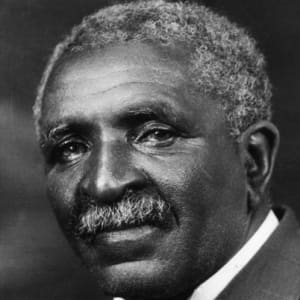
George Washington Carver


You have probably heard of George Washington Carver (1864-1943) as the early-twentieth-century Peanut Man who developed hundreds of commercial products from peanuts, and from other southern United States crops, in his laboratory at Tuskegee Institute in Alabama. But these products were probably the least important part of his work, at that time and in his legacy today. He is also remembered as the black man who earned respect from whites who might otherwise have dismissed blacks as an inferior, perhaps uneducable, race. I have recently posted a video about Carver, filmed at his birthplace.

Carver had a brilliant mind for botany and chemistry. He was also a teacher whom his students loved, because he was humble despite his vast knowledge, and he cared individually about each student. He wanted each student to experience scientific discovery for themselves. While most science teachers today take this approach, it was uncommon in Carver’s day.


The fame was as much for his personal story as for his scientific work. He was born into slavery just before the end of the Civil War, then kidnapped. His owner got him back in exchange for a horse. After the war, George’s owner raised him as one of his own children. He struggled for years to get an education from whatever school would allow a black man to learn. He was the only black student at Iowa State University. His mentors there wanted him to stay as a faculty member, but instead he accepted a call from Booker T. Washington to join the Tuskegee faculty.

For much of his career, Carver labored in obscurity. Tuskegee president Booker T. Washington was impatient with Carver’s disorganized approach to college duties. Whenever Carver accomplished more, Booker T. Washington always thought of something more that he ordered Carver to do. At one point, even though Carver spent every waking moment working for the institute, Washington told Carver he needed to repair the bathrooms. Washington’s regimented and disciplined approach to everything conflicted with Carver’s slower and more thoughtful approach.

Then in 1921, Carver testified before the federal House Ways and Means Committee about all the food and industrial products that could be made from peanuts. The committee was interested because World War I had interrupted many imports into the United States, and they wanted to know what “home-grown” products we could have in the event of a future war. Even though these products ended up not being marketed, the committee was very impressed with this humble and brilliant man. From that point, Carver became a celebrity, and his fame spread worldwide.

Once at Tuskegee, Carver showed his ability to produce excellent work with almost no resources. Though he eventually had a lot of glassware for his teaching and research laboratories, he had literally nothing to work with when he first arrived. So, he found a whiskey bottle at the dump. He tied a string around the middle. He cooled the bottle in cold water, then lit the string on fire. The fire made the cold bottle crack in two. The top half was a funnel, the bottom half a beaker.

By the end of his life, Carver was receiving many prizes and worldwide recognition. Meanwhile, in American society, the legal rights for black people were becoming ever more restricted. After an initial period of openness after the Civil War, southern states found ways to prevent blacks from voting, and they ended up with almost no political voice. While Booker T. Washington and George Washington Carver were widely admired, most white people considered them individual exceptions from their otherwise benighted race.

Max Otto (see previous essay) quoted Russell Lord’s “deeply disturbing” book Behold Our Land. Lord wrote about the soil erosion, which ruined the livelihoods of poor farmers, that was going on “under the eye of a teaching and research staff of considerable distinction; and yet it all was, and is, by them completely ignored. They go right on teaching their geology, their botany, their zoology, their chemistry and physics, their archaeology, their Greek and Latin and English, with no thought or mention of the tragic transformation of the good green country roundabout.” Maybe Lord referred to the major universities, but George Washington Carver was the exact opposite of this disconnected academic lassitude.

Carver never sought fame (though it came to him) or fortune (which he had opportunities to refuse). He lived in a small room on the Tuskegee campus. Books were stacked floor to ceiling in the corner. He had a display case for his crochet work. Rocks and stalactites covered a table, and flowers crowded his window box. His personal space reminds me of my own.

I chose George Washington Carver as my favorite scientist in my recent book. The main reason was not so much because of his scientific research, which was creative but not of the highest quality, as for his motivation. He believed that scientific research at a university should prove directly helpful to the people living around it, and to the world in general. The inspiration of his peanut research (and also research on sweet potatoes and pecans) was to allow poor farmers to produce value-added products, at home, that they could sell for more money than peanuts. He also did research, and taught local farmers, about how to preserve soil fertility, so that they could produce more from each of their acres. This is also one of my main motivations in teaching and research. Like Carver, I am a mediocre scientific researcher, but my heart is in outreach to the wider community, opening their eyes to the wonders and practical benefits of science.

All this, despite the fact that Carver did not really follow what nearly every scientist in his day and today would consider good scientific method. That is the topic of the next essay.

Tuesday, July 15, 2014

Science and Religion: The Case of George Washington Carver

I have written in the previous entry about my immense admiration for George Washington Carver as the model scientist. He is also a very interesting example of the meeting of science and religion.

Throughout his life, but less subtly in his later years, George Washington Carver considered his work to be God’s little laboratory, and that God was revealing the secrets of nature to him.


Carver apparently meant this literally, as when, in 1924, he gave a speech in New York City. The New York Times editorial was highly critical of his religious approach to science.


At first the editorial just seems racist, even though the writer might have meant well (saying that a hocus pocus approach to science makes blacks, who are quite intelligent, look like they are not). But this brings up an interesting point: at what point does religion interfere with a scientist’s quality of work?

I am not talking just about creationism. I have written extensively about how creationists use their pseudoscience as a tool to advance a political agenda. It is really bad science and used to promote a really bad goal. Instead, I am talking about deep religious convictions of scientists that motivate them to pursue scientific research as a holy calling—scientific research that might be just as good as that of any other scientist.

This remains a current issue among scientists. The religious convictions held by Francis Collins were the basis for Sam Harris to claim that he should not be the director of NIH. And the religious faith of Kenneth Miller caused some controversy in the Society for the Study of Evolution when Miller received the Stephen Jay Gould Award in 2011. While, in this link, Jerry Coyne is undoubtedly right that a person who publishes books about science and faith open themselves up for public criticism, I have to wonder if Coyne’s opposition to Miller’s professions of faith is entirely fair.

Is it true, then, that real scientists don’t, or shouldn’t, talk the way George Washington Carver did? To me, this is not a very important question to answer. The real anti-scientists are causing so much trouble that we shouldn’t pick fights with real scientists who happen to be religious. A fair percentage (though of course we keep no records of it) of members of the Oklahoma Academy of Science will describe themselves as people of faith. And if they keep doing good work (such as getting students to look closely at the natural world, which may or may not be God’s creation), I am their enthusiastic colleague. I admit I have problem with some religious institutions, such as Oral Roberts University, whose administration uses every opportunity to promote the belief that God directly told Oral Roberts what the truth was, and that settles it for all time. This resulted in a really disquieting moment at the AAAS Southwest and Rocky Mountain Section meeting in Tulsa in 2012 (which I described in this blog soon after it occurred). My first reaction is always to distrust religious scientists, based on my Oklahoma experiences, which have been mostly negative. But in many individual instances, I have found my religious scientific colleagues to be really fine people.


Some of you might, however, have different views. I encourage comments.

Sunday, July 13, 2014

A Celebration of George Washington Carver

I recently posted an essay about George Washington Carver, botanist and humanitarian, and how he was my idea of a model scientist. (I got a few of my facts wrong and have modified the entry.) He is one of the heroes of Black History Month (February), but I am hesitant to promote Black History Month, since it implies that we should be surprised that black people did great things. George Washington Carver was a great scientist and humanitarian; the fact that he happened to be black is important but secondary. And he was a famous botanist! We need for people to know what a botanist is. This photo is of one of his herbarium specimens (Hordeum jubatum).


I visited the George Washington Carver National Monument in July for the Carver Day Celebration. I will soon post videos from the monument on my YouTubechannel.


The event that I appreciated the most was a performance of “George Washington Carver and Friends” by the Bright Star Touring Theatre, which that particular day consisted of just three people: a young white woman, who plays the part of a schoolgirl wanting to write a report; and a black man who played Carver…and Jackie Robinson, and Thurgood Marshall, and Booker T. Washington, and the man who invented the egg beater, and even the woman who became a millionaire selling her beauty products; and the manager. The actors were very good and they involved audience children in every part of the play. I thanked them for promoting science; they even got the audience chanting “Sci-ence! Sci-ence!”


Check them out if you know a school that needs educational theater!

Here is a display in the Visitors Center that tells about how, to Carver, science was a way of serving humanity.


Next I will post an essay about science and religion, focusing on George Washington Carver.

Tuesday, July 1, 2014

A Model Scientist


Note: I corrected some factual errors from the original posting.

When I recently taught my graduate Research Methods course, I told the students that George Washington Carver was a model scientist. None of them had ever heard of him. Of course most of the students were from Asia and Africa, but even the American students had never heard of him. Those of you out there who teach, let us keep the memory of George Washington Carver alive. If you know a teacher, let them know about this blog entry, or encourage them to read on their own about this great scientist.

Carver was a great scientist not just for his research but because (1) his research focused on turning the agricultural produce of poor rural people into value-added products that would increase their income and (2) he persisted in the face of prejudice. He was good enough to work in a major university, but he could not, because he was black. However, he found his calling at Tuskegee Institute, helping poor rural black farmers in the South.

The George Washington Carver National Monument, at Carver’s birthplace, is near Interstate 44 in western Missouri. I’ll bet it is the only national monument in honor of a botanist, and one of the few that does not honor a military hero or battle.

Here is the entry that I wrote for Facts on File’s Encyclopedia of Science and Technology, which was never published:

Carver, George Washington
(1864?-1943)
American
Botanist, chemist, agriculturalist

George Washington Carver devoted his life to the study of agricultural plants, specifically for the benefit of former slaves and sharecroppers in the poor rural South of the United States. His studies benefited poor rural farmers in two ways: first, by improving techniques of production, which increased the farmers’ chances of self-sufficiency; second, by inventing new markets for their products. Carver is widely considered a hero among scientists, because he overcame personal privations and connected pure scientific research directly to the improvement of the lives of disadvantaged humans.

Carver was born as a slave in Missouri. His birthdate is unknown, because vital statistics of slaves were not always recorded. Along with his mother and sister, he was kidnapped by Confederate soldiers and sold in Arkansas. The others died, and Carver barely survived. He was returned to his master. Carver’s recurring respiratory illness after the Civil War meant that, instead of doing heavy farm labor with the other sharecroppers and freed slaves, Carver had time to wander the fields and make observations. He became so knowledgeable about plants that his neighbors called him “the Plant Doctor.” The local school in Diamond Grove (present day Diamond), Missouri did not permit black children, so Carver walked almost ten miles to a black school in Neosho. He stayed with a black family named Watkins, there so he didn’t need to walk twenty miles a day for education. His love of plants inspired him to also become an artist. Mariah Watkins told Carver he should learn all he could and come back to help his people. Carver went to Kansas to continue his education. When he witnessed the murder of a black man by a white gang, he fled to another city, where he finished high school. He studied art at Simpson College, but was advised that he would be better at science than at art.

Carver was the first black student at Iowa State University, where he studied botany and graduated in 1894. His mentors were so impressed with him that he stayed to earn a Master’s degree in 1896. His work at the Agricultural Experiment Station earned him national recognition in the study of fungal diseases of crop plants. In 1896, the president of the Tuskegee Institute (now Tuskegee University) in Alabama, educator Booker T. Washington, convinced Carver to join the Tuskegee faculty. Carver remained there for 47 years, until his death in 1943.

The soil in Alabama had been depleted by cotton farming. Carver developed systems of crop rotation, in which cotton was alternated with other crops, such as sweet potatoes, so that the soil could build back up. Crop rotation with legumes, especially peanuts, was particularly important.  Carver also developed many new uses for crops for food and industry. He developed more than 300 uses for peanuts, including glue, dyes, ink, varnish, and new foods, which included sauces, but (contrary to popular belief) did not include peanut butter. He did similar research for other Southern crops, including sweet potatoes and pecans. He also developed improvements in adhesives, axle grease, bleach, buttermilk, chili sauce, instant coffee, linoleum, mayonnaise, paper, plastic, shaving cream, shoe polish, and synthetic rubber. He received three patents (one for cosmetics, and two for paints). Carver did not, however, keep a laboratory notebook, and exact formulas for his procedures are largely unknown. To teach the farmers how to use their land better and to create new markets, Carver established an agricultural extension system of advice and laboratory research, modeled after the system in Iowa.

Carver was not well known in the United States even though former president Theodore Roosevelt praised him (at Booker T. Washington’s funeral) in 1915. He was, however, better known in England, where he was elected to the Royal Society of Arts, one of the few Americans to receive that honor at that time. He became famous when he testified with impressive intelligence before a committee of the U.S. Congress about the many uses he had developed for the peanut. Three American presidents met with him. The crown prince of Sweden studied agriculture under him for three weeks, and the Indian leader Mahatma Gandhi also studied with him. Industrialist Henry Ford financed a laboratory for Carver, and worked alongside him in the development of soy-based rubber and synthetic automobile fuel.

After Carver’s death on January 5, 1943, President Franklin D. Roosevelt dedicated a national monument to him in Missouri. It is one of the few national sites dedicated to the honor and memory of a black American and perhaps the only one to a botanist.

Further Reading

Kremer, Gary R., ed. George Washington Carver: In His Own Words.  Columbia: University of Missouri Press, 1991.