Showing posts with label technology. Show all posts

Monday, November 11, 2019

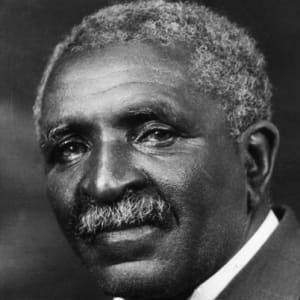
George Washington Carver


You have probably heard of George Washington Carver (1864-1943) as the early-twentieth-century Peanut Man who developed hundreds of commercial products from peanuts, and from other southern United States crops, in his laboratory at Tuskegee Institute in Alabama. But these products were probably the least important part of his work, at that time and in his legacy today. He is also remembered as the black man who earned respect from whites who might otherwise have dismissed blacks as an inferior, perhaps uneducable, race. I have recently posted a video about Carver, filmed at his birthplace.

Carver had a brilliant mind for botany and chemistry. He was also a teacher whom his students loved, because he was humble despite his vast knowledge, and he cared individually about each student. He wanted each student to experience scientific discovery for themselves. While most science teachers today take this approach, it was uncommon in Carver’s day.


The fame was as much for his personal story as for his scientific work. He was born into slavery just before the end of the Civil War, then kidnapped. His owner got him back in exchange for a horse. After the war, George’s owner raised him as one of his own children. He struggled for years to get an education from whatever school would allow a black man to learn. He was the only black student at Iowa State University. His mentors there wanted him to stay as a faculty member, but instead he accepted a call from Booker T. Washington to join the Tuskegee faculty.

For much of his career, Carver labored in obscurity. Tuskegee president Booker T. Washington was impatient with Carver’s disorganized approach to college duties. Whenever Carver accomplished more, Booker T. Washington always thought of something more that he ordered Carver to do. At one point, even though Carver spent every waking moment working for the institute, Washington told Carver he needed to repair the bathrooms. Washington’s regimented and disciplined approach to everything conflicted with Carver’s slower and more thoughtful approach.

Then in 1921, Carver testified before the federal House Ways and Means Committee about all the food and industrial products that could be made from peanuts. The committee was interested because World War I had interrupted many imports into the United States, and they wanted to know what “home-grown” products we could have in the event of a future war. Even though these products ended up not being marketed, the committee was very impressed with this humble and brilliant man. From that point, Carver became a celebrity, and his fame spread worldwide.

Once at Tuskegee, Carver showed his ability to produce excellent work with almost no resources. Though he eventually had a lot of glassware for his teaching and research laboratories, he had literally nothing to work with when he first arrived. So, he found a whiskey bottle at the dump. He tied a string around the middle. He cooled the bottle in cold water, then lit the string on fire. The fire made the cold bottle crack in two. The top half was a funnel, the bottom half a beaker.

By the end of his life, Carver was receiving many prizes and worldwide recognition. Meanwhile, in American society, the legal rights for black people were becoming ever more restricted. After an initial period of openness after the Civil War, southern states found ways to prevent blacks from voting, and they ended up with almost no political voice. While Booker T. Washington and George Washington Carver were widely admired, most white people considered them individual exceptions from their otherwise benighted race.

Max Otto (see previous essay) quoted Russell Lord’s “deeply disturbing” book Behold Our Land. Lord wrote about the soil erosion, which ruined the livelihoods of poor farmers, that was going on “under the eye of a teaching and research staff of considerable distinction; and yet it all was, and is, by them completely ignored. They go right on teaching their geology, their botany, their zoology, their chemistry and physics, their archaeology, their Greek and Latin and English, with no thought or mention of the tragic transformation of the good green country roundabout.” Maybe Lord referred to the major universities, but George Washington Carver was the exact opposite of this disconnected academic lassitude.

Carver never sought fame (though it came to him) or fortune (which he had opportunities to refuse). He lived in a small room on the Tuskegee campus. Books were stacked floor to ceiling in the corner. He had a display case for his crochet work. Rocks and stalactites covered a table, and flowers crowded his window box. His personal space reminds me of my own.

I chose George Washington Carver as my favorite scientist in my recent book. The main reason was not so much because of his scientific research, which was creative but not of the highest quality, as for his motivation. He believed that scientific research at a university should prove directly helpful to the people living around it, and to the world in general. The inspiration of his peanut research (and also research on sweet potatoes and pecans) was to allow poor farmers to produce value-added products, at home, that they could sell for more money than peanuts. He also did research, and taught local farmers, about how to preserve soil fertility, so that they could produce more from each of their acres. This is also one of my main motivations in teaching and research. Like Carver, I am a mediocre scientific researcher, but my heart is in outreach to the wider community, opening their eyes to the wonders and practical benefits of science.

All this, despite the fact that Carver did not really follow what nearly every scientist in his day and today would consider good scientific method. That is the topic of the next essay.

Tuesday, July 16, 2019

A Science Utopia? "July 20, 2019" Visions of Arthur C. Clarke, part one.


In 1986, Arthur C. Clarke wrote a book entitled “July 20, 2019.” I think it is just the right time for us to take a look at this book.

Arthur C. Clarke (1917-2008) is best remembered as a science fiction writer (especially 2001, A Space Odyssey). One of the reasons that he was a great writer was that he thought seriously about the implications of technological developments. Many people foresaw the development of advanced computers, but Clarke invented the computer HAL that passed the intelligence threshold and took control of a space ship.

Though Clarke was insightful and honest about the unexpected problems that might result from technological advance, his 1986 book entitled July 20, 2019 was mostly technological optimism. I recently read this book, and took notes on it with a 50-year-old pencil on a 20-year-old sheet of scratch paper while propped up reading in a 30-year-old bed. This date is the fiftieth anniversary of the 1969 Neil Armstrong moonwalk.

When humans first walked on the moon, anything seemed possible. Among the people who felt this way was, apparently, Clarke, and he still felt that way in 1986. Now that July 20, 2019 has arrived, we can look at Clarke’s predictions and see how close he came.


As Clarke noted, “The future isn’t what it used to be.” Clarke’s predictions were much closer than such predictions would have been on July 20, 1969, and certainly better than predictions made in the nineteenth and early twentieth centuries, such as Jules Verne’s Paris in the Twentieth Century (Paris au XXe siècle). Of course, Clarke was a little off. I’m not criticizing him, but I think an examination of his predictions will teach us something interesting about life and the world.

Some of his predictions were clear extensions of 1986 technology.

  • He knew videotapes would be replaced by a hard digital medium, which he called vidules.
  • In 1986 there were already word processing systems, and Clarke foresaw programs that would tell you when what you wrote was wrong. This technology has come, to the extent that some of us find it annoying.
  • He predicted that hospitals would be competing for patients; that laser surgery would be routine; and that there would be more women doctors. He foresaw more home medical tests, the results of which you could type into a computer, which would send them to your doctor.
  • Clarke foresaw roboticized homes: homes with robot vacuum cleaners, homes that could detect your mood and make automatic adjustments in temperature or even play the most appropriate background music. “The house of 2019 will take care of its owner’s every need.”
  • Clarke foresaw the end of metallic cars.
  • Clarke described international space stations—numerous, not just one.


As you can see, he was not too far off on the above predictions.

In addressing entertainment, Clarke said that the future would be fun. He did not perhaps foresee YouTube and blogs, but he said computers would allow individuals to create and publicize their own work. The only thing about which he was wrong was that he predicted television programs would dub the viewers’ faces into the actors’ bodies.

Most of Clarke’s predictions sounded unbelievable when he made them but were within the realm of the possible.

  • Clarke wrote, “I’ll be only 102 in 2019, which by then will be no unusual age.” Medical research might very well have been able to allow people to live far beyond age 100.
  • Clarke envisioned a commercial moon base, that is, one that was profitable, rather than just a massive drain on the NASA budget. The work on these bases would primarily be done by self-replicating robots. Manufacturing might very well be easier in reduced gravity. We could have done this, though I am not sure that it would have been worth the effort and cost.
  • Scientists knew that neural circuits produced effects that could be measured from outside of the skull. Today, this is the whole basis of brain scans. Clarke envisioned that information from such scans could be used to control the movement of, say, an artificial limb. This is now becoming reality, however far-fetched it seemed in 1986.
  • Clarke foresaw great changes in education, especially that distance education would begin to replace schools. Course papers would be graded and returned by computer. But he was wrong in saying that this education could consist of a professor lecturing (a hologram professor, no less).
  • Clarke predicted that maglev (magnetic levitation) trains would be common—and maybe they could have been, were it not for the self-interest and political power of fossil fuel corporations. He foresaw fusion power, which turned out to be harder to produce than anyone might have guessed.


In some cases, the predictions were almost laughably off target. Most of these had to do with brain technology.

Clarke makes the assumption that everything about our behavior and feelings results from some structural or chemical condition in the brain. True this may be, but Clarke thought that the solutions to all of our mental stresses therefore had straightforward solutions. In 2019, Clarke said, “a mind engineer can look inside your brain and see your insecurities in Technicolor.” He said we would know which drugs were “guaranteed to make your head a nicer place in which to live.” An Oedipus complex could be cured with Oedipills. One pill (mnemosyne) to make you remember, another (nepenthe) to make you forget. Drugs, coupled with the implantation of false memories, can make you forget your miserable past and believe nice, nice things about yourself. Implantation of false memories could, he said, turn bigots into nice people. There would even be a drug (dionysiax) “to shake up a straight-laced libido.” And another drug to eliminate the fear of death once it had become inevitable. At the time, Ecstasy had just been invented, and Clarke wrote about it as if there was no down side to this development. There would be machines to entrain your brain waves to not only eliminate insomnia but also to allow lucid dreaming. In this way, you could go into your own head and purge recurring nightmares. You could even share dreams with a community of other people, including lucid, shared erotic dreams. He thought 2019 would be right in the middle of “the orgasmic age.” (This is not what I expected from Arthur C. Clarke.) These mental experiences, he predicted, would replace religion.

In fact, Clarke speculated that by 2019 the world would be a sexual paradise, without any bad consequences. The reason for this is that most of the bad consequences of uninhibited sex in the twentieth century and, as it turns out, the twenty-first—sexual disease, unintended pregnancy, sexual assault, etc.—resulted from the sex act itself, which by 2019 would be replaced by electrical stimulation of the brain’s pleasure center. If not that, then, for men, a rectal implant that would stimulate penis nerves. I assume Clarke meant that even masturbation would be obsolete by 2019.

I did not make any of these things up.

In the next essay, I will continue the exploration of what Arthur C. Clarke thought the world might be like in 2019.

Monday, September 24, 2018

Somebody had to invent terraces


Human history has largely been the story of destructive human impact on the natural world. Deforestation is at least as old as civilization and is specifically mentioned in Plato’s dialogue Critias. There is indirect evidence for salt buildup, resulting from irrigation, that damaged the grain fields of Mesopotamia thousands of years ago. Since the explosion of both human technology and population, our impacts have become extensive enough to alter the entire ecosystem of the Earth, ushering in a new geological age, the Anthropocene (the epoch of humans).

Nature will eventually clean up our mess. The problem is that this cleanup can take such a long time that our civilization will not be able to persist while the Earth cleans up our mess. We are like the massive dinosaurs that, at the end of the Cretaceous, required daily masses of food. When the asteroid plunged the world first into a pizza-oven fire and then into darkness caused massive disruption of food chains, life recuperated, but the dinosaurs, who could not persist through this interruption, did not.

Occasionally, however, human cultures have invented technologies that reduced our impact on the Earth. One of the best examples of this is terraces. Agriculture always causes soil erosion, the loss of the very soil on which agriculture depends. But this erosion is greatly reduced by the use of terraces. As the rain water runs downhill, it slows down on each terrace and lets the soil settle before proceeding further down the hill. Sometimes terraces wash away, but they have had the overall effect of reducing erosion. Terrace agriculture, especially of rice, can continue for centuries.


We cannot simply relax and assume that somehow human culture will solve our environmental problems. Terraces reduce soil erosion, but somebody had to invent terraces. Terraces may have been invented over and over in separate locations. It required human creativity and will.

Whoever invented terraces did not do so in order to save the Earth. They did so because they wanted to save their own farmlands from the ravages of erosion. The long-term and widespread effect was to help save the Earth.

Today, one of our biggest challenges is global warming. What can we do about it? We can invent new technologies that allow us to use less energy in order to achieve our goals or find new sources of energy that do not emit carbon dioxide. Human technological creativity has given us a dazzling array of such inventions, from wind generators to LED bulbs to solar power.


But these things do not simply happen. Somebody has to do them. And it requires an initial investment to get the technology started. In modern society this occurs best with government support of invention and application. And many countries are doing a much, much better job of this than the United States. Western European countries, China, and Japan are examples of places where the government invests heavily in new energy technology. Already, the people in these countries are reaping the benefits of these investments. That is, the taxpayers that supported these projects are seeing the benefits of their tax money. In contrast, the American government seems hostile toward alternative energy development. This has been the case for a long time. Most wind generators come from China and Denmark, not because Americans can’t invent good wind generators but because China and European countries have invested in wind generator development. This is part of a general Trump Administration hostility toward science. Republicans see basic scientific research (e.g., into ecology and evolution) as a threat to their beliefs, and they actively oppose applied research into alternative energy as a threat to the oil companies who give them so much money.

It is as if, thousands of years ago, ancient governments actively opposed the adoption of terraces and insisted on the continuation of soil erosion.

Saturday, March 18, 2017

Prophecies of Jules Verne

My coming-of-age experience in literature and science was when, in sixth grade, I read Twenty Thousand Leagues Under the Sea (Vingt mille lieues sous les mers), in English of course. Soon I hope to read it in French. (I already notice that the French title was “under the seas,” not sea.)

Jules Verne is considered to be the father of science fiction. In addition, one biographer called Verne “the man who invented the future.” It would seem that Verne was ready to embrace a scientific and technological future for the human species. What a surprise it was, therefore, for me to read Verne’s Paris in the Twentieth Century (Paris au vingtième siècle), in which he created a nightmare future that was ruled by science and technology. As someone said, “It is difficult to make predictions, especially about the future.” This quote has been attributed to everyone from Niels Bohr to Yogi Berra. So far, no one has attributed it to Verne. But, at any rate, Verne got it wrong, though not completely.

Apparently the manuscript of this novel was found in 1994 in the proverbial locked drawer of a desk which Verne’s grandson had inherited. Verne’s publisher rejected the manuscript in 1863. And for good reason. It is a structurally flawed novel with two-dimensional characters. And it was overwhelmingly depressing. At least Twenty Thousand Leagues had an uplifting ending (see below), while this book (I will spoil it since you probably won’t read it) the protagonist falls into the snow and freezes to death.

Rather than to attempt a summary of it myself, I quote extensively from the Wikipedia summary, in bold italics below, but I add some of my own comments, not in italics.


Paris in the Twentieth Century (French: Paris au XXe siècle) is a science fiction novel by Jules Verne. The book presents Paris in August 1960, 97 years in Verne's future, where society places value only on business and technology. Written in 1863 but first published 131 years later (1994), the novel follows a young man who struggles unsuccessfully to live in a technologically advanced, but culturally backwards world. Often referred to as Verne's "lost novel", the work paints a grim, dystopian view of a technological future civilization.

The novel's main character is 16-year-old Michel Dufrénoy, who graduates with a major in literature and the classics, but finds they have been forgotten in a futuristic world where only business and technology are valued. Michel, whose father was a musician, is a poet born too late. In fact, the opening of the novel was of Michel getting an award for writing Latin poetry. The science and technology professors of the big university scoffed at the arts and humanities, “spouting like a steam engine.”

Michel had been living with his respectable uncle, Monsieur Stanislas Boutardin, and his family. The day after graduation, Boutardin tells Michel that he is to start working at a banking company. Boutardin doubts Michel can do anything in the business world.

The rest of that day, Michel searches for literature by classic 19th century writers, such as Hugo and Balzac. Nothing but books about technology are available in bookstores. In fact, the bookstores did have books of poetry, but the poetry was all in praise of mathematics and technology, such as Harmonies Ėlectriques and Méditations sur l’Oxygène. One of the poems began, “Le charbon porte alors sa flamme incendiaire Dans les tubes ardents de l’énorme chaudière...” Yes, it is as bad in French as it sounds (“Horreur, s’écria Michel”).

Michel's last resort is the Imperial Library. The librarian turns out to be his long-hidden uncle, Monsieur Huguenin. Huguenin, still working in the arts, is considered a "disgrace" to the rest of the family, and so was barred from attending Michel's birthdays, graduations, and other family events, though he has followed Michel's life—from a distance. This is the first time they meet in person. Huguenin tells Michel that his father was “un musicien de grand talent, né pour un siècle meilleur,” a great musician born for a better century. In fact, he refers to our present age as “notre âge crapuleux,” which I thought meant “our crappy age” but crapuleux actually means totally motivated by money. Chapter 10 consists of a tour of Uncle Huguenin’s library crammed with non-scientific books that could be found nowhere else.

At his new job, Michel fails at each task with Casmodage and Co. Bank until he is assigned to The Ledger, where Michel dictates the accounts for bookkeeper Monsieur Quinsonnas. Quinsonnas, a kindred spirit of 30, writes the bookkeeping information on The Ledger. Quinsonnas tells Michel that this is a job he can do in order to eat, have an apartment, and support himself while he continues working on a mysterious musical project that will bring him fame and fortune. Michel's fear of not fitting in is resolved; he can be a reader and still work on his own writing after work. In fact, Quinsonnas’s apartment is almost completely filled by a giant piano.

The pair visit Uncle Huguenin and are joined by other visitors, Michel's former teacher Monsieur Richelot and Richelot's granddaughter, Mademoiselle Lucy. Quinsonnas and Michel both dream of being soldiers, but this is impossible, because warfare has become so scientific that there is really no need for soldiers anymore—only chemists and mechanics are able to work the killing machines. But this profession is denied to even them, because "the engines of war" have become so efficient that war is inconceivable and all countries are at a perpetual stalemate. Verne said that fighting lifted the spirit (Se battre élève l’âme) and seemed to mourn the end of war. Verne’s character also missed the old days when there were courtroom battles and convictions instead of just financial settlements out of court.

Before long, Michel and Lucy are in love. Michel discusses women with Quinsonnas, who sadly explains that there are no such things as women anymore; from mindless, repetitive factory work and careful attention to finance and science, most women have become cynical, ugly, neurotic career women. Verne depicts twentieth-century women as downright ugly: long, skinny, and dry. Their waists were flattened, their faces austere, their joints stiffened (La taille s’aplatit, le regard s’austérifia, les jointures s’ankylosèrent). Their noses stuck down below their lips (un nez dur et rigide s’abaissa sur des lèvres), and they were nothing but acute angles (de la ligne drote et des angles aigus). In fury, Quinsonnas spills ink on The Ledger, and he and Michel are fired on the spot; Quinsonnas leaves for Germany. Of course, the misogynous Quinsonnas blamed Eve for the fact that he lost his temper.

In a society without war, or musical and artistic progress, there is no news, so Michel can't even become a journalist. He ends up living in Quinsonnas' empty apartment while writing superb poetry, but lives in such poverty that he has to eat synthetic foods derived from coal. He eventually writes a book of poetry entitled Hopes which is rejected by every publisher in Paris.

Michel briefly has a job at the Great Drama Warehouse, where popular entertainment is churned out quickly and sloppily. Each play was required to have “soixante-quinze mille calembous” (75 thousand puns). Michel, who loved serious literature, quit this job, saying “plutôt mourir de faim,” better to starve to death.

As the year 1961 draws to a close, all of Europe enters a winter of unprecedented ferocity. All agriculture is compromised and food supplies are destroyed, resulting in mass famine. The temperature drops to thirty degrees below, and every river in Europe freezes solid. In despair, Michel spends his last bit of money on violets for Lucy, but finds that she has disappeared from her apartment, evicted when her grandfather lost his job as the university's last teacher of rhetoric. He is unable to locate her amongst the thousands of starving people in Paris. He spends the entire evening stumbling around Paris in a delirious state. Michel becomes convinced that he is being hunted by the Demon of Electricity, but no matter where he goes, he is unable to escape its presence. He wanders into a morgue, with “les cadavres rigides, verdâtres, et boursouflés, étendus sur les tables de marbre,” stiff, greenish, swollen corpses extended upon marble tables, but even here there is bright electrical illumination. As Michel wanders, he finds the tomb of Heloïse and Abélard fallen into ruin, the glorious past forgotten. Is this depressing or what?

In the climax of the story, the heartbroken Michel, bereft of friends and loved ones, wanders through the frozen, mechanized, electrical wonders of Paris. The subjective narrative becomes steadily more surreal as the dying artist, in a final paroxysm of despair, unconsciously circles an old cemetery and finally collapses comatose in the snow. You will never guess what his last word was. If you guessed “Lucy,” you are right. “Oh! Lucy, murmura-t-il, en tombant évanoui sur la neige.”

The book's description of the technology of 1960 was in some ways remarkably close to actual 1960s technology. The book described in detail advances such as cars powered by internal combustion engines ("gas-cabs") together with the necessary supporting infrastructure such as gas stations and paved asphalt roads, elevated and underground passenger train systems and high-speed trains powered by magnetism and compressed air, skyscrapers, electric lights that illuminate entire cities at night, fax machines ("picture-telegraphs"), elevators, primitive computers which can send messages to each other as part of a network somewhat resembling the Internet (described as sophisticated electrically powered mechanical calculators which can send information to each other across vast distances), the utilization of wind power, automated security systems, the electric chair, and remotely-controlled weapons systems, as well as weapons destructive enough to make war unthinkable.

The book also predicts the growth of suburbs and mass-produced higher education (the opening scene has Dufrénoy attending a mass graduation of 250,000 students), department stores, and massive hotels. Verne depicts a giant canal that connects Paris with the ocean, and gigantic ships big enough to be floating gardens. A version of feminism has also arisen in society, with women moving into the workplace and a rise in illegitimate births. It also makes accurate predictions of 20th-century music, predicting the rise of electronic music, and describes a musical instrument similar to a synthesizer, and the replacement of classical music performances with a recorded music industry. Verne’s example of the degeneration of modern music was none other than Richard Wagner projected into the next century. Verne said Wagner’s four-hour operas were not so much to taste as to swallow. His music, Verne thought, sounded like someone sitting on a keyboard. Ah, if Verne could only have imagined what twentieth-century music, with its dissonances, actually did sound like! Whether it was melodic and expressive like Stravinsky or like a gray mixture of dissonance as in Webern, it makes Wagner’s music seem very tame. In addition, [Verne] predicts that the entertainment industry would be dominated by lewd stage plays, often involving nudity and sexually explicit scenes. Verne’s example of this from the nineteenth century was Jacques Offenbach, whose female “jumpers” wore swimsuits “showing them as nature made them.” In another place, Verne writes “le flambeau de l’hymen ne sert plus comme autrefois à faire bouillir la marmite,” which I think means “the flame of the hymen does not serve, as in the old days, to make the stew boil.” I’m not sure what this means, but it can’t be good.

In some ways, the modern world is worse than Verne could have imagined, but in some ways it is better. The modern publisher, on the last page, told how many grams of carbon dioxide equivalent were produced by publishing each book. Verne did not imagine global warming; and he could not have imagined science helping us to prevent global warming.

How could a writer who loved science so much imagine that science would create a nightmare future? I can suggest an answer to this question. In Verne’s twentieth-century Paris, all of science was in the service of making money, whereas the science that M. Arronax viewed from Captain Nemo’s underwater drawing-room was a view of the wonders of the ocean. Twenty Thousand Leagues ends with (I quote from memory), “The writer of Ecclesiastes said, millennia ago, That which is far off and exceedingly deep, who can find it out? Of all men now living only two can answer in the affirmative: CAPTAIN NEMO AND MYSELF (his caps).” Science can liberate our minds to understand the world, or it can enslave us. To Verne, either future was possible. Unfortunately, the real twentieth and twenty-first centuries more closely resembles Captain Nemo’s acts of terrorism than his exploration of the sea.


The main message I get from Verne’s forgotten novel is that science and education are whatever we make them to be. They can be used to open our eyes to beauty or to enslave us to Mammon.