Showing posts with label observation. Show all posts

Friday, August 28, 2026

The Thinking, Walking Biped, part eight. Famous Nature Walks: Henry David Thoreau

Probably every American student has had to read something by Henry David Thoreau. His literary immortality is thus guaranteed forever. Pretty good for a man who never had a steady job. He published a few books, gave a few talks, and walked for (he says) four hours every day as he lived out his life in Concord, Massachusetts during the middle nineteenth century. He was one of many writers who walked a lot; Thoreau mentions William Wordsworth as a writer who walked. He was a friend of (and, I suspect, a dependent upon) Ralph Waldo Emerson.

Thoreau is most famous for living out in the woods (on Emerson’s land) in a little hut that he built himself, at very little expense near the shore of Walden Pond. In case you think he lived in the hut all of his life, this is not true: he only lived there a couple of years. He just wanted to prove that it could be done.

I thought I would find a well-thought-out explanation of how and why he walked in his essay Walking. Given the essay title, it was not an unreasonable thing to expect. But in this essay, Thoreau actually had very little to say about walking other than that he would start off with no clear destination in mind and usually find himself heading southwest “toward Oregon” (which is not southwest of Concord).

But maybe this is the point. He would start walking with no particular topic to think about or problem on his mind. He would wait until he saw something that made him think, and then he would write about it later. That’s what I do, only I do not have a very good memory, so I make notes on my cell phone to remind me what I was supposed to write about. Thoreau was very observant, although (or because) he did not know what to observe.

He noticed patterns that others overlooked, especially Emerson. Emerson thought in big brush strokes and ignored details (or, in some cases, made them up). It was the details that mattered to Thoreau. As I walk around in French forests, I notice that the wild cherries ripen first, then the wild blackberries a couple of weeks later, and the wild dewberries last of all. Blackberries and dewberries look enough alike that it is easy to mistake one for the other. Thoreau had to notice the seasonal patterns of flowers and fruits, as he was passionate about eating wild fruits, especially huckleberries. I also eat wild fruits on my walks, cherries first in the summer, then blackberries, then dewberries toward autumn. Thoreau said that young people can learn more about the world in a day of huckle-berrying than a year of learning Latin.

One major example of Thoreau’s attention to detail was that many people assumed the pine woods had always been pine woods and the hardwood forests had always been hardwood forests. But Thoreau saw birds in pine trees dropping hardwood seeds onto the ground. Apparently pine woods became hardwood forests, which, when they burned or were cut, reverted to being pine woods. Thoreau may not have been the first to come up with this ecological observation, but he certainly came up with it himself. He even reconstructed the population history of pine woods by counting tree rings.

Thoreau was also a man of scientific faith. That is, he wrote down observations in his voluminous notebooks for which he had no use, but which he thought might be useful to somebody someday. Among his observations were the dates on which various species of wildflowers bloomed in the spring. He was not the first person to keep such records, which we today call phenology; in Japan, some records of cherry blossoms go back for centuries. But Thoreau’s records came in very handy when modern botanists such as Richard Primack and Abe Miller-Rushing compared Thoreau’s data with recent data. The flowers bloom much earlier today than they did in Thoreau’s time, consistent with global warming. Many other scientists, including me, have come up with similar results based on entirely separate sets of plants.

Another thing about Thoreau’s scientific faith. He kept walking because you never know what you might see, and if you are not out walking you might miss it.

And us modern scientists acknowledge the details that Thoreau noticed on his nature walks, even though he did not set out with the intention of noticing them.

Tuesday, May 2, 2023

Keep Walking and Keep Your Eyes Open

Today I took a hike on the nearby “mountain” in the fulness of spring. Most of the flowers have finished blooming, but there are millions of fresh green leaves. Over several years, I have seen about 45 species of plants that are common and easily visible this time of year. That is, if I walked everywhere on the mountain today and looked closely, I would have seen about 45 plant species. This does not count down by the river, etc.


But I discovered that, when I stopped and stood in place, and looked for all the plant species I could find, I could see only about nine species (9.2 species, averaged over 10 places). My path took me briefly into an open field, where I was also able to see only 9 plant species from any one location.

The lesson is very simple. You will not be able to see everything from one viewpoint. When I stood still I could see only about one-fifth of the plant species. You have to keep walking and looking in order to see the great majority of plant species. Just one glance will not do it. I try to be observant all the time wherever I go.

It is a happy way to live.

Saturday, December 18, 2021

Science: Close Observation Reveals a World of Wonder

However, without science, close observation is just tedious. There is no point in looking closely at the world if you are just going to make a compendium of random things that you see without understanding how they work.

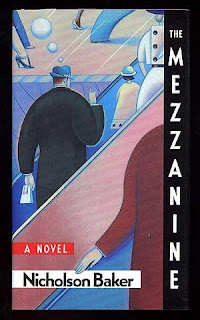
I was reminded of this recently when I ran across my copy of The Mezzanine by Nicholson Baker. He called it a novel. But it had no plot. Or, as David Gates, a reviewer for Newsweek, said, “a plot that is completely out to lunch.” [2 January 1989]


Here is the plot. A man (Howie) rides an escalator during his lunch break to buy something. Then he went back to work. I think that’s pretty much it. I don’t think I missed anything in the plot.

It was not a novel. But that’s fine. It might have been better marketed as an exercise in close observation. Baker was encouraging his readers to start looking closely at and noticing even the most ordinary aspects of the world around them.

This is a wonderful objective. The problem is that Baker did not seek to understand anything that he saw. When Howie saw something that he did not understand, he simply speculated about it based on random and inadequate knowledge. I wrote in the margin of the first page, “I love it when someone writes awesome things about ordinary events; but this author writes ordinary things about ordinary events.”

For example, Howie wonders about how perforations are made in commercial paper. But, lacking the inquisitiveness of a scientist, he just makes up random speculations, without trying to find out how perforations are actually made in commercial paper.

When Baker wrote about the beautiful sounds of farts, I laughed out loud, because it stood out as the only thing interesting in the whole book.

Maybe somebody should write a book in which the first-person observer looks as closely at things as did Howie, and then thinks about the scientific explanations for them. Science is hiding in every little cranny of ordinary life. Baker wrote about farts. Why not write about the incredibly fascinating world of intestinal bacteria—nearly all of them beneficial to our bodies—that produce the gas? He wrote about his unsuccessful attempts to conquer insomnia. This was not merely counting sheep, but an entire discourse—in a footnote—about how the sheep are delivered to his apartment by a sheep dispatcher. But he could have written about the two entirely separate sets of motor nerves, one of which awakens us, the other of which relaxes us, instead of the details of his failed attempts to sleep. Instead of annoyingly trivial guesses, the result would be a new appreciation of our bodies.

Baker has made a career out of taking fascinating ideas and making them dull. His novel—maybe this one actually was a novel—The Fermata was about a man (named Arno, even more annoying than Howie) who found that by sliding his glasses down his nose he could make the whole world go into suspended animation except for him. This is an astonishing premise. What wonders a competent writer could create from this! But Arno just piddled around with not-quite-sex. I wish I could write a novel about how a man with this ability might change the world or at least have exciting adventures. But I cannot because Baker already ruined the premise.

Yes, a scientist should write a book like The Mezzanine or The Fermata and make it actually interesting. But it won’t be me. Nicholson Baker has already poisoned the water. If I proposed such a book to my agent, she would probably say Baker already did that, and ruined any possible chances of anyone else doing it better. That is, assuming she remembers either of these books. She told me the publishing industry has a short memory.

A short memory can be, in certain cases, a blessing.

Tuesday, June 15, 2021

Quiet and Close Observation: The Forest Unseen by David George Haskell

The Forest Unseen is a 2012 book by David George Haskell which I have only now gotten around to reading. This blog is your place to go for reviews of old books. Of course, maybe it is new to you, in which case I hope this review encourages you to read the book.

Haskell chose a square meter of area on the floor of an old growth forest in Tennessee. It was not out in the middle of a wilderness; there is no such place in the eastern United States. In fact, it was just downhill from a golf course. But it was as close to undisturbed nature as one could expect to find. Having chosen his spot, Haskell watched it for a year and wrote a book about what he saw.

Anybody could have done what Haskell did. It is true that he used his immense knowledge of nature to not only identify the organisms that he saw, but to draw the numerous connections between these organisms and the larger world of science. But anybody could have seen these things and figured out at least a little about what they were doing. That is the main impact of The Forest Unseen: wonders await us if we just sit quietly and look closely at the natural world. You don’t need a Ph.D. to do this.

The tiny world of fungi and arthropods and wildflowers is an exciting place. Haskell captures the immediacy of this excitement by usually writing in the present tense. You are there with him, seeing what he sees. You can’t just quickly glance at the world of nature. There is a photo on the cover of Haskell looking through a hand lens at the forest floor. Much of the excitement is on a tiny scale. At one point, he had to watch the soil for a half hour before he realized that what he was seeing was a horsehair worm rather than a bit of leaf litter.

Haskell used poetic language masterfully. As numerous reviewers have remarked, his descriptions are some of the most beautiful that have been written. For example, he described chickadees on a cold day as “four pennyweight furnaces” because of the immense amount of heat, relative to their size, that they produce. He referred to the “pheromone love poems” of invertebrates. Tiny mushrooms and other fungi are a “regatta” (he also says “flotilla”) of colors in a decomposing sea of leaf litter. He is the only writer I know, other than Edgar Allan Poe, to use the word tintinnabulation. This poetic language is exactly what his readers, amateur naturalists, need. Scientists would strongly object to some of his terms, for example when he called a fern gametophyte a little lily pad. It looks like one, but the description is misleading—but only misleading if you are taking a botany course. Maybe the university publishers rejected it for this reason. But the major commercial publisher that released it knew that this book was perfect for nature-lovers.

Haskell draws many fascinating connections between what he sees and the larger world of scientific (and other) knowledge. For example, when he describes a snowflake, he explains how the six-sided shape follows inevitably from the chemical characteristics of the water molecules, but also that each snowflake is different because its shape is determined by so many microscale processes, the little tiny differences in temperature, humidity, and wind as each snowflake forms. Thus each snowflake is the product of natural law and historical accident. This is a major scientific concept, but you can see it in a snowflake. He also explained that Johannes Kepler, in his study of snowflakes, drew some incorrect conclusions, but his observations laid the groundwork for scientists a few decades later to discover that everything was made of atoms—something Kepler did not believe.

Haskell even discusses theology when he describes ichneumon wasps, which he saw following a sunfleck on the forest floor. These wasps lay eggs in caterpillars. The eggs hatch, and the grubs eat the caterpillars from the inside. In the nineteenth century, scientists, philosophers, and theologians argued about whether this constituted cruelty that was contrary to the character of the creator God. I’ll bet that very few of Haskell’s readers knew anything about this controversy that directly involved Charles Darwin and his religious friend, the botanist Asa Gray. Wonderful!

I hope that this book continues to inspire all of us, even after we have finished reading it. I sat outside, reading it, and my two-and-a-half-year-old granddaughter saw the picture on the cover. I told her what Haskell was doing, and right away we got out a magnifying glass and started looking closely at the soil of our backyard. It is possible that this little act, especially if we continue to do it, will have changed by granddaughter’s life.

Richard Louv’s books encourage parents to let kids play in the wild—climb trees and all that. Such undirected play is extremely important. But it is also important for people of all ages to stop and watch the immediate environment carefully and quietly, as Haskell did. It may be hard to get kids to do this for very long, but even for the few moments that they will slow down and look will prove very important to their mental development.

Alas, I cannot do what Haskell did. I cannot go and find an undisturbed place and listen to nature. I don’t believe there is any such place in Oklahoma. Every square meter of Oklahoma is filled with human noise, as well as human garbage. One “natural area” near Tulsa is right near an airport where hundreds of amateur pilots fill the sky; you can usually see and hear three at a time. Another is near a quarry which has constant explosions. There is no place where one does not continually hear loud, fast pickup trucks. Down by the Arkansas River in Tulsa, and Lake Texoma on the state’s southern border, there are hundreds of pieces of garbage everywhere. Or, perhaps there is a quiet place without trash. That is what Black Mesa is like, out in the Panhandle, very near New Mexico. But to get there I have to drive almost nine hours (one way). Not only is silent watching of nature a rare gift that Haskell has, and the rest of us could have, but places to do it are even rarer.

Friday, June 12, 2020

How to Make Your Day with Citizen Science!


How can you make an ordinary hike into an odyssey of the mind? Do some citizen science, of course!

It was a nice day in early summer, so I decided to take a hike. In Tulsa, there is really only one place to do this: Turkey Mountain, so called because it is not a mountain and has no turkeys. I could have gone to Red Bud Valley, which is a really nice place northeast of Tulsa, but the only road into and out of it is one across which trains park for hours at a time, blocking access in and out. In contrast, Turkey Mountain is near my home and is accessible.

But I have been there so many times! I almost know every trail and every tree and every rock. Of course, I always need the exercise and the fresh air. But there must be something more I could do, I thought.

There was. First, I told myself that I would deliberately look for interesting things that I might have previously overlooked. I am a botanist and I know a lot of plants, but there are quite a few that I don’t know. I did not want to carry a key with me (a big book which allows plant identification). Therefore, for many years, I just ignored the plants I didn’t know.

All of that changed with the advent of iNaturalist. Get the app on your phone; take a photo; the app will identify the species of plant (or fungus or bird or scorpion or even bacteria in some cases; it identified Nostoc commune for me, the star jelly, a cyanobacterial mat); upload it to a database with millions of observations. Therefore, I deliberately looked for new things. iNaturalist can identify plants even from crappy phone images; I verified them when I got home. Perhaps the best part is that your observation is added to the database right away, and anybody in the world can look at it, though it appears to be limited to North American observations. Within seconds you can contribute to a worldwide scientific database. Such is the power of citizen science! Bring it along with you on your hike. Participate in citizen science.

(I know you are wondering. Star jelly is mat of single cells that looks like black dried snot except that it comes back to life whenever it rains. Way cool. For centuries, it has been considered extraterrestrial in origin, e.g. asteroid poop. And an article in the magazine Fate, to which I am afraid to link, still says this. If I wrote horror novels, I would have a giant star jelly attacking Godzilla. How about, Attack of the Killer Star Jelly?)

Here is an example of how participating in citizen science helped me learn things. I had always wondered what the grass was that grew along the trail in the forest. I found out it was a panic grass (genus Dichanthelium). But as I looked, I saw the “grass” was mixed in with a rush, Juncus tenuis. They look alike until you look closely.

But this is not, so far, actual science. Somebody might use the iNaturalist database to conduct scientific research, but if I just uploaded images, I was still a participant rather than an actual scientist.

Then I noticed something. It is the peak flowering time for wild carrot, Daucus carota, also called Queen Anne’s lace.


One of the strange things about the bunch of little flowers (called, in this case, an umbel) is that in the very center there is a purplish-black knob which is actually an undeveloped flower. Why is it there? I remember us botany students discussing it back when I was in grad school. Maybe, I thought, I will look it up when I get home. But instead I decided to do some science.

I noticed, first, that some of the umbels had the knobs and some did not. Second, I noticed that there seemed to be more pollinators on the umbels with knobs than those without. The hypothesis popped into my head: the knob looks like a pollinator, and it attracts other pollinators. The insects think that, if there is already a pollinator present, the umbel must be a good place to eat.

Nice idea. Now, to test the hypothesis. I needed to find a big sample of umbels with knobs, and umbels without knobs. Just looking at some of the many umbels along the trail, I found a total of 232 umbels: 136 with knobs, 96 without. I then counted the number of pollinators on each flower, and recorded these numbers on my phone notebook. (I stopped using paper when I found that sweat would destroy my paper notes.) These are the results I got:


Percent of umbels without any pollinators
Average number of pollinators per umbel
Umbels with knobs
39
2.42
Umbels without knobs
47
1.53

The results seemed clear: flowers with the black knobs attracted more pollinators: there were fewer knobbed umbels without pollinators, and the average number of pollinators was greater.

Notice some things I had to take into account in designing this little survey.

  • First, I had to avoid bias. I really had no idea if my hypothesis was correct when I started; I was not trying to get a certain answer. I even did the analysis itself before reading any background material, so as to not let other people’s results bias my analysis.
  • Second, I needed an adequate sample size of umbels with knobs, and those without. If all of the umbels had knobs, I could not have tested the hypothesis. The explanation would then be lost in the evolutionary past. But there were plenty of both kinds of umbels.


I needed a large sample size because there are many other factors at work in this system. Pollinators do not behave independently of one another. They tend to move in groups, which means that, inevitably, some knobbed umbels will remain unvisited, while some un-knobbed umbels will have pollinators, even if the pollinators have a clear preference for knobbed flowers.

The next step was one I did not have time to take, and is beyond the reach of most citizen-scientists: statistical analysis. Almost any result can occur by chance. This result does not seem to be due to chance, but a statistical program on a computer (if you can afford one) will calculate the probability that the results are due to chance. You can’t do this on your cell phone. Not only do you need a program, but you need to know what you are doing. With all of those zeroes (39% and 47% of the observations), you cannot do regular parametric statistics. If you do, and get a very significant result, it is probably okay, though. But unless you have a computer program, you can’t do either parametric or nonparametric statistics. Back in grad school, we did it laboriously by hand. On clay tablets (just kidding).

Okay, now it’s time to look at the literature. Why is there a purplish-black spot in the middle of the umbel? Legend has it that Queen Anne, an avid lace-maker, pricked her finger and left a drop of blood in the middle of the lace. But, let’s stick to science. My hypothesis, that the black knob attracts insects, is the leading explanation, according to The Carrot Museum in the U.K. (You read that right. There is, in fact, a Carrot Museum, although it is online. It is dedicated to the history, evolution, science, sociology, and art of the carrot.) If I had not stopped to do some citizen science, I would never have been provoked into searching online and discovering the Carrot Museum.

But according to a 2013 article in Plant Species Biology, the dark knob in the middle of the umbel does not attract pollinators. This study used videography and triangulation. So, who is right? Me, or those authors? This raises an interesting possibility: maybe the dark knob attracts pollinators sometimes, but not others. I just got lucky. We were both right.

Then there is the possibility that the dark knob is simply a developmental oddity that is harmless and that neither natural nor artificial selection has eliminated.

Now, was this an interesting hike or what? Oh, those poor people who run or walk along with earbuds, thinking that the natural world is not interesting enough for them! But if you are reading this you probably don’t have this problem.

Monday, December 24, 2018

The Big Little World of Robert Hooke


In England in 1664, the scientific world was amazed to see Robert Hooke’s book Micrographia. Hooke was one of the first people to make expert use of early microscopes. The intricate drawings in this book remain some of the best art in the world today. Hooke opened up our vision to a big little world too small for the unaided eye to see.

Most biology textbooks contain the drawing that he made of a thin slice of cork. Rather than being a solid material, it consisted of lots of tiny cubicles, which reminded Hooke of the monastery cells in which monks lived. This observation began the scientific search that eventually led to the cell theory: that all organisms consist of cells. 


But Hooke did not just look at organisms, nor did he just look: he also asked questions about what he saw. One of his drawings was of “gravel in urine,” or kidney stones. When you look at them microscopically, you can see that the smaller ones are crystalline. This helped to explain where they came from: from minerals dissolved in the urine which occasionally crystallize. And because they are crystals formed in the urine, rather than actual gravel, they can be dissolved back into the liquid and thus, perhaps, eliminated. “How great an advantage it would be,” he wrote, “to such as are troubled with the Stone, to find some [liquid] that might dissolve them without hurting the bladder...” This possible solution to kidney stones would not have occurred to someone who did not look at them closely, so someone who just assumed they were gravel.


He also asked questions about the “cells” in the cork. (He was well aware that no one had ever described them before: “...indeed the first microscopical pores I ever saw, and that perhaps were ever seen, for I had not met with any Writer or Person, that had made any mention of them before this.”) He deduced that these cells, which contained air that could not escape from them, were the reason that cork could float and why it was springy. He even deduced that there were also “channels or pipes through which the...natural juices of Vegetables are convey’d, and seem to correspond to the veins, arteries and other Vessels of nutrition in sensible creatures...”

Hooke also rhapsodized about the amazing quantity of tiny objects, such as the cells of cork, of which “a Cubick Inch” could contain 1259712000, or “twelve hundred millions.” It was “a thing almost incredible, did not our Microscope assure us of it...”

How could he be sure that his observation of cork cells was not a mere anomaly of cork? He also looked at (but did not draw) cells in “the pith of an Elder, or almost any other Tree, the inner pulp or pith of the Cany hollow stalks of several other Vegetables: as of Fennel, Carrets, Daucus, Bur-docks, Teasels, Fearn, some kinds of Reeds, &c.”

He also closely observed sensitive plants (a branch and leaf of which appears right under his drawing of cells) to try to figure out why and how the leaflets closed when touched.

His drawings of small arthropods revealed a new world of awe to his readers. Although creatures such as the flea can be very ugly, one must admire the intricacy of their adaptations, which allow them to suck blood and to avoid being scratched away or swatted.


Hooke also wrote about the things he saw through the telescope, and drew craters and mountains of the moon.

The beginning of science is thoughtful observation. The microscope and telescope extended our observation to the very small and the very large and allowed us to ask new questions that we could not have imagined. Thank you, Galileo, and thank you, Robert Hooke.


Tuesday, July 18, 2017

Consider the lilies

One of my favorite sayings of Jesus, many of which were later condensed into a single Sermon on the Mount, is to “Consider the lilies of the field.” It is Biblical passages such as this that are a much more fruitful source of dialogue between science and religion, rather than haggling uselessly about whether the Earth is only a few thousand years old.

The lilies to which Jesus referred were the wildflowers that blanketed the Galilean hillsides briefly in the early spring, before withering away in the summer—just as they still do in the Middle East and other similar climates such as that of California. As a botanist, I really like this passage. Many of these spring wildflowers are, in fact, lilies.

Jesus did not say to glance at the lilies and then forget about them, or to walk past them while you are looking at a scroll or a cell phone. You have to stop and look carefully at them. They are so small that you will probably have to get down on your knees to do it. You will have to pull one of them apart to see the full glory of their structure hidden inside. When you do so, you will find Jesus’ promise fulfilled: “Even Solomon in all his glory was not arrayed as one of these.” That is, the most amazing creations of humankind cannot compare with even one of thousands of short-lived flowers.

Jesus did not say to glance at the lilies and then believe whatever your preacher says they should look like, but to consider what they actually look like. But there are millions of fundamentalists (not quite all of them in Oklahoma where I live) who will believe whatever their preachers say, even regarding things they could easily go and look at for themselves. These deluded followers will not even bother to read the Bible, about which they actually know very little, for themselves, but just believe what the preachers tell them it says.

Jesus did not say to ignore the lilies of the field while driving your tractor or four-wheeler over them, or while pouring chemicals on them, or while paving them over or peeing on them.

I recommend that you actually get down on your knees to look at the flower, rather than picking it and holding it in your fingers. By picking it you have already vanquished it and made it into a thing, an expendable resource, rather than a living being with which you share the world. Pick it only if you are dissecting it for closer study.

I like to believe that if people who consider themselves Christians will actually get down on the ground and look at a wildflower, this will begin a cascade of consequences that will make them start thinking for themselves rather than just believing their preachers. This is important since some preachers, most famously Pat Robertson, tell them that God wants them to believe everything that Donald Trump says. How can you worship Donald Trump once you have looked closely at the intricacy of a flower?


In case you missed my video on this topic, see it here.

Wednesday, June 1, 2016

The Thoughtful Observer

Yes, that’s what David Rains Wallace is. Thirty years after I bought it, I finally read his book Idle Weeds: The Life of a Sandstone Ridge. Wallace described the hidden life of a midwestern hill, day and night, throughout a typical year. I have not encountered such thoughtful observation except in the writings of Thoreau. The things you can discover by close observation! I hadn’t thought what a disaster for animals an ice glaze could be, cutting off their surface access and even the sharp ice cutting their feet. I didn’t know you could hear earthworms and harvestmen on the forest floor. Here is a sample of how closely Wallace observed a storm:

“The strange orange light intensified as thunder began. The rumbles and flashes were fait, seeming to come from high in the clouds, but it began to rain hard anyway. The light turned an extraordinary apricot yellow; the outlines of the trees were a sepia brown tiny against it. Then the sun set and the apricot modulated to a more normal pink. Gray clumps of cumulus appeared and spread until the western horizon was the color of slate. The thunder ceased, and crickets and an occasional katydid began to call, responding perhaps to changes in air pressure. A few fireflies still flashed their cold green lights in the woods, but much more numerous were their larvae, which resembled stubby millipedes and crawled on the ground. Some had luminescent abdomens, although they did not flash as brightly as the adults. Instead they glowed with a light so soft that they were conspicuous only on cloudy nights. They seemed to be everywhere on this warm, moist evening—wandering green or yellow glows that often faded mysteriously as the observer approached and the frightened larvae took refuge under a stone.”

Like Thoreau’s observations, Wallace’s book is not about an unspoiled wilderness but about a second-growth forest heavily impacted by humans. It has an old apple orchard, the fruits of which are still gathered by poor people. He explains how a forest hemmed in by subdivision development can quickly degrade even if it is officially protected. Raccoons search through garbage, and overbreed, and disease breaks out; and cats eat birds from the forest. And Wallace describes scenes very much like what I see in Oklahoma: men dumping large garbage (such as an old water heater) in the forest and then threatening people—using a shotgun—who criticize them for doing so. Humans are a part of nature, even the ones who despise it.

Wallace does not present nature as comfortable and cozy. He describes horrifying events, even though they are on what is to us a very small scale. This provides something of a plot to the book. Near the beginning, you meet the tree shrew mother, and throughout the book you discover how precarious her survival is. Her offspring eat their dead siblings, and even then barely survive. And at the end, only one shrew survives. I remember that when I was a child I watched a robin build a nest and lay eggs in the mulberry tree by my window. Then one day a blue jay attacked the nest and simply destroyed the eggs. Nature can be brutal. In Wallace’s book I encountered both the beauty and the brutality.

Wallace makes us feel the value of even a degraded spot in the natural world. The soil is precious; and if it were not for the living component of the soil, says Wallace, “its value would decline to that of gold and gems.”

Not all of Wallace’s writing is like this. Another book, Klamath Knot, though it too had much careful observation, is filled with confusing speculations, such as, why would evolution waste energy making legs on an amphibian larva if most tadpoles are going to die anyway? It is, he further says, uneconomic for millipedes to have so many legs. What do they need them for? And maybe chicken houses are superorganisms. He speculated that mushrooms may be degenerate flowers, and that mosses have almost no sexual recombination. These observations are pretty far off. Wallace is at his best when he is observing, not speculating.


Some of the happiest people who have ever lived have been those who closely observed the natural world, such as Thoreau, Edwin Way Teale, Herbert S. Zim, Hal Borland, and David Rains Wallace.