Monday, January 24, 2022

Democracy is About to End: An Evolutionary Prediction

Ever since the American Declaration of Independence, democracy has been considered the highest achievement of society. Some countries embraced it, some were forced into it. Even today’s dictatorships try to pretend that they are democracies. Less in the achievement than in the image, democracy (widely considered an American invention) has been revered for almost 250 years.

But is it something that we idealistically invented, or is it the product of human evolution? I argue the former, and that human evolution will eventually cause the extinction of democracy.

Democracy is a kind of altruism, in which people give up some of their individual rights to others. For example, warlords want to be dictators, but a democratic system forces them to surrender these rights for the sake of the rest of the people in the country. However much the right-wing militias in America want to impose their will on the whole country by force of arms, the Constitution prevents them from doing so.

This kind of altruism would seem to be good for everyone. In democracy, the selfish interest of almost all individuals is best served by pursuing the interests of all of us. Democracy, rather than roving bands of warlord separatists, is the most efficiently selfish way for almost everyone to maximize their wealth, health, and safety. Try to imagine a country in which every investment could be destroyed by militias without notice. Would you invest in Afghanistan?

But the course of history is inexorably going toward single-party rulership. I will focus just on the United States.

The Republican Party has openly declared that they are going to establish a permanent single-party rulership. Donald Trump demanded that all states with Republican legislatures should appoint a slate of Republican electors, even if the Republicans lost the popular vote. This is what they plan to do. I believe them.

Can they do this? The Constitution, apparently, supports their right to do this. Right at the beginning of Article Two, the Constitution reads, “Each State shall appoint, in such Manner as the Legislature thereof may direct, a Number of Electors, equal to the whole Number of Senators and Representatives to which the State may be entitled in the Congress.” No legislature has ever appointed electors in contradiction to the popular vote, but there is no reason they cannot begin doing so in 2024.

One would think that a legislature would need a justification for declaring a slate of electors different than the one indicated by the popular vote. Actually, they don’t, but they would probably want to have a justification to use. We all know what that justification would be: the popular vote cannot be trusted because there is a suspicion of voter fraud.

There will always be suspicion of voter fraud. Always, always, always. If a Red legislature says they have suspicions, then there are suspicions. Evidence? They have made their claims that the Democrats “stole the 2020 election” with no evidence whatever; why should they start needing evidence in the future? All the Red legislatures would have to do is to say, sorry folks, we think that there is fraud in the popular results.

Let’s consider the numbers from the 2020 election. Reliably Democratic states collectively have 213 electoral votes. Reliably Republican states have 229 electoral votes. (Even some of these states, however, have been partly Democratic in the past. Oklahoma, where I live, used to have a Democratic governor, as did Texas.) The other states (Virginia, Arizona, Wisconsin, Michigan, Pennsylvania, and Georgia) have a total of 86 electoral votes. If, as they plan, Republican legislatures from these states declare Republican electors either in defiance of or agreement with the popular vote, there will be 315 Republican electors. They intend this situation to be permanent; I  believe them. We will therefore have, starting in 2025, a permanent Republican president.

This situation can lead to a permanent one-party rule in America. Once the Republicans rule, they can pass legislation, or at least proclaim executive orders, that will block minority voters from voting. Who is to stop them? The Supreme Court will not. Congrass? There are moderate Republicans who would consider the destruction of democracy to be unacceptable. But they have been deliberately displaced from positions of leadership in Congrass. Any remaining moderate Republicans will be putting their careers on the line by opposing whatever Donald Trump might decide to do. These Republicans, which is to say most Republicans, will allow the extremists to do what they want.

To the Trump Republicans, Democrats are heathens, but moderate Republicans are heretics. Guess which one is worse.

For each of the “swing” states, there are two possible outcomes. First, if the legislature in any of these states is Republican, then the electors will be Republican. Second, if the legislature in any of these states is Democratic, and such legislatures vote to accept the blue popular vote without overturning it, violent militias will storm the state capitols and take them over by force. They have already done so in Michigan (see article here). All I am saying is that they will do so again. These are the two reasons that no swing state will ever again have Democratic electors.

Throughout human evolutionary history, from tribalism to civilization, most people have wanted forceful leaders to impose their will on everyone else. They are deluded into thinking that these forceful leaders will represent them. Then the situation gets out of hand. It is unclear how many Germans really, really wanted Hitler to exterminate the Jews. But they supported him until it was too late. Then they just had to go along with him. Above all, humans are afraid to take a stand against abusive power.

The result must inevitably be that the world will consist primarily of dictatorships that are ready to go to war with each other; and these dictators will have the allegiance of a minority of their citizens, while a majority simply goes along with them.

Neil Young claims that love, spearheaded by his music, will save us. Were it only so.

Saturday, January 15, 2022

People Like Me

If the world were full of people like me, I fantasize, it would be a much more peaceful world. It would be a world in which time and resources were more efficiently used because people would not use them against one another. I enjoy being good. People from my past, some of whom I had completely forgotten, keep re-emerging on social media hunting me down to share their memories of me. I’ve done some not-so-good things as well, but it appears, from my reputation, that the good things have prevailed in my image.

But there is one very real sense in which the world would be a shambles if everyone was like me. You see, I don’t consume very much. I do not take expensive vacations or patronize expensive entertainment. I do not go out to eat very much. I am frugal and I enjoy it. A lot. And my wife is even more frugal and enjoys it even more. The high point of her month is when she shows me the utility bill, which compares the average Tulsan, an energy-conscious Tulsan, and us, and we use less electricity than even those considered to be energy conservationists.

Our French in-laws have a similar view of life. Their idea of a good time is to get together and eat sausages, sauerkraut, and pretzels, or go hiking in the mountains. Their only non-frugal expenditures are on wine and fragrant cheese. Of course, this is because they are French. But just as you will not find me and my wife taking a vacation to Vegas, you won’t find our French relatives going to the Côte d’Azur or Monaco.

As the economy “climbs out of the recession caused by the pandemic,” many sectors (particularly hospitality and entertainment) cry out for us to patronize them. My wife and I are the world’s worst big-time consumers. We were before, and we are even more so now, living as we do in Oklahoma were only a little more than one in three people are vaccinated.


The only way our economy can recover is if a lot of people start wasting money. This is, however, a problem that results from our unrealistically hedonistic economy.

Wednesday, January 5, 2022

A Future Full of Plagues


Happy New Year, y’all.

The late nineteenth and the twentieth century was an amazing time of medical progress. Nearly every disease at least began to submit to scientific eradication. Not just infectious diseases, but cancer and nutritional diseases also. It seemed as if nothing could stop the progress of medicine.

But, it was apparent by the late twentieth century, one thing could stop the progress of medicine against bacterial diseases: the evolution of antibiotic resistance. Many bacteria that cause disease (which most do not) evolved resistance against many antibiotics, rendering them obsolete. This actually occurred by the process of natural selection: resistance evolved. By the end of the twentieth century, two things became apparent. The first is that we needed to keep developing new antibiotics. The second is that we had to decrease our reliance on antibiotics.

With regard to the first, we have done an inadequate job. Private pharmaceutical companies have not been developing new antibiotics as rapidly as the old ones become obsolete. This is because new antibiotics are not profitable. When a corporation develops a new antibiotic, it has a limited time span of use. First, each patient takes the antibiotic for a limited time, usually ten to fifteen days. Second, after a few years, the bacteria evolve resistance. It is much more profitable for pharmaceutical corporations to develop and market new drugs against diseases that cannot evolve resistance, and for which the patient must take the drug every day for the rest of his or her life. An example would be depression. The result is that our “armamentarium” (medical historians like military metaphors) of antibiotics is growing smaller each year.

With regard to the second, there are clearly things that we can do. Doctors used to prescribe antibiotics with little regard as to whether they were necessary. Since antibiotics do not work against viruses, doctors began to prescribe antibiotics only after they knew the infection was bacterial, not viral, in origin. This was and continues to be a good thing. But another thing we can all do to reduce the use of antibiotics is to prevent the spread of diseases.

There are many ways to reduce the spread of disease, and everyone knows what they are. As the covid pandemic broke out, and before vaccinations were available, we were told to practice social distancing and to wear masks. These practices were very effective, so that covid incidence began to decline even before vaccinations were widely available. It is now very clear that we can reduce our dependence on antibiotics by using vaccination, masking, and social distancing to control the spread of bacterial diseases. If we do these things, the old antibiotics will become obsolete more slowly, or, if we are lucky, not at all. Penicillin almost became obsolete, but it remains effective for some uses even after almost eighty years of use.

But there are no antibiotics against viruses. For viral diseases such as the various kinds of coronavirus, we have only vaccination, masking, and social distancing. That’s it. (Well, there is one alternative: massive dieoff, in which natural selection produces a resistant population of humans. I have actually had people tell me that this is an acceptable solution to the problem.)

Political conservatives in many countries, however, have shown hostility against all three of these ways of preventing the spread of disease. The Islamic fundamentalists have been rejecting vaccination for decades, with the result that many diseases that could have been eradicated are still in the world. And now Christian fundamentalists, and fierce conservatives (often the same people) reject masking, social distancing, and vaccination with unbridled fervor. They would, literally die—and have you die, too—than to participate in any of these.

New infectious diseases will come along. They always do. And when the next one comes, millions of fierce conservatives will make sure that the disease gets a free ride to spread through the world as much as possible. It is almost as if death from covid (even their own deaths) are a badge of honor to them. If the disease is bacterial, these conservatives who would rather die than to wear a mask will get the germs to spread faster than antibiotics can be used to control them.

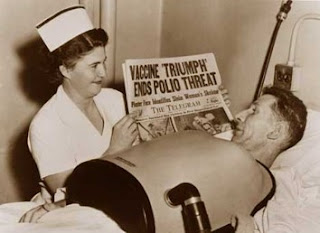
The nurse in this photo is showing a headline to a man who is confined to a ventilator because the polio virus destroyed the nerves that allowed him to breathe. The news came too late for him, but the nurse intended it as good news that, at least, the next generation of people would not have to suffer from polio. Neither of them would have guessed that millions of people would consider the polio vaccine to be evil. When Edward Jenner developed the smallpox vaccine; when Louis Pasteur developed the rabies vaccine; when Jonas Salk developed one of the polio vaccines—they could not have imagined that people would consider them evil and actively work against them.

We are, it appears, entering a new dark age of plagues. We have political conservatives to thank for it.

Monday, December 27, 2021

Where Has Optimism Gone? Reflections at the End of the Year

In the process of downsizing my library, I ran across a book that was important in 1990: The Decade of Destruction, by Adrian Cowell. The decade he referred to was the 1980s, and the destruction was of the tropical rainforests. And he was optimistic. As Cowell explored the Amazon rainforest in the 1980s, he saw that there were no groups who were trying to save the Amazon from destruction. By 1990, things looked very different. There were many rainforest conservation groups, not just in developed countries (think Rainforest Action Network) but also many local groups in the Amazon. Cowell wrote his book just as Lula da Silva was coming to power as Brazil’s prime minister, and he had appointed a sincere conservationist, Jose Lutzenberger, as Secretary of the Environment.

I think it is safe to say that optimism related to the Amazon rainforest is receding quickly. Lula da Silva was a disappointment, and “Lutz” quickly departed the scene. The 1980s was the time of the movie The Emerald Forest, when it seemed like the way to save the rainforest was to allow tribes to go back to their primitive way of life and leave them alone. But few such people exist anymore. Further, we cannot protect the Amazon rainforest merely by leaving it alone. Global warming is already causing destructive wildfires in the Amazon Basin, a process that is predicted to get much worse in upcoming decades. Already, the Amazon is a net emitter of carbon dioxide.

While I was mourning the inexorable destruction of the Amazon rainforest, I followed the news about the wildfire destruction of the giant sequoias in the Sierra Nevada of California, which just barely missed Giant Forest in Sequoia National Park. When I was a child, Giant Forest seemed the closest thing I could imagine to Heaven on Earth. I thought this when I was a Christian fundamentalist, and continued thinking it when, later, my religious views were less well defined. But there is no more hope for the ancient North American forests than for the Amazon.

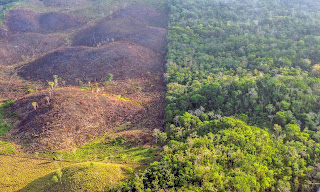
Here is an image from Rainforest Action Network, in which you can see the border of Guatemala and Belize, with rainforest destruction on the Honduras side.

I feel, and I sense that many others feel, a sense of resignation. We live in a dysfunctional economy and society, in which I feel lucky each day to simply not be killed. Wildfires in the west and almost weekly hurricanes in the southeast are the new normal. It is now almost normal in the summer, in Oklahoma, to see the sun dim and red while it is yet far above the horizon, because of smoke from western wildfires. I am giving away Cowell’s book in part because I can hardly bear the thought that there was a time when many of us felt optimism.

And I thus end 2021.

Tuesday, December 21, 2021

Adaptive Stories: Another Message from Fluff the Cottonwood Tree

This is Fluff the cottonwood tree (she/her/hers). I think this is my sixth message that Stan has agreed to post for me on his blog. I live about a half block away from his house in Oklahoma.

Adaptation is the process or the outcome of evolution in which populations become more successful in their habitats. If you want a more detailed discussion of adaptation, read about it in Stan’s Encyclopedia of Evolution. But you get the point.

Adaptations sometimes seem obvious. For example, leaves are flat because this allows the green cells inside them to absorb more light and allows them to absorb the yummy carbon dioxide more quickly. For such adaptations as these, it is easy to figure out the reason for the adaptation.

But other characteristics are more difficult to explain. Look at this photo of cottonwood leaves. Aren’t they beautiful? I have now shed all of my leaves for the winter, but about three months from now I will grow thousands of new ones.

Notice the teeth along the edges of my leaves. Truly artistic! I’m not bragging, but do you humans have anything this beautiful about your bodies?

But are these teeth an adaptation? Stan insists that they are. Toothed leaves, said Stan, are better in cooler climates, and he showed me a website that made this very point. But there are plenty of exceptions to this pattern. Maybe this is just an adaptive story, insightful but not necessarily true. Maybe trees of the genus Populus, including me, just have a genetic tendency to have toothed leaves, and we also happen to live north of the tropics. These two facts may not be connected at all.

An even better example of an adaptive story is about fluttering leaves. My leaves, as those of all cottonwoods, poplars and aspens, flutter in the wind, creating a delightful shimmering sensation. All leaves move in the wind, producing a sound called susurrus (one of Stan’s favorite words), but my leaves and those of my evolutionary relatives don’t just rustle in the wind; they almost twinkle. Some aspens are called quaking aspens, or trembling aspens, because of this most obvious and beautiful characteristic. This occurs because our leaf petioles are flat rather than round.

Botanists like Stan say that this fluttering movement increases the rate at which carbon dioxide gets into our leaves. Sorry, Stan, but that is almost certainly just an adaptive story. Of course, fluttering leaves absorb more carbon dioxide; and almost any fast-growing plant benefits from having lots of carbon dioxide. Why, then, is it just us members of the genus Populus that have this characteristics? Why don’t sycamores, which like us grow along rivers, have fluttery leaves? There are some that live only a few meters away from me.

To tell the difference between an adaptive story and a scientific explanation, you need to not only explain the advantage of the characteristic, but why you don’t see all organisms that live under the same conditions with that characteristic.

Cottonwood leaves flutter, and as a result we have more photosynthesis. But other trees achieve the same result in different ways. There is no answer to the question of why my leaves flutter in the wind more than those of sycamore trees. Meanwhile, just look at my leaves and admire them.

Saturday, December 18, 2021

Science: Close Observation Reveals a World of Wonder

However, without science, close observation is just tedious. There is no point in looking closely at the world if you are just going to make a compendium of random things that you see without understanding how they work.

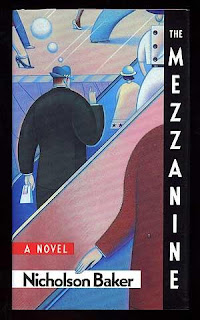
I was reminded of this recently when I ran across my copy of The Mezzanine by Nicholson Baker. He called it a novel. But it had no plot. Or, as David Gates, a reviewer for Newsweek, said, “a plot that is completely out to lunch.” [2 January 1989]


Here is the plot. A man (Howie) rides an escalator during his lunch break to buy something. Then he went back to work. I think that’s pretty much it. I don’t think I missed anything in the plot.

It was not a novel. But that’s fine. It might have been better marketed as an exercise in close observation. Baker was encouraging his readers to start looking closely at and noticing even the most ordinary aspects of the world around them.

This is a wonderful objective. The problem is that Baker did not seek to understand anything that he saw. When Howie saw something that he did not understand, he simply speculated about it based on random and inadequate knowledge. I wrote in the margin of the first page, “I love it when someone writes awesome things about ordinary events; but this author writes ordinary things about ordinary events.”

For example, Howie wonders about how perforations are made in commercial paper. But, lacking the inquisitiveness of a scientist, he just makes up random speculations, without trying to find out how perforations are actually made in commercial paper.

When Baker wrote about the beautiful sounds of farts, I laughed out loud, because it stood out as the only thing interesting in the whole book.

Maybe somebody should write a book in which the first-person observer looks as closely at things as did Howie, and then thinks about the scientific explanations for them. Science is hiding in every little cranny of ordinary life. Baker wrote about farts. Why not write about the incredibly fascinating world of intestinal bacteria—nearly all of them beneficial to our bodies—that produce the gas? He wrote about his unsuccessful attempts to conquer insomnia. This was not merely counting sheep, but an entire discourse—in a footnote—about how the sheep are delivered to his apartment by a sheep dispatcher. But he could have written about the two entirely separate sets of motor nerves, one of which awakens us, the other of which relaxes us, instead of the details of his failed attempts to sleep. Instead of annoyingly trivial guesses, the result would be a new appreciation of our bodies.

Baker has made a career out of taking fascinating ideas and making them dull. His novel—maybe this one actually was a novel—The Fermata was about a man (named Arno, even more annoying than Howie) who found that by sliding his glasses down his nose he could make the whole world go into suspended animation except for him. This is an astonishing premise. What wonders a competent writer could create from this! But Arno just piddled around with not-quite-sex. I wish I could write a novel about how a man with this ability might change the world or at least have exciting adventures. But I cannot because Baker already ruined the premise.

Yes, a scientist should write a book like The Mezzanine or The Fermata and make it actually interesting. But it won’t be me. Nicholson Baker has already poisoned the water. If I proposed such a book to my agent, she would probably say Baker already did that, and ruined any possible chances of anyone else doing it better. That is, assuming she remembers either of these books. She told me the publishing industry has a short memory.

A short memory can be, in certain cases, a blessing.

Sunday, December 12, 2021

Was Love Born in a Manger?


A church sign I saw out in the country in Oklahoma recently read, “Love Was Born in a Manger.” I will briefly explain why this is wrong.

Most of my life, devoutly Christian, I was deeply moved, almost suffocated, by my belief that Jesus represented the manifestation of God’s love to humankind. I was wrong. The stories of Jesus are wonderful—certainly, in my mind, Jesus represents some of the finest of human love—and I wish I could still believe that love was born in a manger at Christmas.

But I will now explain why this belief is wrong.

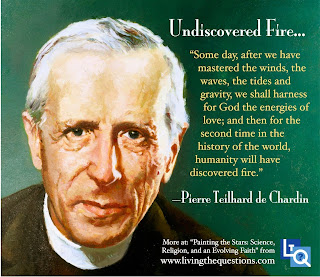
The statement implies that, without Jesus having been born, or foreordained from the beginning of Creation to be born, then there would be no love. But it is quite clear that love evolved. I do not mean  in some vague way as Pierre Teilhard de Chardin wrote about decades ago. I mean that love evolved by means of natural selection.


I am talking about altruism. Love promotes altruism which promotes fitness. Not always, but often. To love your offspring and, to a lesser extent, your relatives increases fitness through inclusive fitness. To love your friends increases fitness through direct reciprocity. To have a reputation for being kind and generous increases fitness through indirect reciprocity. Natural selection favors whatever increases our fitness. Often this is hatred, but often (perhaps even more often) it is love. Natural selection gave us the instinct of love. The evidence is that it feels so good. We need food; natural selection favored millions of years of animals who, when hungry, love the taste of food. We need water; natural selection favored millions of years of animals who, when thirsty, love water. Love is an appetite, just as much as sex, food, and water. Whether we decide to use the instinct of love or not is up to each of us individually.

There is another problem with the belief that Jesus is the origin of all love. It implies that those of us who do not accept the doctrines about Jesus (however much we may love Him) do not really love other people, the natural world, or God. We are either faking it or are totally deluded. What I experience, when I feel love for Jesus or for other people or for the creation, is not genuine, according to this view.

But I know what I am thinking. I know for a fact that I am not faking it. Billions of people who are not doctrinal Christians love people, the natural world, and God very passionately. Some are lying, but we can’t all be lying. I cannot speak for anyone else, but it would be the height of arrogance to claim that I am the only non-doctrinally-Christian person who sincerely loves other people. Many doctrinal Christians would claim that those of us who reject their doctrines might sincerely believe we are sincere, but it is in fact a delusion. I am not deluded. The burden of proof is on doctrinal Christians who claim that all who reject their doctrines are either liars or lunatics.

If, in fact, love does not exist apart from a doctrinal Jesus, then it must come from somewhere else. It must be part of human nature. And, as I wrote above, I believe that evolution put it there. Love is a basic instinct.

Merry Christmas, y’all, and though you may not think it possible, I believe Merry Christmas.